Français



_11zon.webp)


_14_11zon.webp)
_6_11zon.webp)



Welding safety: understanding the risks and adopting the right protection
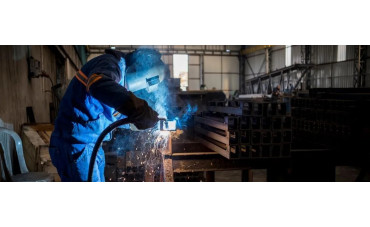
Welding safety is an essential topic for protecting welders, nearby operators and the working environment. Welding operations can expose workers to various risks: radiation, spatter, heat, fumes, burns, eye injuries, noise, electricity, awkward postures and the handling of heavy metal parts.
This blog category aims to help you better understand the risks associated with welding and the prevention measures to put in place. The goal is not only to choose protective equipment, but also to understand how to organise a safe workstation adapted to the process used and the working conditions.
Identifying the main risks associated with welding
Each welding process presents specific risks. Arc welding can generate intense radiation, spatter and fumes. MIG/MAG, TIG or MMA welding requires particular attention to protecting the eyes, skin and respiratory tract. Cutting, grinding or workpiece preparation operations can also create spatter, noise and metallic dust.
Prevention therefore starts with identifying the hazards: type of process, material being welded, exposure duration, workspace, available ventilation, presence of nearby personnel and equipment used. This analysis makes it possible to choose suitable protection and organise work in better conditions.
Protecting the eyes, face and skin
The eyes and face are particularly exposed during welding operations. Radiation, hot metal spatter, sparks and particles can cause serious injuries if protection is not suitable. Welding helmets, masks, goggles or protective screens must therefore be chosen according to the process, light intensity and working environment.
The skin must also be protected against burns, spatter and heat. Jackets, sleeves, aprons, gloves, trousers and safety footwear must be suited to welding constraints. The choice of materials, heat resistance, comfort and freedom of movement plays an important role in the welder’s everyday safety.
Welding fumes and respiratory protection
Welding fumes are among the major risks to consider. They may contain metallic particles, gases and compounds from the base metal, filler metal, coatings or the process used. Their concentration depends on the type of welding, the materials being worked, the duration of the operation and workstation ventilation.
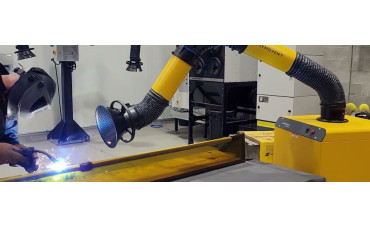
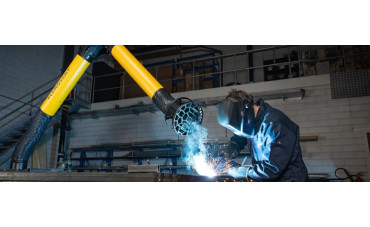
To limit exposure, it is important to provide fume extraction as close as possible to the source, suitable ventilation and, when necessary, additional respiratory protection. The choice between an extraction arm, extraction torch, downdraft table, mobile filtration unit or fixed system depends on workshop organisation and the nature of the work carried out.
Welding screens and protection of nearby personnel
Safety does not only concern the welder. People working nearby can also be exposed to radiation, spatter, fumes or risks linked to movement around the workstation. Welding screens, curtains, mobile partitions or marked zones help separate work areas more effectively and limit indirect exposure.
Good workshop organisation helps avoid unnecessary movement around the welding area, protect other operators and reduce accident risks. The positioning of screens, stability of supports, visibility and access to equipment must be considered before work begins.
Choosing PPE suited to the process and environment
Personal protective equipment must be chosen according to the process used, exposure level, work duration and environment. Protection suited to workshop welding will not necessarily be sufficient for worksite intervention, confined spaces or areas with heavy spatter.
Gloves, clothing, boots, eye protection, respiratory protection and welding helmets must provide a good level of protection while remaining comfortable. PPE that is too restrictive, poorly adjusted or unsuitable may be worn less consistently by the operator and reduce the effectiveness of prevention.
Organisation, training and best practices
Welding safety also relies on workstation organisation. Before welding, it is important to check the condition of the equipment, the stability of the parts, the quality of the connections, the absence of flammable elements nearby and the availability of the necessary protection.
Operator training also plays an essential role. Welders must understand the risks of the process used, basic settings, safety instructions, equipment to wear and the actions to take in the event of an incident. Good prevention therefore combines equipment selection, workstation layout, equipment maintenance and user awareness.
Maintaining and checking protective equipment
Safety equipment must be checked regularly to remain effective. A damaged welding helmet, scratched screen, worn glove, torn jacket, damaged sole or saturated filter can reduce the expected level of protection. Maintenance and replacement of worn components must therefore be part of everyday working habits.
Extraction and filtration systems must also be monitored: filter checks, airflow verification, correct positioning of extraction arms, cleaning and maintenance according to the manufacturer’s recommendations. Poorly maintained protective equipment can give a false sense of safety.
Our advice to better understand welding safety
Through this category, HD Soudage helps you understand welding-related risks and protection solutions. You will find advice on welding helmets, gloves, clothing, boots, welding screens, fume extraction, air quality, workshop organisation and best practices to adopt.
Whether you are a welder, boiler maker, metalworker, pipefitter, maintenance technician, workshop manager or industrial buyer, this section will help you better understand safety equipment and the right habits to adopt in order to work in better conditions.