
 Français



_11zon.webp)


_14_11zon.webp)
_6_11zon.webp)



Tungsten Electrodes: The Ultimate Buying Guide for Professional TIG Welds
- LAURENT DAROLT
- 16 Jun, 2026
- Welding techniques
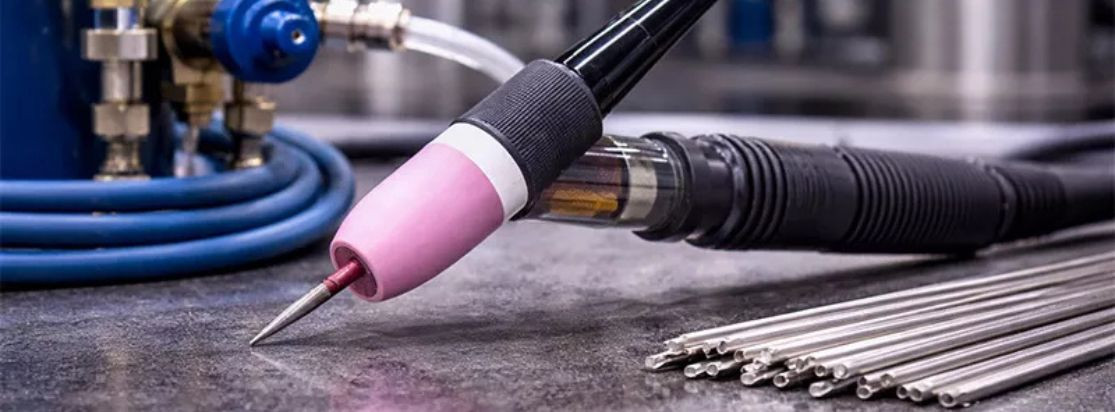
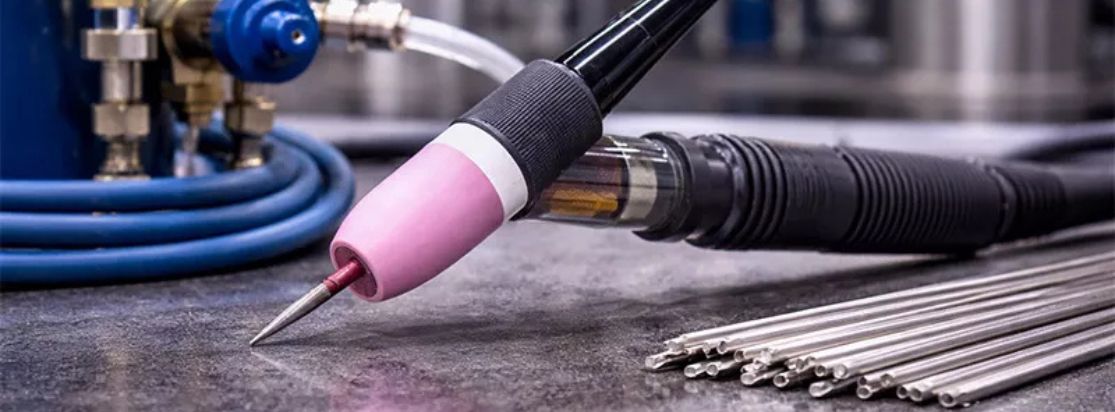
Every welder, whether an artistic craftsperson or a high-precision sheet metal technician, has experienced this deep frustration: an electric arc that starts dancing erratically, a tip that becomes contaminated after only a few centimeters of weld bead, or worse, metallic contamination that ruins a complex assembly on stainless steel or titanium. In the demanding world of TIG welding (Tungsten Inert Gas), success does not rely solely on the sophistication of your inverter or the steadiness of your hand. It intrinsically depends on a component that is often overlooked but absolutely vital: the electrode. Tungsten electrodes are not just simple consumable rods; they are the true “beating heart” of the process, the unique energy vector capable of transforming an electrical discharge into a stable and focused plasma column. This guide, written with the rigor of metallurgical expertise, aims to transform your technical approach and optimize your purchasing decisions to achieve consistent operational excellence.
À retenir
- Decode the chemistry through color: Each color code (Blue, Gold, Turquoise) indicates a precise concentration of oxides that influences arc starting and service life.
- Master longitudinal grinding: Never grind across the electrode; transverse scratches are one of the main causes of arc instability.
- Set the diameter precisely: Adapt the electrode size (1.6 mm, 2.4 mm, etc.) to your current range to avoid tip melting or difficult arc starting.
- Make a safer transition: Move away from thoriated electrodes (red) in favor of lanthanum or rare earth electrodes to protect your health from radioactive dust.
Understanding the tungsten electrode: Why is it essential?
The choice of tungsten is not an industrial coincidence; it is a necessity dictated by high-energy physics. As a technical advisor, I often point out that the electrode is the center of complex physical phenomena that directly influence the very shape of your weld pool.
Definition and role of the non-consumable electrode
In the TIG process, unlike MMA or MIG/MAG welding, the electrode is known as non-consumable. Its role is not to melt in order to add material, but to act as a terminal for the electric arc. It works as a pure energy bridge. This distinction is fundamental: it allows the welder to completely separate heat input from filler metal input. This separation is what provides the surgical precision required for work on thin materials or reactive alloys.
Thermal properties
Tungsten has an extremely high melting point of 3,422°C, the highest of all metals. But its true strength lies in its thermionic emission. To create an arc, electrons must “leave” the metal. Pure tungsten has a relatively high work function, meaning the energy required to release an electron is significant. This is where additives, or oxides, come into play: they lower this energy barrier, allowing easier arc starting and a more stable arc at lower temperatures. This thermal stability ensures a concentrated energy flow that prevents the Heat-Affected Zone (HAZ) from becoming too wide, thereby preserving the mechanical properties of your parts.
Expert verdict: Moving from pure tungsten to alloyed tungsten is like switching from an incandescent bulb to a laser: you gain concentration, control, and energy efficiency.
Tungsten electrode color code: Selection guide
The color at the end of your electrode is a universal language. Do not see it as an aesthetic detail, but as a simplified technical data sheet of its chemical composition.
Versatile electrodes: The technological shift — Blue, Gold, and Rare Earth
These electrodes represent the highest level of versatility for modern workshops.
- Blue (2% Lanthanated): My number one recommendation. 2% lanthanum offers a higher current-carrying capacity than pure tungsten. It performs extremely well both in direct current (DC) on stainless steel and in alternating current (AC) on aluminum. Its wear resistance reduces downtime for regrinding by nearly 30% compared with a conventional electrode.
- Gold (1.5% Lanthanated): Very similar to the blue electrode, it is slightly more flexible when starting the arc at very low amperage. It is the preferred choice for special alloys and micro-welding.
- Turquoise/Purple (Rare Earth / E3): This is the pinnacle of innovation. By combining several rare earth oxides, manufacturers have created an electrode that barely overheats. It maintains a perfect tip even after long industrial cycles, effectively replacing many other references.
Specific electrodes: Uses and traditions — Green, Grey, White, and Red
- Green (Pure Tungsten): Historically used for aluminum in AC with transformer-based machines. It promotes the formation of a perfect ball at the tip. However, on modern inverter machines, it has become obsolete because it does not handle high frequencies well.
- Grey (2% Ceriated): Excellent for orbital welding and low-amperage applications. Cerium promotes instant arc starting, making it ideal for precision tack welding on 0.5 mm sheets.
- White (Zirconiated): The specialist for magnesium and aluminum. It offers exceptional resistance to contamination if you accidentally touch the weld pool, as zirconium helps prevent impurities from rising by capillary action.
- Red (2% Thoriated): The historical benchmark for DC welding. Although its performance is undeniable, thorium is radioactive. The dust generated during grinding poses a major risk of internal contamination. In a responsible professional environment, it should be phased out in favor of lanthanated electrodes.
Technical criteria: Metal, current, and diameter
A poorly calibrated electrode is a guarantee of welding defects. Consistency between your material, your current type, and the diameter of your tungsten electrode is the key to arc stability.
Matching the electrode to the material and current
- Steel and stainless steel (DC current): You need a tip that remains sharp. Choose lanthanated tungsten (Blue) or ceriated tungsten (Grey). The electron flow moves from the electrode to the workpiece, concentrating heat on the base metal.
- Aluminum and magnesium (AC current): Here, the current changes direction 50 to 200 times per second. The electrode is subjected to heavy electron bombardment. Zirconiated tungsten (White) or lanthanated tungsten (Blue) are essential to withstand this thermal shock without disintegrating.
Correlation between diameter and current intensity — amperage
If your electrode is too thin, it melts and creates a tungsten inclusion. If it is too thick, the arc will “wander” across the tip, creating an arc wandering phenomenon.
| Electrode diameter | Indicative amperage range | Typical use |
|---|---|---|
| 1.0 mm | 10 to 80 A | Jewellery, ultra-thin sheet metal work, electronics. |
| 1.6 mm | 50 to 150 A | Thin pipework, metalwork, stainless steel from 1.5 to 3 mm. |
| 2.4 mm | 100 to 250 A | Industrial standard, light structural work, aluminium. |
| 3.2 mm | 200 to 350 A | Thick materials, hardfacing, foundry work. |
Pro Tip: If you use a Gas Lens grid diffuser, you can often use a slightly smaller diameter because the laminar gas flow cools the electrode more effectively, allowing you to work at higher amperage without degradation.
The Art of Sharpening: Optimizing Arc Geometry
Sharpening is not just a preparation task; it is the adjustment of your electric arc’s “focal point.”
Grinding Techniques and Direction
The rule is absolute: grinding must be longitudinal. The micro-grooves created by the abrasive must run parallel to the electrode. These grooves act like rails for the electrons. Transverse grinding creates turbulence in the plasma column, making the arc unstable and unpredictable.
Choosing the Tip Angle and the Tip Flat
- Sharp angle (20°): Produces a narrow arc, very deep penetration, and a reduced HAZ. Ideal for thin stainless steel where thermal deformation must be avoided.
- Wide angle (60°): Produces a wider arc. Useful on thick materials to “wet” the edges of the bevel.
- The Tip Flat: For high-current DC welds, I recommend slightly truncating the tip by creating a flat area of 0.1 to 0.3 mm. This prevents the end from breaking off under the effect of current density, significantly increasing the life of your sharpened tip.
Expert Advice: Dedicate a diamond grinding wheel exclusively to tungsten. A wheel contaminated with steel particles will instantly cause a “dirty” arc and tungsten projections into your weld pool.
Diagnostics: Identifying Electrode-Related Defects
An elite welder knows how to read the warning signs of equipment fatigue even before the weld fails.
Visual Analysis of the Electrode
- Bluing or blackening: A clear sign of poor gas shielding or premature post-flow gas cutoff. Your tungsten is oxidizing while still hot.
- Tip “blooming” or splitting: Your electrode is overloaded with current. Increase the diameter or switch to a lanthanated grade.
- Shiny deposits on the tip: You have touched the filler metal. Stop immediately! These contaminations alter conductivity and will pollute the rest of your weld bead.
Instability and Inclusions
Tungsten inclusion is the quality inspector’s nightmare. It appears on radiography as a very bright white spot because tungsten is denser than steel. It is often caused by an overly fine tip that has melted or by accidental contact. If your arc “jumps” from side to side, check your grinding marks; they are probably transverse, or your tip is contaminated.
Maintenance, Safety and Best Practices
Tungsten metallurgy requires strict discipline to guarantee safety and repeatability.
Storage and Handling Hygiene
Moisture and grease are TIG welding’s enemies. Keep your electrodes in their original case, ideally in a dry place. Handle them with clean gloves; the natural oils from your fingers can be enough to create micro-porosity during high-frequency ignition.
Safety: The Challenge of Thorium and Dust
Grinding releases fine inhalable dust. The risk is both health-related, due to heavy metal toxicity, and radioactive for red electrodes, which are alpha emitters.
- Local extraction: Always use a sharpening grinder with a closed housing or a powerful extraction system.
- Regulatory transition: Many industrial workshops have already banned thorium to comply with occupational health standards. Do not fall behind: modern alternatives such as blue and turquoise electrodes offer superior performance without biological risk.
Mastering tungsten electrodes is what separates a basic operator from a true expert. Choosing the right alloy, respecting sharpening geometry, and diagnosing wear signs are not minor details; they are the pillars of your technical performance. Today, rationalizing your stock inevitably means adopting lanthanated or rare-earth electrodes. They provide the versatility and safety required by modern standards. I invite you to open your toolbox today: are your electrodes worthy of your skill? Try the blue grade on your next complex project, and you will understand why excellence always begins at the tip of the tungsten.
Let’s talk about your project
An industry expert will respond within 24 business hours.