
 Français



_11zon.webp)


_14_11zon.webp)
_6_11zon.webp)



Cutting or Grinding? Choose the Right Metal Technique
- Nada Iddouch
- 01 Oct, 2025
- Everything You Need to Know About Metal Drilling
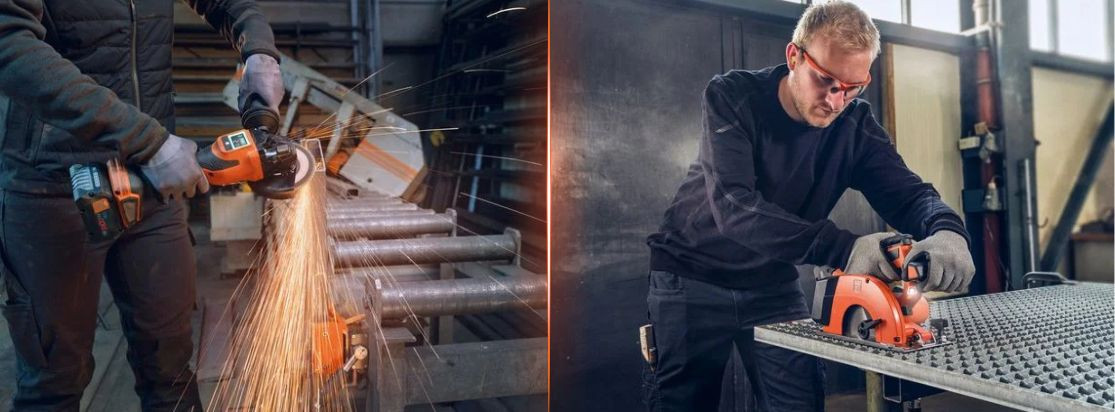
.jpg)
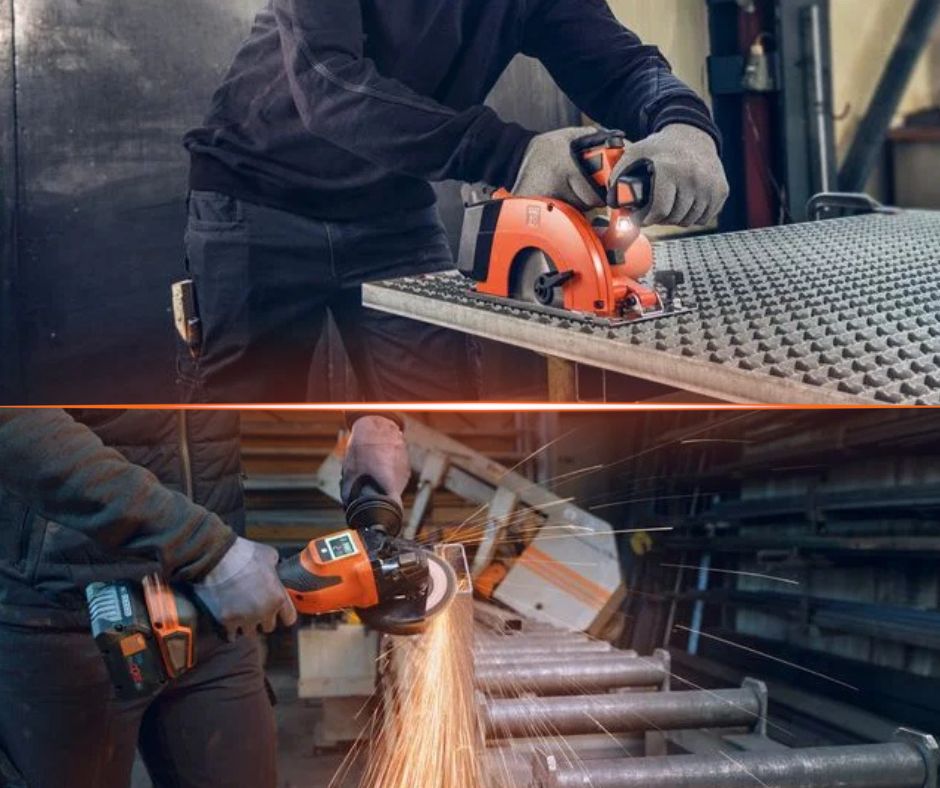
Cutting and finishing metals place high demands on tools. An unsuitable choice or poor settings lead to wasted time, premature equipment wear, and even unsatisfactory results. Given the diversity of steels, thicknesses, and profiles to be shaped, mastering the combination of a circular saw and an angle grinder becomes essential to balance productivity and quality in both industrial and artisanal environments.
Optimizing Metal Machining with Circular Saws
Metal circular saws are the go-to solution when it comes to making straight, precise, and repeatable cuts on tubes, profiles, or plates. Their efficiency relies not only on modern motorization (brushless motor, high-capacity battery) but above all on the relevance of the blade–settings combination. With a circular saw designed for metal and properly adjusted, it is possible to significantly improve efficiency compared to traditional solutions.
Choosing the Ideal Saw Blade for Metal
The core of performance lies in selecting the right cutting disc. Models designed specifically for metal are fundamentally different from those intended for wood: here, heat resistance is the top priority.
- HSS steel (high-speed steel): this material offers strong durability against the high temperatures generated during intensive sawing. It withstands repeated use in both mild steel and stainless steel without failing.
- Tungsten carbide tips: these inserts reinforce the cutting edges to considerably extend their lifespan, even under continuous stress.
The tooth profile plays a major role:
| Metal thickness | Fine teeth | Coarse teeth |
|---|---|---|
| Thin (<2 mm) | Clean cut | Risk of snagging |
| Thick (>2 mm) | Slow cut | Optimal chip evacuation |
To approach thin sheet metal without deformation or excessive burrs, opting for a fine-tooth blade is essential. Conversely, thick materials require wider spacing in order to efficiently evacuate chips.
Taking the time to analyze the exact type of steel to be machined makes it possible to fine-tune the blade selection—an indispensable condition for any successful machining process.
Adjusting Cutting Speed for Efficient Sawing
Success does not depend only on the choice of disc: adjusting the linear speed remains indispensable. Too high a rotation quickly causes overheating; this not only alters the workpiece (localized discoloration, hardened zones) but also irreversibly weakens the cutting edge.
On the other hand, slowing the movement down too much unnecessarily lengthens each pass: the potential gain offered by the latest generations (up to 150 cuts achievable with a single ProCORE 8Ah charge in 2 mm) would then be lost. Finding the right balance maximizes battery life while optimizing every linear meter cut.
Concrete example: thanks to the AMPShare 18V system combined with a suitable blade and lightweight brushless motor (barely 3 kg), it becomes possible to remove material up to 50% faster compared to previous standards—without compromising either the final finish or the achieved geometry.
Carefully adjusting this variable therefore allows:
- To sustainably preserve your tools
- To significantly reduce downtime
- To consistently obtain clean, precise cuts
Flexibility and Precision with Angle Grinders
While circular saws excel at straight or repetitive cuts, they quickly reach their limits when it comes to details or complex shaping. This is where angle grinders come into their own, capable of deburring, rounding, or shaping according to immediate needs.
Their main advantage lies in versatility: these tools can easily access hard-to-reach areas thanks to their compact design, while ensuring constant power through either a high-performance battery or a standard power supply. To achieve professional results, whether grinding or localized shaping, it remains essential to adapt both the disc and the handling technique.
Selection and Use of Abrasive Discs
The right disc literally transforms the user experience:
- Aluminum oxide discs: universally suitable for common alloys; offering a balance between controlled aggressiveness and decent longevity.
- Zirconia discs: the natural choice for stainless steels or particularly tough alloys; the hard grain allows effective removal even under high mechanical stress.
Applying steady, consistent pressure is the key to avoiding unwanted marks or accidental gouges: keeping the tool in constant motion prevents both deep scratches and superficial burns caused by localized overheating.
Attention must also be paid to noise level and debris: wearing protective glasses, a dust mask, and reinforced footwear is mandatory to reduce frequent accidents, especially those caused by sparks and metal fragments when working intensively on hardened steel.
Grinding Techniques for a Perfect Finish
Achieving a flawless finish often requires several graduated steps:
1. Roughing with a coarse-grit abrasive to quickly remove excess material after welding or cutting.
2. Refining progressively with finer grits until all visible marks and weld seams have disappeared.
3. Finishing with light polishing when high aesthetic standards are required (for example, visible stainless steel).
This sequential approach not only promotes visual uniformity but also significantly reduces thermal risks: strict motor speed control prevents the appearance of blue or purple spots, typical of localized overheating—a common issue when speed is not adapted to the hardness of the material.
By alternating crosswise movements rather than strictly linear ones during the final phases, you ensure the absence of persistent micro-scratches, which could eventually weaken corrosion resistance (especially for pieces exposed outdoors).
Ultimately, the methodical use of a high-performance circular saw, complemented by finishing work with a well-equipped angle grinder, now forms a winning combination for all demanding metalworking jobs—whether repetitive industrial cuts or complex custom adjustments.
To guarantee maximum productivity without sacrificing safety or final aesthetics, always choose suitable equipment combined with precise settings according to the specific requirements of the worksite and the metal being processed.
Need personalized technical support or a quick tooling quote? Contact our specialized B2B team: we will guide you toward the optimal solution based on your business needs!
Let’s talk about your project
An industry expert will respond within 24 business hours.
The cutting speed must be adjusted to avoid excessive heating, which can damage the workpiece and weaken the blade’s edge. It is important to find the right balance to maximize battery life and optimize each linear meter cut.
Angle grinders are versatile and ideal for detailed work and complex shapes. They allow deburring, rounding, and shaping with precision thanks to their compact design and consistent power.
Aluminum oxide discs are versatile and suitable for a variety of common alloys. For stainless steels or tough alloys, zirconia discs are preferable due to their efficiency under high mechanical stress.
It is essential to wear protective glasses, a dust mask, and reinforced footwear to protect against debris and the high noise level during grinding.
For a perfect finish, it is recommended to follow a multi-step process: roughing with a coarse-grit abrasive, refining with progressively finer grits, and optionally light polishing for enhanced aesthetics.
Choosing the right equipment helps optimize productivity, ensure safety, and guarantee a satisfactory final appearance. Using suitable tools and precise settings is essential to meet the specific requirements of each job site or type of metal.