
 Français



_11zon.webp)


_14_11zon.webp)
_6_11zon.webp)



Select the Ideal Welding Table
- Nada Iddouch
- 09 Oct, 2025
- Welding equipment
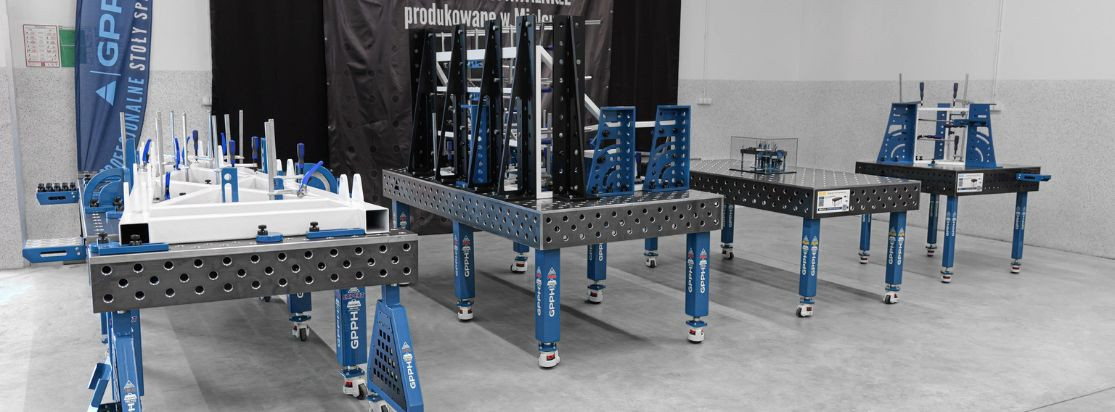
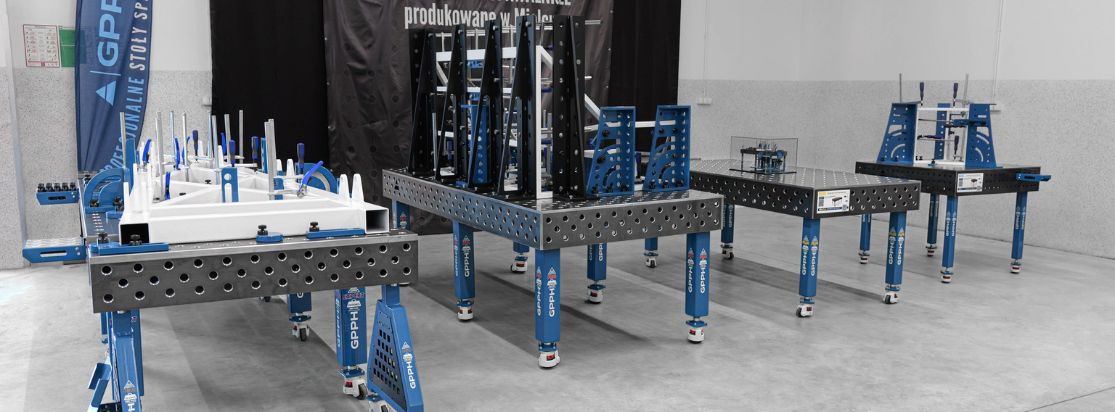
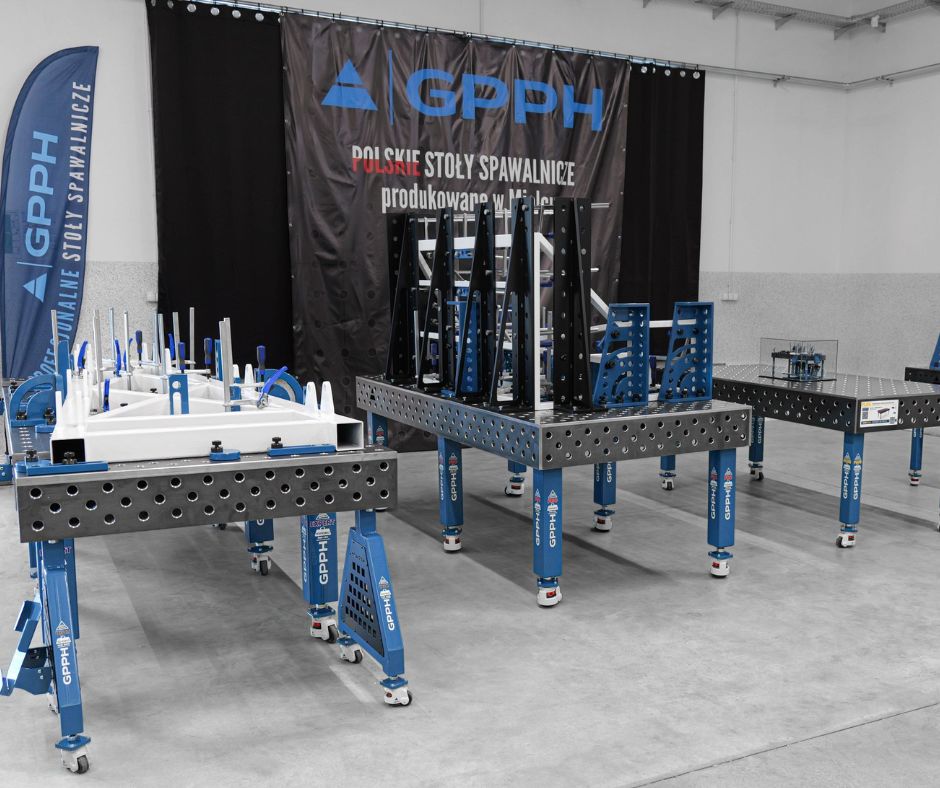
Handling and assembling large steel structures requires specialized equipment that combines stability, precision, and strength. Given the size and weight of the components to be joined, every detail matters when choosing a welding table. The EXPERT, PRO, and PLUS ranges designed by GPPH meet these demands thanks to their solid design, high load capacity, and multiple hole configurations. Adapting the equipment to real workshop conditions provides immediate efficiency gains and ensures optimal safety throughout the industrial process.
Choosing the Ideal Welding Table for Massive Metal Structures
Comparison of EXPERT and PRO Models for Heavy Loads
Assembling heavy components requires a work surface capable of supporting the load without bending or deforming. The EXPERT tables excel in this context with their impressive capacity: each leg supports up to 1000 kg. This exceptional strength comes from a 25 mm thick solid plate combined with a reinforced internal structure, minimizing any deformation under stress. This level of robustness allows workshops specializing in the manufacture of road machinery or large industrial equipment (cranes, hoists) to work continuously with large parts without compromising the geometry or squareness of assemblies.
The PRO series offers a high-performance alternative when the setup requires a balance between extreme strength and maneuverability. With a capacity of up to 700 kg per leg, these tables are perfectly suited for assembling or tack-welding components such as thick plates or load-bearing beams used in construction or heavy industry. The tabletop here is 15 mm thick — a smart compromise that ensures rigidity and effective absorption of mechanical stresses during intensive clamping or multi-pass welding.
Both models feature a robust design in which each structural reinforcement is engineered to minimize vibration during critical operations. On these durable surfaces, securing a jig or immobilizing a component can be done without excessive flex or loss of alignment — essential conditions when coupling multiple tubular sections or thick plates intended for metal infrastructures.
Quick comparison table
| Series | Load Capacity per Leg | Tabletop Thickness | Typical Use |
|---|---|---|---|
| EXPERT | Up to 1000 kg | 25 mm | Heavy machinery and large structures (cranes, hoists…) |
| PRO | Up to 700 kg | 15 mm | Beams, large plates, load-bearing components |
Advantages of the PLUS Series for Demanding Environments
In some situations, the challenge lies less in handling extreme weight and more in finding the right balance between robustness and budget optimization. The PLUS series meets this need precisely by offering a reliable solution for demanding environments that do not necessarily require maximum resistance.
Each leg can support up to 500 kg — more than sufficient for efficiently handling medium-weight metal components commonly used in urban furniture, secondary structures, or certain prefabricated modules. The tabletop features a controlled thickness (12 mm), significantly reducing the risk of warping while offering greater logistical flexibility during transport or storage.
This intermediate positioning allows workshops seeking both performance and cost-efficiency to access robust professional equipment without unnecessarily increasing material investment. For those who prioritize dimensional consistency and aim to ensure precision and stability over time — whether for occasional assembly or intensive daily work — this range represents an excellent compromise.
Optimizing Assembly with GPPH Table Hole Systems
Hole System Configuration for Precise Positioning
The secret behind operational efficiency often lies in the precision of initial positioning before welding begins. This is where GPPH’s engineering expertise truly stands out: each table is equipped, depending on the version, with a precisely machined hole layout that allows fast and secure installation of necessary accessories (quick clamps, sliding stops, etc.).
Three main layouts are available to meet different needs:
– Standard grid: Regular spacing (100 × 100 mm) for instant reference during setup.
– Tight mesh: Dense layout (50 × 50 mm) ideal when every millimeter counts in dimensional accuracy.
– Diagonal pattern: Suitable for complex applications requiring specific angles or offset fixed points.
This diversity gives each operator the flexibility to adapt their process: simultaneously securing multiple heterogeneous components becomes simple thanks to the modularity built directly into the metal tabletop. Even when working with atypical parts — bent tubes, complex polygonal frames — the multiple combinations offered by these precise grids ensure a firm hold without sacrificing speed or repeatability.
The regular hole arrangement eliminates approximation during initial clamping, directly reducing human error and potential waste caused by poor alignment before critical tack welds.
Impact of GPPH Tables on Production Quality and Safety
Beyond the comfort provided by these advanced modular systems, the overall final quality is enhanced: almost total elimination of unwanted play during critical phases (temporary assembly, then final welding) and strict maintenance of nominal dimensions, even in long-run repetitive production.
Consistent use of GPPH tables also improves safety: impeccable mechanical stability under any conditions or load, perfect immobilization that drastically reduces tipping risks, and highly durable materials designed to resist both localized thermal shocks and the repetitive mechanical stresses of clamping, welding, unclamping, and adjustment cycles.
The GPPH product line covers all necessary formats — from compact stations for prototyping to XXL workbenches capable of accommodating several operators around a complex assembly — ensuring immediate availability regardless of project size or industrial application.
Investing in this type of specialized equipment, designed for heavy metalwork, allows every workshop to benefit from reliable tools and sustainably optimize workflows: reduced downtime, productivity gains through faster setups, and confidence in meeting increasingly stringent quality and safety standards.
To choose the GPPH table best suited to your needs — whether for heavy-handling applications (EXPERT or PRO ranges) or for versatility with a controlled budget (PLUS range) — contact our technical team today. You’ll receive personalized advice based on your operational requirements and a detailed quote. Use our contact form or try our full workshop configurator simulation now.
Let’s talk about your project
An industry expert will respond within 24 business hours.
Each leg of the EXPERT series welding tables can support up to 1000 kg, thanks to a solid 25 mm thick tabletop and a reinforced internal structure.
The EXPERT tables have a higher load capacity (up to 1000 kg per leg) and a thicker tabletop (25 mm) compared to the PRO tables, which support up to 700 kg per leg with a 15 mm thick top. The PRO tables offer a good balance between strength and maneuverability.
The PLUS series is ideal for demanding environments that do not require maximum resistance. Each leg can support up to 500 kg, which is sufficient for medium-weight metal components such as those used in urban furniture or secondary structures.
The hole systems allow for quick and precise positioning of essential accessories such as quick clamps and sliding stops. They provide modularity that simplifies securing heterogeneous components.
GPPH tables ensure flawless mechanical stability, reduce the risk of accidental tipping, and are designed to withstand both thermal shocks and mechanical stress. This enhances the final assembly quality and improves operator safety.
The tabletop of the PLUS series tables is 12 mm thick, minimizing warping risks while offering greater logistical flexibility.
To select the right GPPH welding table, consider the nature of your projects (heavy-duty handling or versatility with controlled cost) and consult GPPH’s technical team for personalized advice.