I. The Importance of Ergonomic Welding Tables for Welders’ Well-being
Welding, a vital pillar of modern industry, demands remarkable precision and physical endurance. Professionals in this field often spend long hours in positions that place significant strain on their bodies. This reality makes workplace ergonomics crucial—not only to protect welders’ health but also to optimize their efficiency. Ergonomic welding tables, in particular, play a central role in the effort to improve working conditions.
1. Optimizing Workstations to Reduce Physical Risks
In the welding industry, ergonomics is not just a matter of comfort. It is a key factor in reducing the physical strain that welders face on a daily basis. Ergonomic welding tables promote postures that minimize stress on the spine—a particularly vulnerable area for professionals in this trade. By adjusting equipment to suit the welder’s morphology and specific needs, it is possible to improve both comfort and efficiency.
The impact of such optimization is tangible: fewer chronic pains and a reduced risk of injury. Ergonomic welding tables help welders maintain an upright and comfortable position, avoiding awkward postures that can cause back problems. This type of workstation reorganization directly reduces physical strain, making welding less exhausting and much safer.
2. Custom Dimensions and Features Designed for Optimal Comfort
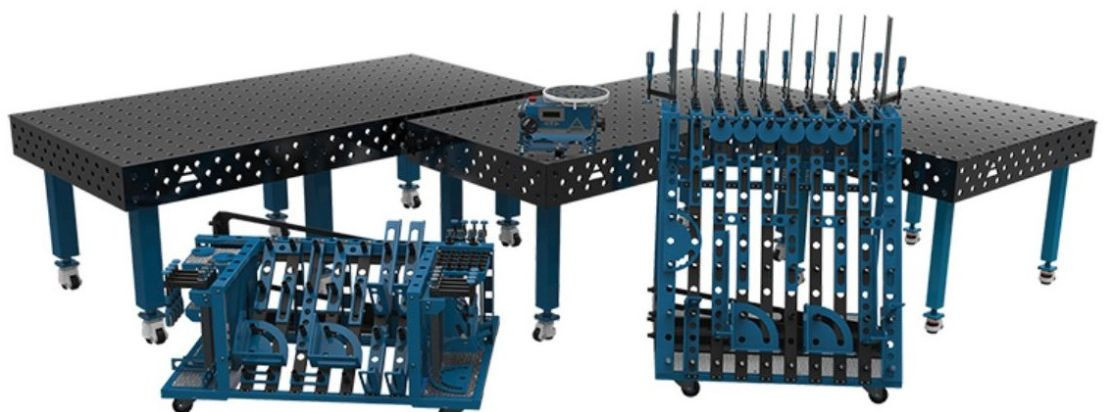
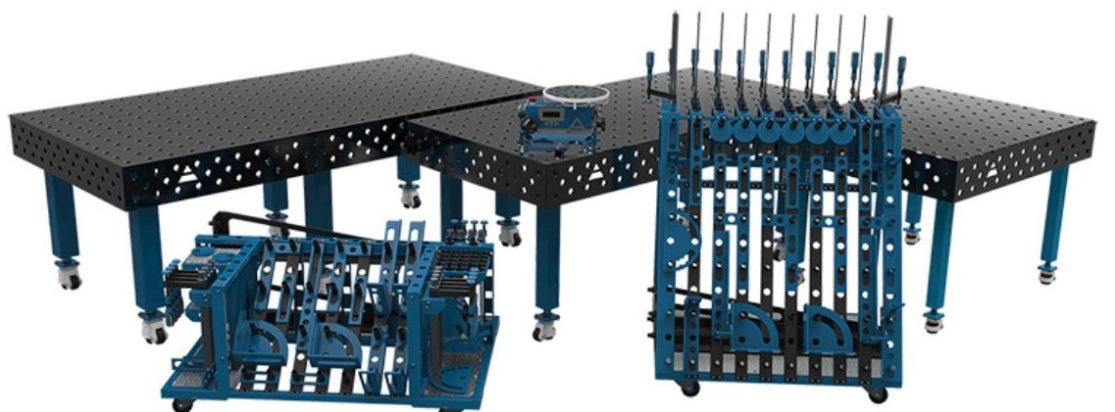
Welding tables come in a wide range of sizes and thicknesses, designed to suit every production environment, from small workshops to industrial sites. A well-chosen size ensures excellent stability and allows precise positioning of the parts to be welded—both of which are essential for safe and flawless work. Many modular options—such as fixed legs or wheeled legs—enable flexible organization of the workspace according to the user’s specific needs.
Available dimensions generally range from 1000×600 mm to 3000×1480 mm, offering a broad variety of possibilities for efficient work regardless of the size of the parts being handled. A well-sized table not only reduces errors caused by inaccurate movements but also improves the operator’s posture—a decisive factor for safety and work quality. Tabletop thickness is another key consideration: EXPERT models (25 mm) or PRO models (15 mm) are designed for heavy-duty and intensive use, while thinner versions like SMART (12 mm) or ECO (8 mm) are better suited for precision tasks or compact spaces. This variety allows each welder to configure their station according to their technical needs.
Furthermore, GPPH tables offer the choice between footpads for maximum stability or casters to increase mobility in the workshop. This kind of equipment allows quick adaptation of the workspace to ever-changing projects or constraints. By optimizing both ergonomics and flexibility, these solutions enhance user comfort and overall productivity in the welding workshop.
II. Welding Accessories: Key Tools for Enhanced Performance and Safety
1. Equipment Designed to Optimize Precision and Comfort
In a welding shop, specialized accessories such as squares, positioning stops, clamping pins, and multifunctional supports play a critical role in workstation optimization. These tools securely hold parts in place during operations, minimizing unintentional movement and supporting a more natural working posture. This added stability reduces muscle strain and promotes more precise welding, while also improving operator safety.
The tools offered by GPPH are known for their robustness and smart design. Their ergonomic construction makes it easier to position the components being assembled, while reducing the physical effort required. With these accessories, welders can work more efficiently, keeping parts perfectly aligned even when dealing with heavy or complex elements. The result is a noticeable improvement in weld quality and a reduction in errors, all while minimizing risks related to awkward postures or repetitive movements.
The GPPH range includes a variety of solutions adaptable to all needs: multifunction blocks, interchangeable clamping tips, modular devices… These tools meet the diverse tasks encountered in workshops, from simple welds to more technical assemblies. By investing in this type of equipment, professionals benefit from a more ergonomic work environment, enhanced productivity, and a higher level of safety—essential factors for optimizing daily performance.
2. Investing in Ergonomic Solutions for Better Work Quality
Integrating high-quality tools and accessories into a welding workshop is a strategic investment in welders’ health and productivity. By optimizing workstation ergonomics, proper posture is encouraged, injury risks are reduced, and weld quality is improved. Ergonomic solutions, such as those offered by GPPH, help create a work environment where safety and efficiency come first—ensuring a tangible return on investment in terms of health and performance.
Ergonomics is a crucial element of any workstation, and it is even more important in welding. A well-designed workspace impacts not only comfort, but also the health and effectiveness of welders. GPPH offers comprehensive solutions that minimize injury risk and boost productivity. With tables, tools, supports, spacers, and filtration and ventilation systems, welders can work in safe and comfortable conditions—resulting in better work quality and less fatigue.
By investing in an ergonomic workstation with GPPH products, you're investing in your employees’ health and the quality of your welds. Our solutions help create more efficient workstations, promoting comfortable posture, reducing injury risk, and improving overall productivity. With these products, welders can focus on their craft without worrying about inadequate working conditions.
In conclusion, ergonomic welding tables and well-designed accessories represent much more than simple comfort for welders. They are an essential component of a safe and efficient work environment—ensuring not only the health of professionals but also the quality and precision of completed welds. Investing in ergonomic solutions is therefore a smart choice for any company committed to employee performance and well-being.

 Français



_11zon.webp)


_14_11zon.webp)
_6_11zon.webp)