
 Français



_11zon.webp)


_14_11zon.webp)
_6_11zon.webp)



Welding Gloves: Essential Daily Protection
- LAURENT DAROLT
- 27 Oct, 2026
- Welding safety
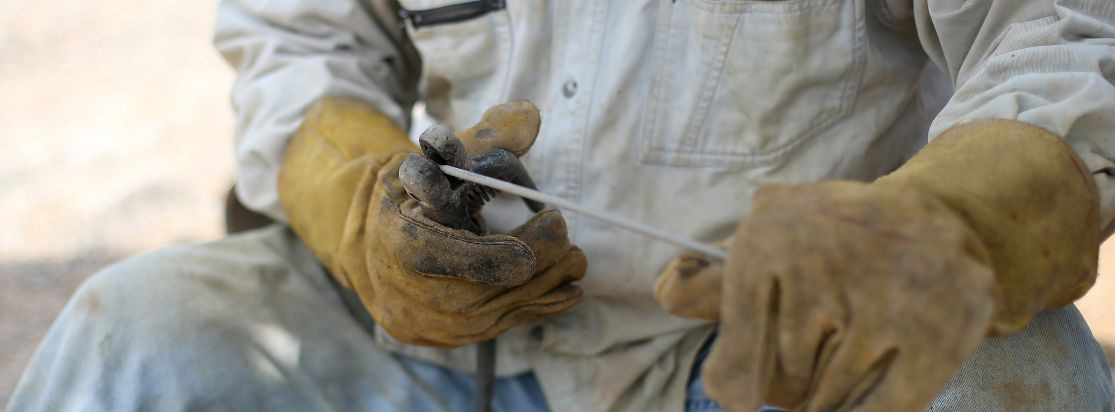
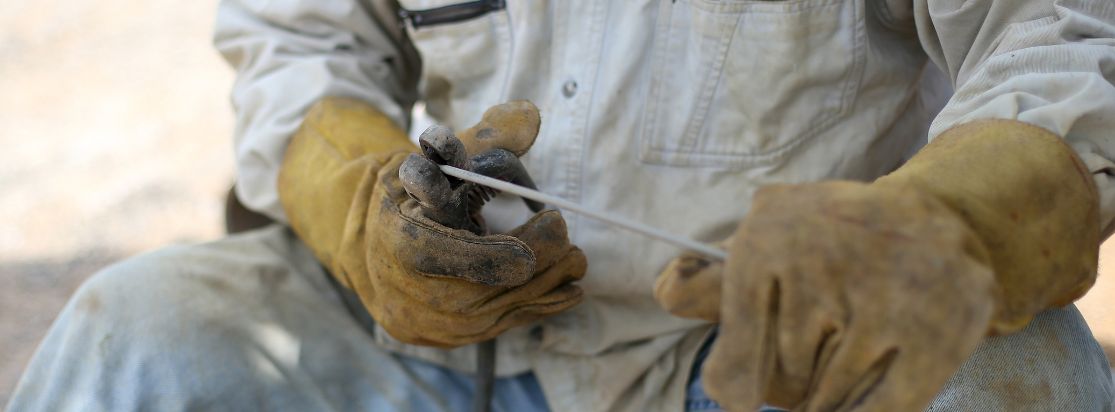
Welding gloves provide an essential protective barrier to safeguard the hands and wrists against high temperatures, molten metal spatter, brief flame exposure, ultraviolet and infrared radiation from the welding arc, and mechanical hazards. Choosing the right pair depends on the welding process used, heat intensity, amount of spatter, required dexterity, hand size, and cuff length. Welding gloves must comply with applicable standards, fit the operator's hand properly, and be visually inspected before each use. This personal protective equipment (PPE) complements collective protective measures and the welder's other protective equipment. However, welding gloves are not designed for directly handling hot metal workpieces immediately after welding (which requires the use of suitable tongs) and do not automatically provide electrical insulation against the risk of electric shock.
Key Takeaways
- Comprehensive thermal and radiation protection: Welding gloves provide a protective barrier against thermal burns, molten metal droplets, hot slag, and harmful radiation from the welding arc (ultraviolet and infrared).
- Protection against mechanical hazards: They protect the skin against cuts, abrasion, punctures, and injuries caused during material preparation, grinding, or handling of workpieces.
- Standardized classification under EN 12477: This standard distinguishes between Type A (high thermal and mechanical protection) and Type B (high dexterity for precision work).
- Systematic inspection before use: Visually inspecting gloves to ensure they are dry, flexible, and free from holes helps maintain their protective performance and safety in the workplace.
- Strict limitations of use: Welding gloves do not replace suitable tongs for handling hot metal and do not eliminate the need for specific electrical insulating protection (EN 60903 standard).
Why Should You Wear Welding Gloves?
Occupational risk assessment at welding and assembly workstations requires a thorough analysis of all potential hazards to workers' health. In accordance with Article R. 4534-131 of the French Labour Code and the prevention guidelines established by INRS, employers must assess all physical hazards associated with the workstation, identify situations involving direct exposure, and demonstrate the need to provide suitable personal protective equipment.
Protection Against Heat, Spatter and Arc Radiation
Welding gloves provide a protective barrier against thermal hazards, sparks and radiation emitted by the electric arc, helping to prevent skin injuries. The welding arc generates invisible ultraviolet (UV) and infrared (IR) radiation, which can be particularly harmful to exposed or perspiration-covered skin. UV exposure causes skin burns similar to severe sunburn (erythema), while infrared radiation produces intense heat. In addition, molten metal droplets and slag (the protective glass-like layer formed over the weld) can cause deep burns upon direct contact. Wet welding gloves or gloves saturated with perspiration lose a significant portion of their thermal insulation properties. It is important to remember that welding gloves alone are not sufficient for directly handling freshly welded metal parts: handling extremely hot metals requires the use of suitable tongs or gripping tools. For more information about workplace safety requirements, consult our guide on welder safety and risk prevention.
Reducing Cuts and Abrasion During Material Handling
Welding gloves also protect the hands against mechanical injuries that may occur during metal handling, preparation and finishing operations. Before and after welding, operators frequently handle steel, stainless steel and aluminium components with sharp edges, cutting burrs or rough, ground surfaces. These operations directly expose the skin to cuts, abrasion and puncture injuries. The mechanical resistance of welding glove materials significantly reduces the risk of minor to serious physical injuries in workshops and on construction sites. To better understand the legal framework and organisation of workplace protective measures, refer to our overview of the importance of personal protective equipment.
The effectiveness of this mechanical and thermal protection depends on compliance with strict assessment standards applicable to manufacturers.
Understanding the EN 12477 Standard
European standards governing personal protective equipment establish safety performance requirements verified through laboratory testing. They enable buyers and safety managers to structure the equipment selection process, compare equipment performance objectively, and determine the appropriate level of protection based on workplace risk assessments.
Differences Between Type A and Type B Welding Gloves
The EN 12477 standard defines Type A and Type B welding gloves according to the balance between thermal and mechanical protection and the level of dexterity provided. Their main characteristics are summarised below:
- Type A: Provides higher thermal and mechanical protection but offers lower dexterity. It is generally recommended for welding processes involving intense heat and significant amounts of spatter.
- Type B: Provides greater dexterity for precision work but has lower minimum thermal and mechanical protection requirements.
This classification should not be interpreted as an absolute rule that simply assigns TIG welding to one category and MIG/MAG or MMA welding to another. The final choice must be based on an actual assessment of workplace hazards. All certified welding gloves must bear the CE marking, and users must consult the manufacturer's instructions to understand the exact scope and limitations of their protective performance.
The Role of EN 407, EN 388 and EN ISO 21420 Standards
The EN 12477 standard combines general safety, mechanical resistance and thermal protection requirements defined by several specialised standards. It is based on three fundamental standards:
- EN ISO 21420 (formerly EN 420): Defines general requirements for ergonomics, material safety, fit and sizing.
- EN 388: Evaluates resistance to mechanical hazards (abrasion, blade cuts, tearing and punctures).
- EN 407: Assesses protection against heat and flames (limited flame spread, contact heat, convective heat, radiant heat and small splashes of molten metal).
| Standard Reference | Assessment / Targeted Protection | Inspection & Benefits for the User |
|---|---|---|
| EN ISO 21420 | Ergonomics, material safety and sizing | Verification of comfort and proper fit |
| EN 388 | Mechanical hazards (abrasion, cuts and punctures) | Prevention of physical injuries |
| EN 407 | Thermal hazards (flames, heat and molten metal spatter) | Protection against welding-related burns |
| EN 12477 | Welding-specific standard combining the above requirements | Classification into Type A (higher protection) or Type B (greater dexterity) |
Gloves certified to EN 12477 are not electrically insulating gloves within the meaning of EN 60903. The presence of moisture, dirt or perspiration inside the glove significantly reduces its electrical resistance and increases the risk of electric shock when changing electrodes or handling the welding torch.
Understanding these standard markings directly helps operators select suitable gloves and maintain their equipment on a daily basis.
How to Choose and Maintain Welding Gloves
Careful purchasing decisions and regular equipment inspections help identify welders' specific needs, monitor premature wear and recommend appropriate preventive measures based on actual working conditions.
Choosing the Right Gloves for TIG, MIG/MAG or MMA Welding
The welding process used directly determines the level of tactile sensitivity and thermal resistance required to protect the hands.
- TIG Welding (Tungsten Inert Gas): This process requires excellent precision and dexterity to handle the filler rod and maintain a very short welding arc. Welders generally prefer lightweight Type B gloves made from soft, flexible leather.
- MIG/MAG and MMA Welding (Shielded Metal Arc Welding): These processes generate significant radiant heat, hot slag and substantial amounts of molten metal spatter. They require enhanced protection and thicker cuffs, generally corresponding to Type A gloves.
The manufacturer's instructions and workplace-specific risk assessment must always take precedence. To explore suitable protective equipment, browse our selection of welding gloves for different welding processes. The materials used in glove manufacturing also play a key role in their durability and protective performance. Find out more about the different types of leather used for welding gloves.
Checking Glove Size, Cuff Length and Condition Before Each Use
Visual and physical inspection before wearing welding gloves is essential to verify that they remain in suitable condition to protect against occupational hazards. In accordance with workplace safety guidelines (INRS and the French Labour Code), gloves must be immediately removed from service if any of the following defects are detected:
- Holes, tears or loose and damaged stitching.
- Material that has become burnt, hardened or brittle due to repeated heat exposure.
- Leather that has become excessively thin through abrasion or shows signs of moisture.
- Torn internal lining or cuffs that are too short to adequately cover the wrist and lower forearm.
There is no universally applicable service life or washing method for all welding gloves because of the wide variety of materials and working conditions involved. Article R. 4323-95 of the French Labour Code states that employers must provide suitable personal protective equipment free of charge and ensure that it is maintained in proper working condition.
This inspection routine forms an integral part of the operator's overall responsibility for workplace safety before striking the welding arc.
Conclusion
Protective welding gloves are an essential part of a comprehensive workplace risk prevention strategy and must be used alongside appropriate collective protective measures.
Key Points to Remember Before Welding
Wearing compliant and carefully inspected welding gloves is an essential prerequisite before starting any welding or metal joining operation. This protective equipment helps protect against thermal hazards, mechanical injuries and radiation emitted by the electric welding arc. Operators must ensure that their gloves are completely dry, free from holes and properly fitted to their hands. They must also remember that suitable tools, such as tongs or gripping pliers, are required to handle hot metal workpieces safely.
Choosing the Right Protective Equipment
Welding gloves should always be selected according to actual working conditions and the welding process being performed. Professional welders and metalworkers should prioritise certified protective equipment that provides an appropriate balance between thermal protection, mechanical resistance and freedom of movement.
Explore our selection of welding gloves for different welding processes