
 Français



_11zon.webp)


_14_11zon.webp)
_6_11zon.webp)



Welding Head Caps: Standards and Materials Guide
- Nada Iddouch
- 29 Jan, 2026
- Welding safety
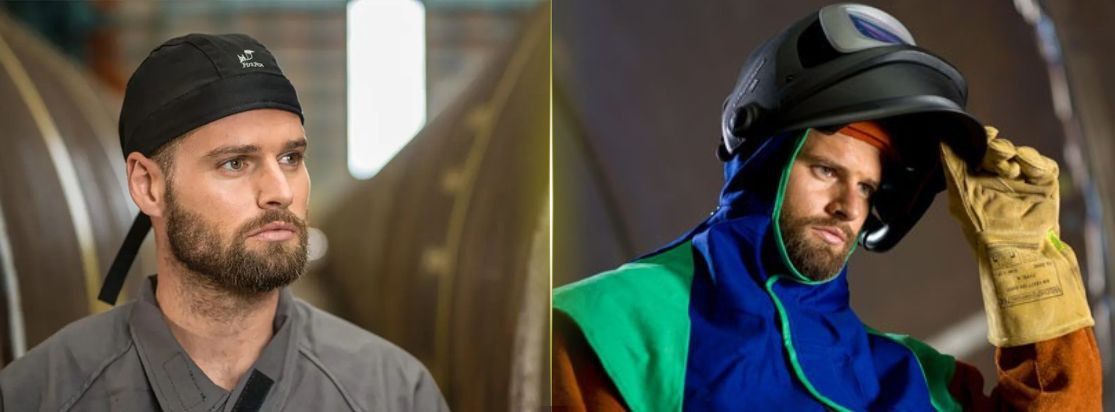
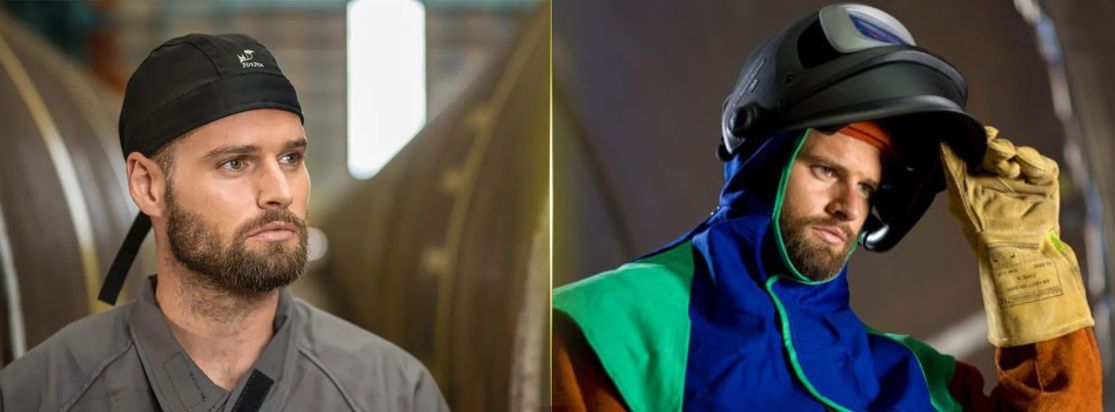

Welding exposes operators to multiple hazards: molten metal splashes, sparks, and intense heat. The head proves particularly vulnerable during these operations. Without adequate protection, the scalp, neck, or ears can suffer burns or injuries. A wide range of equipment has therefore been developed to meet the diverse needs found on worksites and in workshops.
Understanding the different types of protection for welders
Welder safety depends on equipment adapted to each situation. Several product families provide this protection while ensuring comfort and practicality.
Welding caps: effective head protection
The welding cap is one of the essential accessories worn under the helmet. Its primary role is to protect the hair and scalp from incandescent particles released during metalworking. Thanks to an extended neck flap, it also shields this sensitive area from splashes.
Available models come in various colors (blue, orange, or assorted patterns), allowing users to match their style to the professional environment or personal preferences. Some welders choose a more customized look through specific prints.
The cap offers a precise fit thanks to multiple sizes ranging from 56 to 62 cm, allowing it to conform perfectly to head shape without compromising helmet wear. For improved comfort, all models feature an absorbent headband that effectively reduces the feeling of moisture caused by perspiration under heat.
Its design also ensures great versatility of use. The cap can be positioned laterally to cover one ear during angled work or when the operator is lying on their side. This flexibility guarantees optimal adaptation to the various constraints encountered on site.
Regarding fire protection, only models made from flame-retardant treated cotton meet the requirements of the EN 11611 Class 1 standard (see below). Printed versions are also available, but they do not offer the same level of safety, as they benefit neither from flame-retardant treatment nor from official certification.
Doo-rags and beanies: modern and practical alternatives
The ongoing pursuit of comfort has led to innovative alternatives such as doo-rags or bandanas designed for welding. These modern accessories combine functionality and simplicity: made from dense flame-retardant cotton (305 g/m²), they effectively protect against heat and metal splashes while remaining lightweight to wear.
The one-size-fits-all design adjusts easily thanks to a rear tie system: a single model therefore fits all head circumferences from 46 to 68 cm. This solution simplifies purchasing and, above all, daily use when several operators share the same equipment within a collective workshop.
Doo-rags feature an absorbent front band designed to quickly wick away sweat during prolonged sessions under a closed helmet. This characteristic significantly enhances comfort throughout extended operations.
There are two main categories within these products: those made entirely from flame-retardant fabric (EN 11611 Class 1 certified) provide reliable thermal shielding; those decorated with printed designs do not always have the fire-resistant treatment required to handle all types of heavy-duty work.
Alongside doo-rags, some professionals still prefer the simple beanie: made without irritating seams or unnecessary embellishments, it naturally conforms to the shape of the head under any type of helmet. Here again, only certified flame-retardant cotton guarantees sufficient protection against all thermal risks encountered in industrial welding.
Full hood: advanced solution for increased risks
To go further in protection—especially during operations that heavily expose the neck and shoulders—certain tasks require full coverage with a complete hood that encloses not only the entire head but also the upper part of the torso. This type of equipment sometimes extends to the shoulders thanks to an extra-long version, preventing any accidental infiltration of hot droplets between the collar and the main garment.
Manufactured according to the same strict criteria as other textile protections (thick flame-retardant cotton), these hoods are available in several sizes (L/XL) as well as seasonal variants lined with internal insulating materials suitable for cold or winter environments. Fastening is generally achieved via strategically placed hook-and-loop strips that fit snugly around the chin and neck without pressure points or excessive discomfort during repetitive movements associated with intensive manual work.
Another advantage lies in their quick-attachment system: connected directly to the main helmet via flame-retardant-treated Velcro, the hood can be removed simultaneously with the helmet. This design limits repetitive handling that could lead to soiling or accidental contamination between intensive hot-work sessions.
In the most demanding situations, where maximum resistance is imperative—particularly during heavy industrial welding—only a full-grain leather version is truly suitable. Heavier, it nevertheless offers near-nonflammable protection, even after repeated exposure to significant incandescent splashes, typical of intensive operations on thick steels or special alloys requiring a powerful and prolonged electric arc.
Standards and certifications: ensuring welder safety
Beyond aesthetic or ergonomic considerations, equipment selection requires a rigorous analysis of applicable standards to avoid any non-compliance that could endanger operators and nearby colleagues during sensitive operations on complex industrial sites.
Importance of the EN 11611 standard for welding equipment
European regulations require that any garment used during welding activities strictly comply with the requirements of the EN 11611 standard, specifically dedicated to personal protective equipment (PPE) in this particularly demanding sector.
This standard precisely defines minimum performance thresholds in terms of resistance to direct flame, seam integrity, radiant heat propagation, and localized impacts of molten metal droplets on the textile substrate.
The certification is structured around two distinct classes:
- Class 1 (standard use): intended for common situations involving moderate exposure to splashes and thermal radiation. Materials are validated after withstanding at least fifteen consecutive molten metal droplets without ignition.
- Class 2 (intensive use): recommended in environments where high concentrations of hot splashes may create areas of weakening. Validation requires resistance to twenty-five consecutive localized impacts or more during tests conducted in accredited laboratories.
This classification applies to full protective garments as well as localized equipment such as caps, welding caps, doo-rags, full hoods, and reinforced leather variants.
Materials and certifications: choosing the right equipment
The primary material directly determines the overall performance of the equipment against the main risks encountered during technical operations involving powerful electric arcs and high levels of thermal intensity.
Flame-retardant treated cotton
- The most commonly used material in the manufacture of traditional welding caps, doo-rags, simple beanies, and modern textile hoods.
- Surface weight generally standardized around 305 g/m², offering a good balance between protection and comfort.
- EN 11611 Class 1 certification achieved when the flame-retardant treatment remains effective after a maximum of five domestic wash cycles.
Heavy split leather
- Reserved for applications requiring extreme and durable resistance, particularly in intensive industrial environments.
- Significantly higher surface weight, close to or exceeding 520 g/m², ensuring enhanced protection against incandescent splashes.
- EN 11611 Class 2 approval is possible only with a combination of high-quality leather as the outer layer and a specific inner lining made of antistatic, flame-retardant cotton.
A summary table can then be used to quickly visualize the match between the selected material, the type of use, and the desired level of safety.
| Type | Main material | Certification | Recommended use |
|---|---|---|---|
| Cap | Flame-retardant cotton | EN 11611 – Class 1 | General welding |
| Doo-rag | Flame-retardant cotton | EN 11611 – Class 1 | Light to moderate welding |
| Beanie | Flame-retardant cotton | EN 11611 – Class 1 | Standard under-helmet use |
| Textile hood | Heavy flame-retardant cotton | EN 11611 – Class 1 | Head, neck, and shoulder protection |
| Leather hood | Split leather + cotton | EN 11611 – Class 2 | Heavy-duty or prolonged welding |
Finally, it should be noted that beyond five washing cycles, the flame-retardant properties of standard textiles begin to decrease significantly. Regular replacement of textile equipment therefore becomes essential to avoid any critical loss of performance, especially when the rate of use remains high week after week.
Practical summary & next steps
In view of the increasing demands of modern industry and ever-stricter European regulations, the systematic adoption of certified head protection equipment is essential from the very first operation involving an open electric arc, molten metal splashes, or prolonged exposure to radiant heat.
A rigorous analysis of materials, their composition, and their actual durability—particularly with regard to the expected washing frequency—helps ensure a sound investment while providing reliable and long-lasting protection in the field.
To benefit from personalized advice tailored to your professional context or to obtain an accurate quotation incorporating the latest regulatory developments in the field of welding PPE (innovative technical caps, reinforced textiles, selected leathers), it is recommended to contact a specialized distributor.
To do so, simply complete the contact form below; we will get back to you within 24 hours.
Let’s talk about your project
An industry expert will respond within 24 business hours.
Welders’ heads are vulnerable to molten metal splashes, sparks, and intense heat. Without adequate protection, the scalp, neck, and ears can suffer burns or injuries.
Head protection for welders includes welding caps, doo-rags, beanies, and full hoods. Each type offers different levels of protection and comfort depending on the specific welding tasks.
A welding cap is an accessory worn under the helmet to protect the hair and scalp from incandescent particles. It is often made of flame-retardant treated cotton and features an extended flap to protect the neck.
Doo-rags and beanies are modern alternatives to welding caps. Doo-rags are adjustable thanks to a rear tie system and are often made of flame-retardant cotton. Beanies, on the other hand, are simple and naturally conform to the shape of the head.
Welding protective equipment must comply with the EN 11611 standard, which defines minimum requirements for resistance to flame, molten metal splashes, and radiant heat. This standard is divided into two classes depending on the required level of protection.
The choice of equipment depends on the type of welding performed, the level of protection required, and the materials used. It is important to check certifications such as EN 11611 and ensure that the materials are flame-retardant and suitable for the intended use.