
 Français



_11zon.webp)


_14_11zon.webp)
_6_11zon.webp)



Laser Welding: Why PAPR Respiratory Protection Is a Must
- Nada Iddouch
- 16 Dec, 2025
- Laser welding
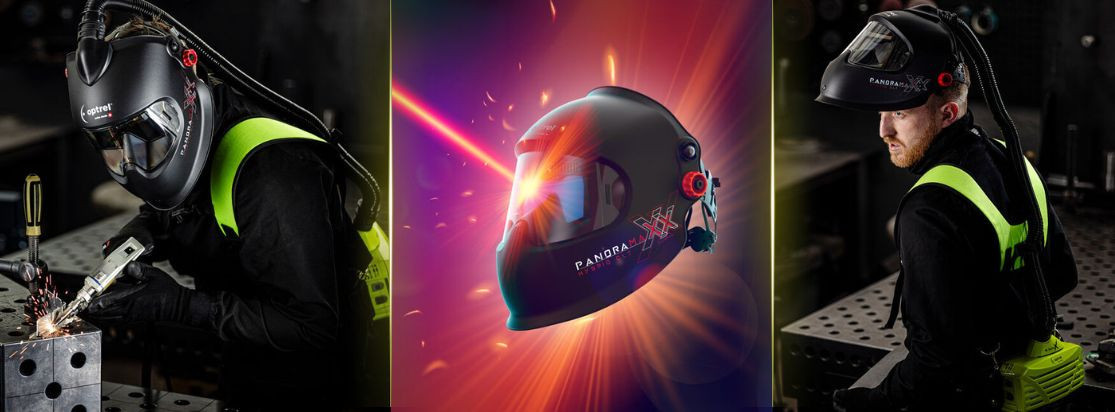
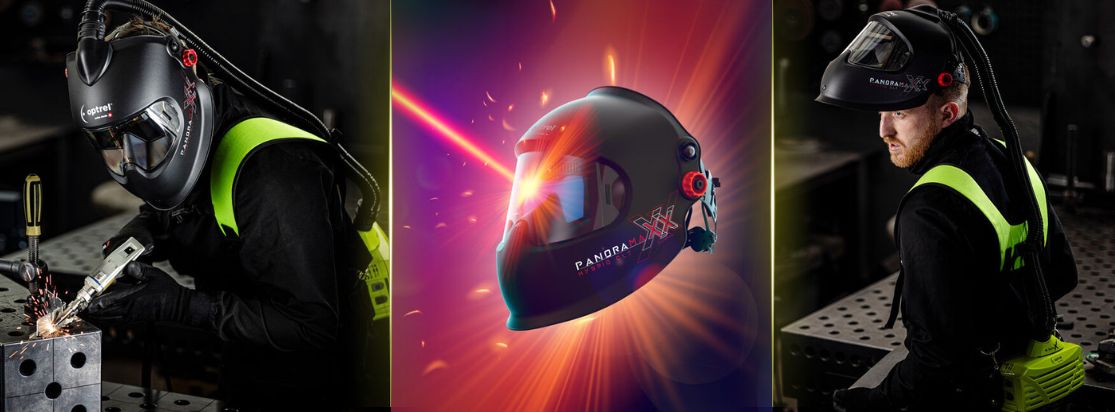
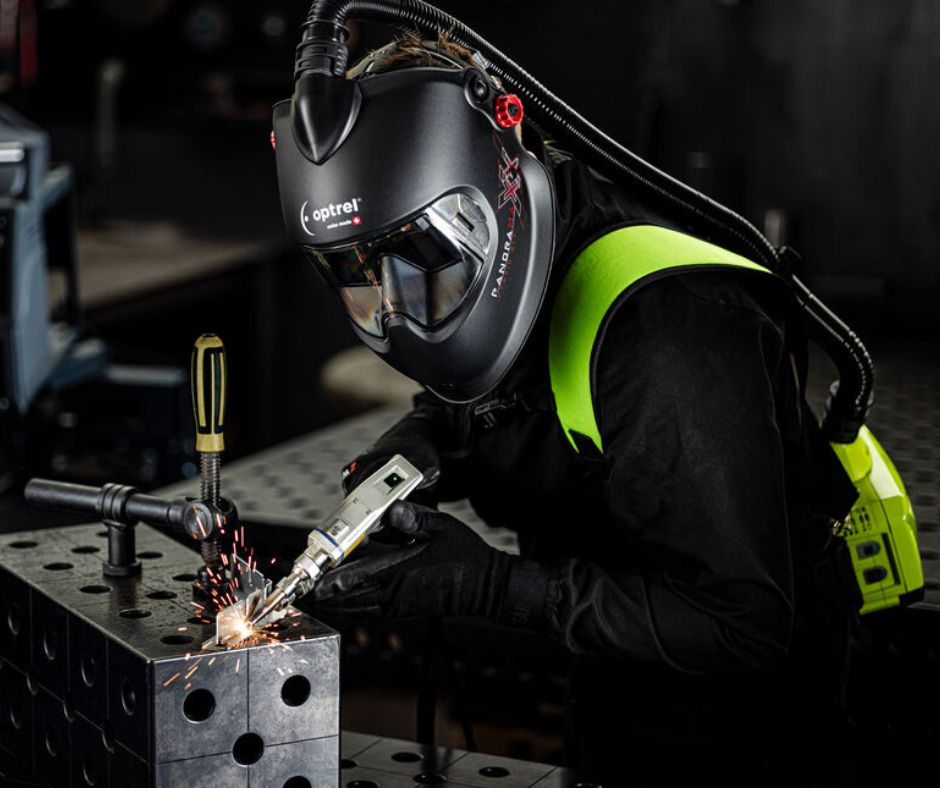
Laser welding stands out for its speed and precision, while maintaining controlled temperatures in the treated areas. However, behind this cutting-edge technology lies a danger far less visible than the thick fumes of conventional processes: ultrafine particulate emissions. This imperceptible pollution poses a major threat to operators’ health, particularly in confined or poorly ventilated spaces where exposure can quickly accumulate.
Understanding the Invisible Risks of Laser Welding
Welding Fumes: A Silent but Very Real Threat
The absence of a dense plume of smoke during laser joining may give the illusion of a healthy environment. In reality, the intense heat generated by the beam instantly vaporizes a fraction of the processed metal. This vaporization creates a cloud of microscopic particles, often smaller than one micron. Their extremely small size allows them to pass easily through the body’s natural respiratory defenses, penetrating deep into the pulmonary alveoli.
Coarser dust particles are generally trapped by mucus or expelled through coughing. By contrast, metallic aerosols penetrate deep into the body without being filtered and accumulate over time. Repeated exposure can cause lasting lung damage, trigger chronic inflammation, and lead to severe respiratory disorders.
Toxic Components and Health Consequences
The particles generated during laser welding are not limited to inert metallic residue. The resulting cloud contains a variety of harmful “chemical agents”: oxides of manganese, zinc, or aluminum are regularly among the contaminants detected in the ambient air of workshops using this technology.
An additional risk arises when working on stainless steel: hexavalent chromium (Cr(VI)), recognized for its high toxicity, is easily found in fumes produced by laser fusion. Continuous or prolonged inhalation of these substances can lead to a wide range of occupational diseases:
- Acute or chronic pneumonitis
- “Metal fume fever” with flu-like symptoms
- Occupational asthma and COPD (chronic obstructive pulmonary disease)
- Irreversible damage to the central nervous system
- Development of cancers linked to inhalation of toxic metallic compounds
Although local exhaust ventilation remains essential to limit the overall concentration of airborne pollutants, it is not always sufficient when space is limited or when multiple operations are carried out simultaneously. In this context, wearing high-performance personal protective equipment becomes unavoidable to ensure an effective barrier against these invisible hazards.
The Importance of PAPR Systems for Optimal Protection
Advantages of PAPR Systems Compared with Standard Masks
Given the extreme fineness of the particles released during laser welding, conventional disposable masks quickly show their limitations: they struggle to effectively retain submicron aerosols and become uncomfortable after just a few hours of continuous use.
PAPR (Powered Air-Purifying Respirator) systems represent a decisive step forward in personal safety thanks to several major innovations:
- Certified HEPA filtration: each unit integrates a high-efficiency filter tested to international standards (P100/HEPA), capable of capturing 99.97% of airborne particles down to 0.3 micrometers.
- Motorized airflow: a built-in motor actively draws in ambient air before delivering it to the welder’s visor or hood.
- Constant positive pressure maintenance: this continuous airflow creates slight overpressure around the face, preventing any accidental ingress of contaminated air even if the facial seal shifts slightly during work.
- Verified system integrity: unlike passive solutions that rely solely on proper manual facial fit, every component—including the battery—is tested as a complete unit to ensure consistent performance and reliability throughout use.
In practice, this means that a momentary leak around the mask does not immediately expose the operator to pollutants present in the surrounding environment: filtered air always flows toward the user rather than the other way around.
Enhanced Comfort and Safety with PAPR Systems
Beyond their superior fine-filtration performance, PAPR systems provide a practical response to the ergonomic challenges faced by professionals who weld for several consecutive hours:
- Drastic reduction in breathing fatigue: unlike non-powered masks that impose constant resistance with every inhalation and exhalation—often leading to exhaustion—the integrated motor significantly облегчates breathing, resulting in less shortness of breath even after a full day under a helmet.
- Active cooling under the visor: the constant supply of fresh air significantly limits excessive heat buildup around the face as well as internal humidity levels; it also effectively prevents fogging on optical lenses during precision work.
- Sustained focus during detailed tasks: thanks to improved thermal comfort and the near absence of internal breathing resistance (passive filters), it becomes possible to remain focused for longer periods without discomfort or physiological stress related to perceived oxygen deprivation.
To ensure all these performance benefits in real industrial environments—where every detail matters—only certain official certifications guarantee rigorous reliability and compliance.
NIOSH Certification: An Essential Quality Assurance
Recognition granted by the National Institute for Occupational Safety and Health (NIOSH) clearly distinguishes systems that have successfully met the required independent testing criteria:
| Criterion | NIOSH Requirement |
|---|---|
| Filtration efficiency | ≥ 99.97% for particles ≥ 0.3 µm (HEPA / P100 equivalent standard) |
| System integrity | The complete unit (mask, blower, filters, battery) is tested as an inseparable system |
| Integrated alarms | Mandatory alerts for low battery and insufficient airflow |
This certification process notably requires:
– Independent verification confirming that all components—including the filter—strictly meet the stated performance levels;
– Monitored operation through dedicated alarms that immediately signal any potential malfunction (insufficient airflow, motor blockage, low battery), ensuring rapid response to critical incidents;
– Overall certification guaranteeing consistency between the powered blower unit, filters, helmet–hood fit, and batteries used across various professional configurations;
Integrated Optrel Solutions for Maximum Safety
Some specialized manufacturers now combine very high-level respiratory protection with eye protection specifically adapted to the light spectrum emitted during industrial laser welding. A flagship example can be found at optrel, with its NIOSH-approved integrated systems such as:
- optrel e3000X PAPR
- Compatible with a wide range of conventional welding helmets
- Optimized integration with dedicated “laser safety” protection
- panoramaxx laser pure air
- The only NIOSH-approved model designed exclusively for the requirements of laser welding
- Simultaneous protection of vision and respiratory pathways, without compromising mobility or visibility
Choosing this type of comprehensive equipment not only ensures the visual clarity essential for high-precision welding, but also guarantees continuous compliance with international health and safety standards now required across all responsible industries.
The invisible hazards associated with laser welding therefore call for heightened vigilance, both in collective and individual ventilation measures. To effectively reduce acute and chronic pulmonary risks linked to toxic submicron emissions generated by metals processed under high-power optical beams, the systematic adoption of an approved PAPR solution has become an essential benchmark in any modern workshop seeking to combine optimal productivity with the long-term protection of its specialized teams.
To learn how to concretely enhance your personal safety in the face of these current industrial challenges, explore our dedicated e3000X PAPR and panoramaxx laser pure air ranges today. Benefit immediately from personalized advice and specialized support tailored to your specific operational needs.
Let’s talk about your project
An industry expert will respond within 24 business hours.
Laser welding is a welding technique that uses a laser beam to join materials. It offers advantages such as high speed, precision, and controlled temperatures in the treated areas.
Laser welding generates ultrafine particles that can penetrate deep into the lungs, leading to health risks such as pneumonitis, occupational asthma, and even cancers caused by inhalation of toxic metallic compounds.
These particles are often smaller than one micron, allowing them to bypass the body’s natural respiratory defenses and accumulate in the lungs, causing long-term damage.
Hexavalent chromium (Cr(VI)) is a toxic compound commonly present in fumes from stainless steel welding. Prolonged inhalation can cause serious illnesses, including cancer.
PAPR systems provide certified HEPA filtration, powered airflow, and maintain positive pressure, ensuring superior protection against submicron particles compared to standard masks.
They reduce breathing fatigue, provide active cooling under the visor, and allow sustained focus during precision tasks, improving operator comfort and safety.
NIOSH certification ensures that PAPR systems meet strict criteria for filtration efficiency, system integrity, and safety, thereby providing optimal protection for users.