Français



_11zon.webp)


_14_11zon.webp)
_6_11zon.webp)



Laser welding: understanding a fast, precise and demanding welding technology
Laser welding is an assembly process that uses a concentrated laser beam as a heat source to fuse materials. This technology stands out for its precision, speed of execution and ability to produce clean welds on different metals, particularly steel, stainless steel and aluminium.
This blog category aims to help you better understand how laser welding works, its advantages, its limitations, its professional applications and the essential precautions to follow. Laser welding can deliver real productivity gains, but it also requires proper preparation, suitable protection and rigorous workstation organisation.
How does laser welding work?
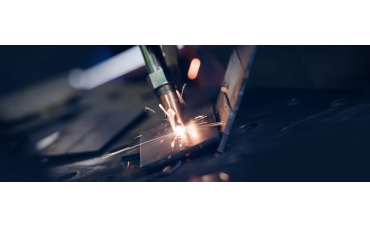
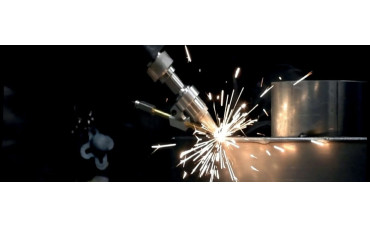
The principle of laser welding is based on applying highly concentrated energy to a precise area of the workpiece. The beam locally heats the metal until the edges to be joined begin to fuse. Depending on the application, welding can be carried out with or without filler metal, with a travel speed adapted to the material, thickness and expected result.
Thanks to its concentrated energy, laser welding helps limit the heat-affected zone and reduce certain distortions compared with more traditional processes. It is particularly valued for fine assemblies, consistent weld beads, clean finishes and applications where precision is an important requirement.
Applications of laser welding in workshops and industry
Laser welding can be used in many fields: metal fabrication, fine boiler making, sheet metal work, maintenance, repair, stainless steel part assembly, industrial production or work requiring a neat finish. It is often chosen when the goal is to save time, improve weld bead consistency or reduce rework after welding.
Advantages and key points to consider with laser welding
Laser welding offers several advantages for professionals: fast execution, beam precision, fine weld beads, reduced distortion, limited spatter and a possible reduction in finishing operations. These benefits make it an attractive technology for workshops looking for better productivity and consistent quality.
However, this technology should not be approached as a simple replacement for a traditional welding machine. Laser welding requires good control of the parameters, proper workpiece preparation, operator training and a precise risk assessment. Beam power, laser reflections, fumes and the working environment must all be taken into account before use.
Laser safety: an essential point for protecting operators
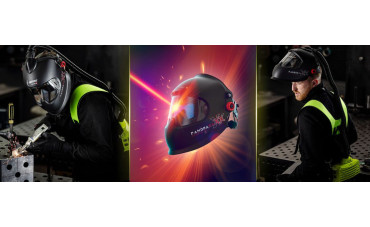
Safety is one of the most important topics when discussing laser welding. The laser beam, whether direct or reflected, can present significant risks to the eyes, skin and people nearby. Fumes, particles, spatter and fire risks must also be included in the organisation of the workstation.
Properly preparing your laser welding workstation
Before using laser welding equipment, it is important to identify the real requirements: type of material, thickness of the parts, desired production rate, required finish level, working environment, accessibility of the area to be welded and available protection. This analysis makes it possible to choose a coherent configuration and limit usage errors.
Workstation preparation does not only concern the machine. It also includes consumables, nozzles, protective lenses, filler wire if required, shielding gas, personal protective equipment and extraction solutions. Each element contributes to weld bead quality, process stability and operator safety.
Training, compliance and best practices
Laser welding requires a rigorous approach. Operators must understand how the machine works, the essential settings, the associated risks and the safety procedures to follow. Training is therefore an important element in using this technology correctly and avoiding poor practices.
Our advice to better understand laser welding
Through this category, HD Soudage helps you understand laser welding, from how it works to its safety requirements. You will find advice on possible applications, the advantages of the process, protective equipment, compliance, training and best practices to adopt in the workshop or on site.
Whether you are a welder, boiler maker, maintenance technician, workshop manager or metal fabrication professional, this section will help you better understand the possibilities of laser welding and the precautions to take before using it.