
 Français



_11zon.webp)


_14_11zon.webp)
_6_11zon.webp)



Explore How Laser Welding Machines Work
- Nada Iddouch
- 17 Mar, 2025
- Laser welding
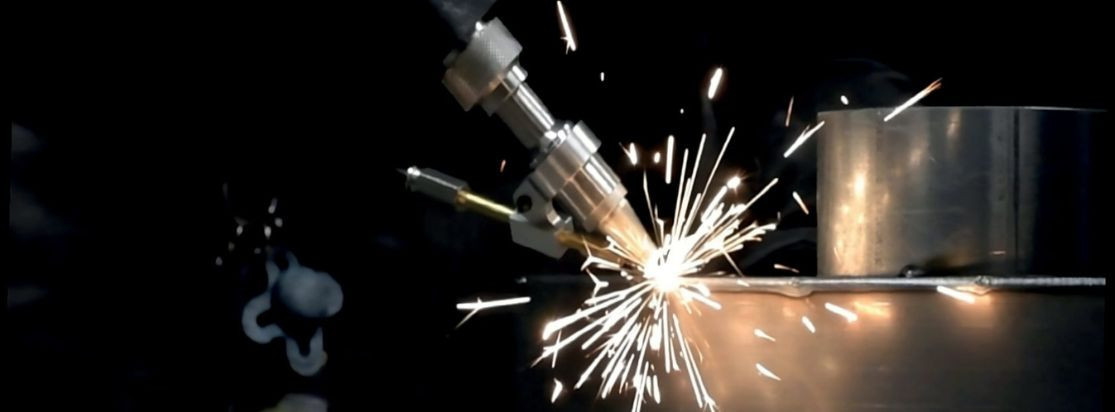
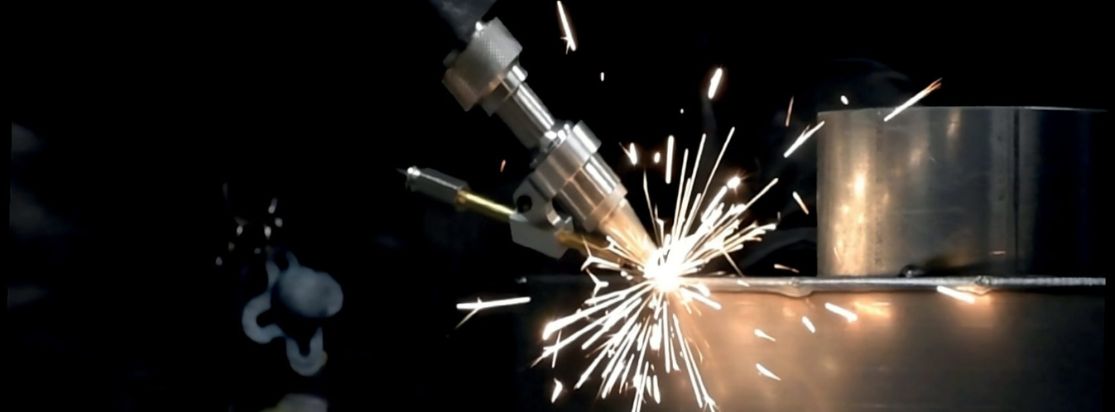
Laser welding represents a major advancement in the field of metal assembly. This cutting-edge technology uses a concentrated laser beam to fuse materials with unparalleled precision and efficiency. In this article, we will explore in detail how a laser welding machine works and its many advantages for modern industry.
I. Basic Principles of Laser Welding
Laser welding relies on the use of a high-power laser beam to create a localized fusion zone between the parts to be joined. Unlike traditional methods such as arc or gas welding, the laser allows a large amount of energy to be concentrated on a very small surface.
The laser beam is generated by a laser source, usually a fiber laser or a CO2 laser, and then transmitted to the welding head via a complex optical system. At the welding head, the beam is focused on a precise point of the workpiece. The laser energy quickly melts the metal at that point, creating a molten pool that solidifies immediately to form the weld bead.
One of the great advantages of laser welding is the ability to finely control process parameters such as laser power, travel speed, and beam focus. This allows precise adaptation of the welding process to the material characteristics and part geometry.
II. Main Components of a Laser Welding Machine
A modern laser welding machine relies on high-precision technology that combines several essential elements. Each of these components plays a key role in the performance, quality, and reliability of laser welding.
1. The Laser Source
The laser source is the heart of the system. It generates the concentrated light beam that enables material fusion. Fiber lasers are now the most commonly used due to their excellent energy efficiency, durability, and ability to produce a high-quality beam with low divergence. Their power varies depending on industrial needs, ranging from a few hundred watts for precision applications such as micro-welding to several kilowatts for thick assemblies in the automotive, aerospace, and metal industries.
The choice of laser source depends on several criteria, including the nature of the materials to be welded, the thickness of the parts, and the required production speed. Fiber lasers are often preferred for their low maintenance and energy efficiency, while CO2 lasers are still used for specific applications.
2. The Beam Guidance System
The laser beam guidance system is a fundamental component that ensures the precise and stable delivery of light energy. This system generally consists of mirrors, lenses, and optical fibers that transmit the beam from the source to the welding head. Perfect alignment of these components is essential to ensure uniform intensity and prevent energy dispersion, which could affect weld quality.
Modern systems often integrate dynamic correction devices that automatically adjust the beam trajectory based on thermal deformations and material variations. This optimizes the stability and precision of the welding process, even under demanding industrial conditions.
3. The Welding Head
The welding head is a key component of the system. It is equipped with focusing optics that concentrate the laser beam on a precise point on the workpiece surface. This focusing allows control of the laser penetration and the weld bead shape.
Some welding head models include advanced features such as:
- Protective gas nozzles, used to prevent oxidation and improve weld cleanliness. Argon and nitrogen are commonly used as shielding gases depending on the welded materials.
- A cooling system, usually water-based, to dissipate the heat generated by the laser intensity and extend the lifespan of optical components.
- Tracking sensors that automatically adjust the beam position based on surface variations, ensuring a consistent and defect-free weld.
Welding heads can be fixed or mounted on robotic arms for full automation of the process, especially in mass production lines.
4. The Motion System
The movement of the laser beam and the workpiece is a crucial factor in the precision and efficiency of welding. This system can take different forms depending on the application and production requirements:
- Welding robots: used in the automotive and aerospace industries, they allow precise positioning and smooth movement for complex welds.
- Welding gantries: suitable for large parts, they offer controlled movement along multiple axes with high mechanical rigidity.
- XY tables: commonly used for micro-welding and electronics applications, they enable precise movement in a horizontal plane.
These systems are generally controlled by numerical command software, which automates trajectories and optimizes cycle times for better productivity.
5. The Controller
The controller is the brain of the laser welding machine. It manages and synchronizes all welding process parameters, such as laser power, feed rate, beam trajectory, and shielding gas intensity.
Modern control systems incorporate advanced technologies such as:
- Real-time monitoring: using integrated sensors, the controller continuously analyzes the weld bead quality and automatically adjusts parameters based on material variations.
- Artificial intelligence and machine learning: some machines are equipped with algorithms capable of optimizing settings based on detected defects, reducing scrap and increasing process reliability.
- An intuitive user interface: control software allows simplified programming and offers 3D visualizations of the process to facilitate adjustments and quality control.
Thanks to these innovations, laser welding machines are becoming increasingly autonomous, offering unparalleled precision and repeatability in various industrial sectors.
III. Advantages of Laser Welding for Industry
Laser welding has become an essential technology in many industrial sectors due to its exceptional performance and high adaptability. It offers a unique combination of precision, speed, and flexibility, improving both the quality of assemblies and the productivity of manufacturing lines.
1. Precision and Quality
One of the main advantages of laser welding is its ability to produce welds with unmatched finesse and precision. Thanks to the extreme concentration of energy on a very small area, this process ensures clean and uniform welds with minimal heat input. This characteristic is essential to preserve material integrity and prevent deformations, a particularly sought-after advantage in the aerospace, electronics, and high-precision component manufacturing industries.
Reducing the heat-affected zone (HAZ) is another crucial benefit. By limiting heat diffusion around the weld area, the process minimizes the risk of altering the mechanical properties of materials and maintains the strength of assemblies. This feature is particularly beneficial for materials sensitive to high temperatures, such as certain aluminum and titanium alloys.
2. High Speed
Laser welding is also recognized for its fast execution. Unlike traditional welding methods, which often require multiple passes to achieve a strong joint, the laser can complete welds in a single pass at speeds of several meters per minute. This rapidity significantly reduces production times and increases the efficiency of manufacturing lines.
The high welding speed is particularly advantageous in industries requiring high production rates, such as automotive and electronics. It not only accelerates the assembly process but also reduces production costs by lowering energy consumption and labor requirements.
3. Flexibility
Laser welding is an extremely versatile process that adapts to a wide range of materials, including metals such as stainless steel, aluminum, titanium, and copper, as well as composite materials used in specific applications. It also allows welding of different types of materials, opening new possibilities for hybrid structures in fields such as aerospace and medical applications.
In addition to its compatibility with various materials, laser welding can accommodate complex geometries. Whether the workpieces have curved, angular shapes or variable thicknesses, the laser beam can be precisely adjusted to ensure homogeneous fusion. This adaptability makes it a preferred solution for applications ranging from micro-electronic component manufacturing to large metal structures.
4. Automation
One of the major advantages of laser welding is its compatibility with automation. The process is perfectly suited for integration into robotic production lines, where articulated arms and digital control systems ensure precise positioning of the laser beam. This automation optimizes production speed while maintaining consistent weld quality.
In manufacturing industries, the automation of laser welding reduces reliance on skilled labor and minimizes human error. Modern systems are equipped with sensors and intelligent algorithms that adjust welding parameters in real-time to compensate for material variations or environmental conditions. This self-adjusting capability further enhances process reliability and reduces the need for post-weld inspections.
5. Repeatability
Thanks to the stability of the laser beam and the highly precise control of welding parameters, the process ensures excellent repeatability of welds. Each joint is created with identical characteristics, ensuring consistent quality across a series of parts. This uniformity is crucial in industries where assembly reliability is paramount, such as aerospace and medical sectors.
The ability to produce identical welds also reduces scrap rates and costs associated with rework or manufacturing defects. Moreover, weld traceability is facilitated by the digital recording of welding parameters, ensuring accurate monitoring of each manufactured component.
By combining precision, speed, flexibility, automation, and repeatability, laser welding stands out as a preferred solution for many industries seeking optimal performance and impeccable quality. This process continues to evolve with technological advancements, paving the way for increasingly innovative and efficient applications.
IV. Applications of Laser Welding
Laser welding has become an essential technology in many industrial sectors due to its precision, speed, and ability to minimize thermal impact on materials. Its adaptability allows for the assembly of diverse components with high reliability, meeting the strict requirements of several industries.
1. Automotive
The automotive industry has widely adopted laser welding for assembling vehicle structures, including bodywork and chassis. This process enables the welding of high-strength steel parts while limiting thermal deformations. This characteristic is essential for ensuring structural integrity while reducing vehicle weight, contributing to improved energy efficiency and reduced CO₂ emissions.
Laser welding is also used for manufacturing specific components such as exhaust systems, electric vehicle batteries, and transmission elements. Its ability to perform fast and clean welds optimizes production rates in automated factories, reducing costs and increasing assembly quality.
2. Aerospace
The aerospace sector demands high-precision assemblies and absolute reliability to ensure the safety of aircraft and spacecraft. Laser welding is particularly suited to these requirements as it enables the assembly of complex materials such as titanium, aluminum, and special alloys used in the construction of fuselages, wings, and fuel tanks.
This process is also used for manufacturing critical components such as turbines, satellite structures, and jet engine parts. Thanks to the low heat-affected zone of laser welding, it is possible to preserve the mechanical properties of materials, ensuring optimal durability for parts exposed to extreme temperature and pressure conditions.
3. Electronics
In the electronics field, the miniaturization of components requires highly precise assembly techniques. Laser welding meets this need, enabling the welding of microscopic connections without generating excessive heat that could damage circuits.
It is commonly used for assembling connectors, sensors, and microcircuits found in smartphones, computers, and other electronic devices. This process is also employed in the manufacturing of printed circuit boards and semiconductor components, where weld precision and cleanliness are essential to ensure proper device functionality.
4. Medical
The medical industry requires perfectly clean and precise assemblies, particularly for the manufacturing of surgical instruments and biomedical implants. Laser welding is widely used to weld biocompatible materials such as stainless steel, titanium, and specialized alloys.
Common applications include the production of prosthetics, pacemakers, and medical tools requiring contamination-free and flawless welds. The laser beam’s high precision allows for smooth and hermetic welds, which are crucial for preventing infections or material rejection by the human body.
Since the laser welding process involves no direct contact with the parts being joined, it also reduces the risk of contamination, making it an ideal solution for sterile environments in the pharmaceutical and biomedical industries.
5. Energy
Laser welding plays a key role in the energy sector, particularly in manufacturing components for renewable energy and advanced energy storage technologies. It is commonly used in lithium-ion battery production for electric vehicles and electronic devices, ensuring precise cell assembly with optimal conductivity.
The renewable energy sector also benefits from laser welding, particularly in manufacturing solar panels and hydrogen fuel cells. The process’s precision and speed improve production efficiency while ensuring increased equipment durability.
Additionally, in the nuclear industry, laser welding is used for manufacturing and maintaining critical components such as heat exchangers and cooling circuits, where weld strength and reliability are crucial for ensuring plant safety.
Thanks to its versatility and exceptional performance, laser welding has become an indispensable technology across various industries. As it continues to evolve with advancements like artificial intelligence and automation, the future holds even more promising applications for this high-precision welding technique.
V. Developments and Future Prospects of Laser Welding
Laser welding technology continues to evolve to meet the increasing demands of the industry by improving the power, control, and versatility of systems. Manufacturers are developing increasingly powerful laser sources capable of welding thicker materials and increasing production speed, thereby expanding application possibilities across various sectors. At the same time, the integration of smart sensors and artificial intelligence algorithms enables real-time monitoring of weld quality, making systems more autonomous and capable of self-adjusting to optimize precision and reduce defects. Hybrid welding, which combines laser with other processes such as arc welding, is also being developed to merge the advantages of different technologies and enhance the robustness of assemblies. Finally, laser welding plays a key role in metal additive manufacturing, allowing the creation of complex parts layer by layer, opening up new opportunities for the aerospace, automotive, and medical industries. These advancements position laser welding as an essential technology, continuously innovating to address the challenges of the future.
The laser welding machine represents cutting-edge technology that is revolutionizing assembly processes in many industrial sectors. Its precision, speed, and flexibility make it an indispensable tool for meeting growing demands for quality and productivity.
With ongoing advancements in this field, laser welding still has a bright future ahead and will undoubtedly continue to push the boundaries of what is possible in metal assembly. Industrial players would do well to seriously consider this technology to remain competitive in an increasingly demanding global market.
Working with a laser welding machine? Here's how to prevent accidents and ensure operator safety.


On order

On order


On order