
 Français



_11zon.webp)


_14_11zon.webp)
_6_11zon.webp)



Optrel & Laservision: A New Era in Laser Safety
- Nada Iddouch
- 30 Oct, 2025
- Welding safety
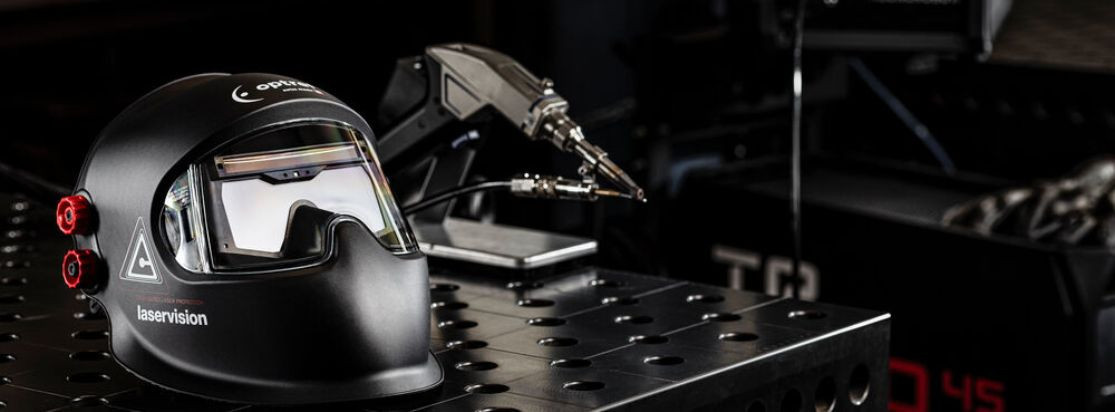
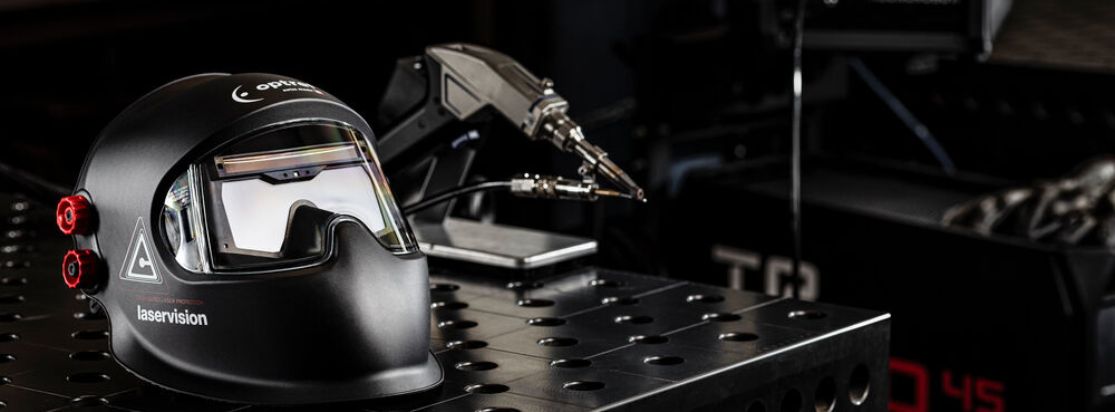
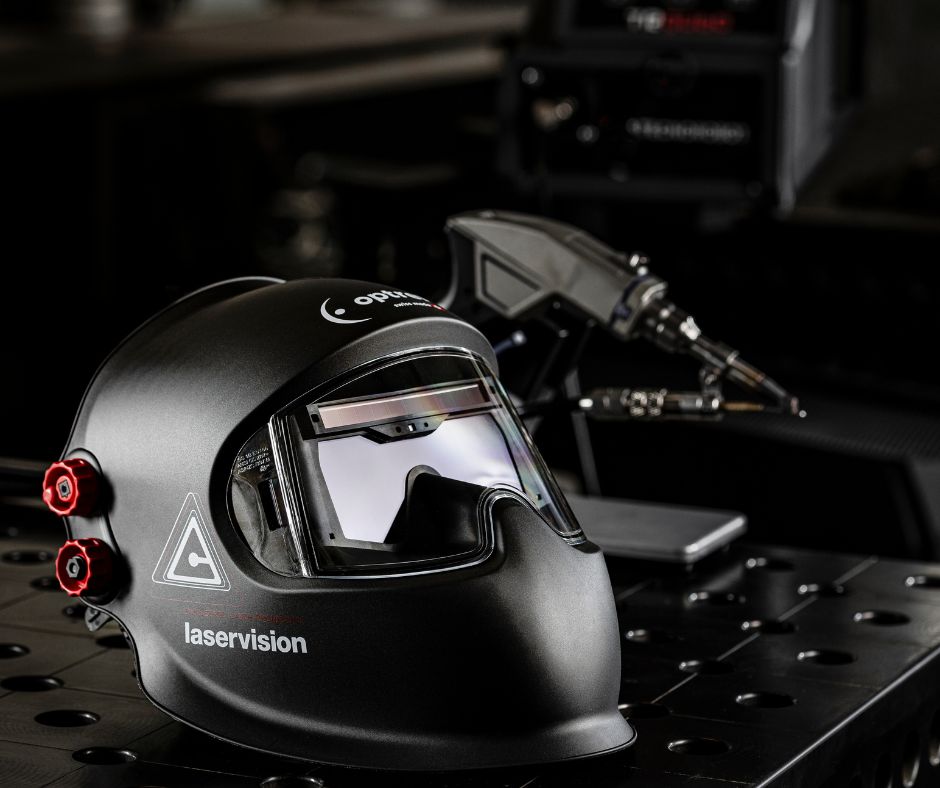
Dans le secteur industriel, l’adoption du soudage laser manuel bouleverse les pratiques traditionnelles. Face à l’intensité des faisceaux employés, la sécurité des opérateurs devient un enjeu prioritaire. Les avancées technologiques récentes répondent à ces défis en intégrant des solutions novatrices dans les équipements de protection, garantissant une performance sans compromis sur la sûreté.
Avancées Technologiques dans les Casques Laser pour le Soudage
Innovations en Protection Laser pour le Soudage Manuel
L’apparition du soudage laser manuel transforme profondément les opérations métallurgiques. Grâce à un faisceau concentré opérant généralement entre 1000 et 1100 nm, cette technique assure une jonction précise des matériaux tout en préservant leur structure. La stabilité du rayon autorise des assemblages d’une qualité remarquable, avec un contrôle précis de la chaleur délivrée.
Cette précision réduit considérablement la zone affectée par l’apport thermique autour de la soudure. Résultat : moins de distorsion sur les pièces travaillées, ce qui permet d’obtenir des soudures soignées sans altérer ni la forme ni l’aspect du métal. Le procédé simplifie aussi la préparation et limite le temps nécessaire au positionnement initial. L’assemblage pur, cette technologie excelle dans d’autres domaines industriels comme le découpage fin, le marquage précis ou encore le nettoyage ciblé de surfaces métalliques.
Les évolutions récentes ne se limitent pas à l’amélioration du processus lui-même ; elles englobent toute une série d’innovations en matière de sécurité active et passive. Par exemple, certains casques intègrent désormais des filtres spéciaux capables d’arrêter efficacement la lumière laser nocive tout en offrant une vision nette et fidèle lors du travail ou pendant les phases préparatoires.
Les Casques de Soudage Optrel-Laservision : Une Révolution en Matière de Sécurité
La synergie entre Optrel et Laservision marque un tournant décisif dans le domaine des équipements de protection pour soudeur laser. Leur collaboration a donné naissance à la série Panoramaxx : une gamme qui associe ingénierie innovante et matériaux hautement spécialisés pour offrir un niveau inégalé de sécurité et d’ergonomie.
Technologies embarquées
Chaque casque Panoramaxx bénéficie d’atouts spécifiques conçus pour répondre aux exigences variées du soudage moderne :
- Crystal Lens Technology (CLT) : Cette technologie apporte une clarté visuelle supérieure grâce à un indice d’ouverture exceptionnel (2,5), réduisant significativement la fatigue oculaire lors des réglages ou entre deux passes.
- ShadeTronic : Ce système ajuste automatiquement le niveau de teinte entre différentes valeurs selon l’intensité lumineuse détectée (plages variant selon les modèles), éliminant ainsi toute manipulation manuelle fréquente.
- Vraie vision couleur : L’absence dominante du jaune dans le champ visuel améliore considérablement la perception durant toutes les étapes du soudage.
La conception interne repose sur une armature brevetée signée Laservision, réalisée en plastique technique léger plutôt qu’en métal lourd traditionnellement utilisé par la concurrence. Cette solution protège efficacement contre la pénétration ou réflexion accidentelle du faisceau tout en restant confortable même lors d’un port prolongé.
Présentation comparative des modèles Panoramaxx
| Model | Optimal application | Auto shade range | Key features |
|---|---|---|---|
| Hybrid CLT | TIG, laser & more | 4–12 | CLT 2.5 / Crystal-clear vision / Manual adjustment 3–8 |
| Hybrid | Versatile use | 5–13 | Optics 2.5 (open state 3) / Arc + laser versatility |
| L | Laser-specific | Fixed (shade 2) | Continuous protection with no adjustment required |
All these helmets share a distinctive nasal cutout that expands the direct field of vision on the active zone, promoting precise movements and optimal control even during complex operations.
Finally, their native compatibility with the Swiss Air system allows users to easily integrate advanced respiratory protection — an additional safeguard against fine fumes generated by certain high-intensity laser processes.
Essential Safety Measures for Laser Welding
The Importance of Personal Protective Equipment (PPE)
The inherent hazards of laser welding demand strict rigor and vigilance in the choice of PPE. Even minimal direct or indirect exposure to the beam can cause irreversible injuries — especially to the eyes, where retinal burns or corneal damage pose major risks.
Specialized filtering glasses are indispensable whenever the operator might be exposed to stray reflections or intense light emitted during the process. They are often paired with a full-face shield that protects not only from light but also from incandescent projections and molten metal particles.
Beyond eye and face protection, every exposed part of the body must be covered with suitable barriers:
- Heat-resistant gloves,
- Flame-retardant full-coverage clothing,
- Effective respiratory protection against fine particles produced by vaporized metals during critical phases.
All these elements actively help prevent skin and lung injuries among operators working in demanding environments.
Systematically adapting equipment to the immediate context — the type of metals handled, the power used, and working conditions — remains essential to ensure optimal safety. Every operation must remain fully controlled in terms of individual protection.
Controlled Environments and Monitoring Systems for Maximum Safety
Using a dedicated, enclosed laser welding station has become an essential standard whenever high-power welds are performed. These specialized cells are primarily designed to contain all hazardous light emissions — both direct and reflected — outside areas accessible to unprotected personnel.
Specific filtering windows allow observation of the operation from outside while effectively blocking unwanted radiation; they thus form a vital double safety barrier around active zones.
Several complementary systems are also required:
- Automated monitoring systems continuously supervising beam activity,
- Instant detection of any loss of connection or critical contact,
- Secure controls strictly limiting physical access to authorized operators during operation.
All these measures lock down risks associated with both the main process and peripheral accidental scenarios (for example, accidental door opening during active welding).
Finally, the installation of visible warning lights completes this comprehensive safety setup: they immediately indicate that a sensitive operation is in progress within the cell, allowing anyone nearby to promptly adopt appropriate behavior in response to potential danger.
The joint advancements of Optrel and Laservision set a new benchmark in personal protection for high-intensity handheld laser welding. Through adaptive optical innovations such as Crystal Lens Technology, ergonomic comfort optimized by patented lightweight inner frames, and full compatibility with the latest filtered respiratory systems, every component is engineered to deliver maximum performance and safety in the most demanding industrial environments.
To learn how to equip your teams with these innovative solutions, contact our technical experts today for personalized advice or a detailed quote tailored to your production needs and operational constraints.
Let’s talk about your project
An industry expert will respond within 24 business hours.
Handheld laser welding uses a concentrated laser beam, typically between 1000 and 1100 nm, to create precise joints between materials. This technique allows precise heat control, reducing distortion on the welded parts.
Modern helmets integrate advanced technologies such as Crystal Lens Technology (CLT) and ShadeTronic, providing superior visual clarity and automatic shade adjustment, reducing eye strain and enhancing safety.
The Panoramaxx series combines innovative engineering with specialized materials to deliver unmatched safety. It features technologies like CLT and ShadeTronic and uses a lightweight technical plastic frame that improves both comfort and protection.
Without adequate protection, operators risk serious injuries, including retinal burns and corneal lesions, caused by direct or indirect exposure to the laser beam.
Essential equipment includes filtering safety glasses, a full-face shield, heat-resistant gloves, flame-retardant clothing, and effective respiratory protection against fine metal particles.
Controlled environments, such as enclosed workstations, contain hazardous light emissions and include automated monitoring systems that detect anomalies and restrict access to unprotected personnel.
Panoramaxx helmets are compatible with Swiss Air or SuppliedAir systems, allowing easy integration of advanced respiratory protection against fine fumes generated during laser welding.