
 Français



_11zon.webp)


_14_11zon.webp)
_6_11zon.webp)



Orbital Tube Welding: From Invention to Advanced Automation
- Nada Iddouch
- 08 Aug, 2025
- Welding techniques
I. The Technological Evolution of Orbital Welding: From Invention to Innovation
The industrial world is in constant flux, and orbital welding is a striking example of this evolution. Since its inception, this technique has revolutionized numerous sectors by offering unmatched precision and reliability. But how did this method come into being, and what are its current applications? Let's dive into the fascinating world of orbital welding, from its origins to its contemporary challenges.
1. The Origins of Orbital Welding: A Response to Aeronautical Challenges
The history of orbital welding began in 1964 when Rodrick Rohrberg, an engineer at North American Aviation, faced a significant issue: leaks in the plumbing systems of the North American X-15, an iconic rocket plane of the era. These leaks, caused by imperfect welds, compromised the safety and performance of the aircraft. To address this, Rohrberg devised an automated method capable of performing continuous and precise welds on cylindrical components. Thus, orbital welding was born, marking a decisive turning point in the aerospace industry.
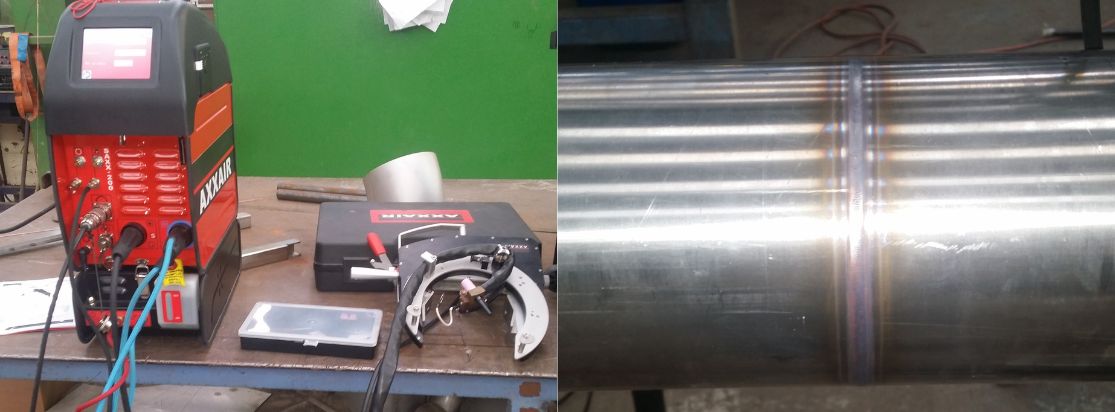
This innovation is based on a simple yet ingenious principle: a welding arc rotates around a fixed piece, usually a tube, to execute a complete 360-degree weld. Thanks to this approach, welds are not only more reliable but also reduce the risk of human error, often present in manual methods. Orbital welding quickly became an indispensable solution for applications requiring high-quality welds.
2. Technological Advancements in the Automation of Orbital Welding
Over the decades, orbital welding has benefited from significant technological advancements, particularly in automation. The integration of computer systems has allowed for precise control over the entire welding process, thereby optimizing the quality and repeatability of welds. This automation has not only improved precision but has also significantly reduced human errors, making orbital welding essential in numerous industries.
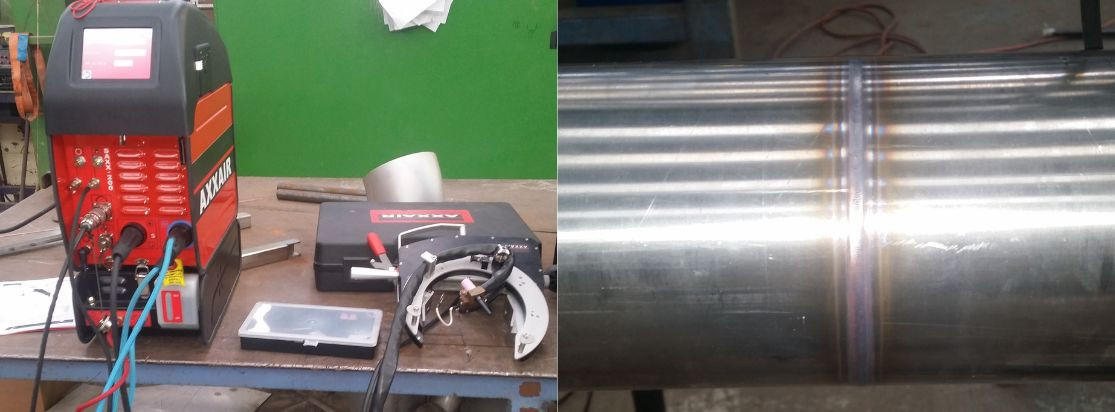
Modern orbital welding machines are equipped with sophisticated motors, controllers, and welding heads, sometimes accompanied by wire feeders. Various parameters influence the final weld, such as arc height, intensity, welding current pulse frequency, welding speed, shielding gas, and base material. This complexity requires in-depth technical expertise to ensure optimal results.
The automation of orbital welding has also simplified the management of mechanical constraints, enabling welds in challenging positions, such as overhead or vertical downward welding. This flexibility, combined with the pre-programming of welding parameters, ensures consistent quality even in the most demanding environments.
II. Industrial Applications and Challenges of Orbital Welding Across Sectors
1. Use of Orbital Welding in High-Tech Industries
Orbital welding has found its place in many high-tech industrial sectors, where reliability and precision are crucial. In aerospace, for instance, this technique is used to assemble critical components subjected to extreme conditions. The welds must withstand high pressures and temperatures while ensuring perfect sealing.
In the pharmaceutical industry, where hygiene is paramount, orbital welding is employed to create flawless connections in piping systems. The cleanliness of the process, which generates minimal particles, is a significant asset in preventing contamination.
The power plant construction sector, particularly nuclear, also benefits from orbital welding. The materials used in these facilities must withstand enormous mechanical loads, and even the slightest imperfection in a weld could have disastrous consequences. Orbital welding, with its ability to produce robust and precise welds, is thus a preferred solution.
2. Challenges and Limitations of Orbital Welding in Industrial Environments
Despite its numerous advantages, orbital welding presents certain challenges. The bulkiness of the equipment, particularly the welding heads, can pose problems in confined spaces. Moreover, the installation of these machines often requires adaptation of existing infrastructures, which can lead to additional costs and longer timelines.
The technical complexity of orbital welding also demands specialized training for operators. They must master not only the operation of the machines but also the specific welding parameters for each application. This skill requirement can limit the availability of qualified personnel, making the recruitment of experienced operators sometimes challenging.
Finally, although orbital welding is automated, it is not without limitations. Some environments or complex configurations may require manual adjustments, highlighting the importance of extensive technical expertise.
III. Conclusion
Since its invention in the 1960s, orbital welding has come a long way. From an innovative solution to specific problems, it has become an indispensable pillar in many industries. Its technological advancements and increasing automation have raised the standards of weld quality and safety while meeting the demands of the most challenging environments.
However, like any technology, orbital welding has its own challenges. Equipment bulkiness, the need for technical expertise, and the costs of infrastructure adaptation are factors to consider when deploying it. Yet, the advantages it offers in terms of precision, reliability, and cleanliness make it a preferred solution for industries where weld quality is paramount.
Looking to the future, orbital welding will undoubtedly continue to evolve, adapting to new industrial requirements and integrating cutting-edge technologies to meet the challenges of tomorrow. It is this capacity for innovation and adaptation that ensures its longevity in a constantly changing world.
Orbital welding is an automated welding technique that enables continuous and precise 360-degree welds around cylindrical parts, such as tubes. It was invented in 1964 by Rodrick Rohrberg to address leakage issues in the plumbing systems of the North American X-15 rocket plane, offering a more reliable and precise solution than manual methods.
The main advantages of orbital welding include increased precision and reliability, reduced human error through automation, and the ability to produce high-quality welds in difficult positions. This technique is particularly useful in industries where weld quality is crucial, such as aerospace, pharmaceuticals, and power plant construction.
The integration of computer systems and automation has significantly enhanced orbital welding. Modern machines are equipped with sophisticated motors, controllers, and welding heads, allowing precise control over parameters such as arc height, intensity, and welding speed. These advancements have optimized the quality and repeatability of welds.
Challenges include the bulkiness of the equipment, which can be problematic in confined spaces, and the need to adapt existing infrastructure, potentially leading to additional costs. Moreover, the technical complexity of this method requires specialized training for operators, which can complicate the recruitment of qualified personnel.
Orbital welding is commonly used in aerospace for assembling components subjected to extreme conditions, as well as in the pharmaceutical industry, where hygiene is crucial. It is also essential in the construction of power plants, particularly nuclear ones, where robust and precise welds are necessary to ensure the safety and performance of the installations.