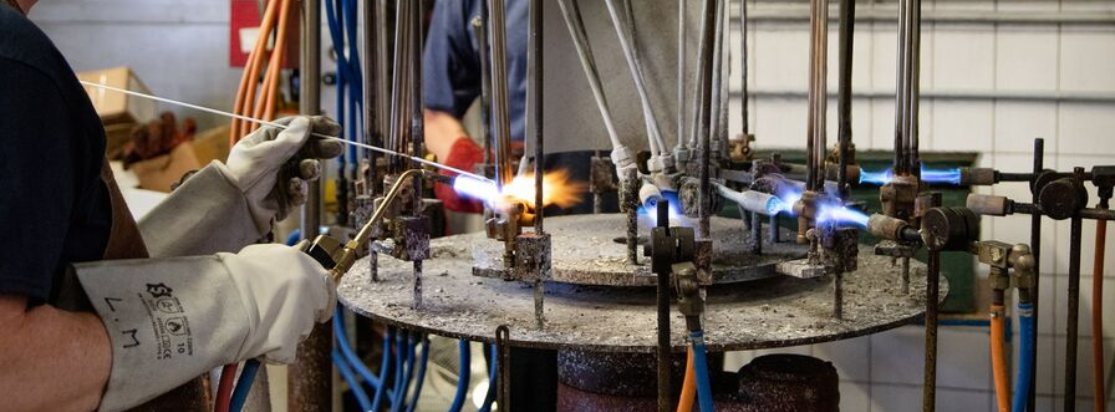
I. Introduction to Oxy-Fuel Cutting
1. What is Oxy-Fuel Cutting?
Oxy-fuel cutting is a thermal metal cutting process that relies on the combustion of a fuel gas (usually acetylene) combined with a stream of pure oxygen. This technique is widely used in metallurgy, construction, boiler making, and industrial maintenance due to its ability to precisely cut thick steel materials.
In practice, oxy-fuel cutting involves heating the metal to its ignition temperature (approximately 1,300 °C for mild steel) using a cutting torch. Once this temperature is reached, a pressurized stream of oxygen is released, initiating oxidation of the metal. The resulting oxides (slag) are expelled from the cutting area.
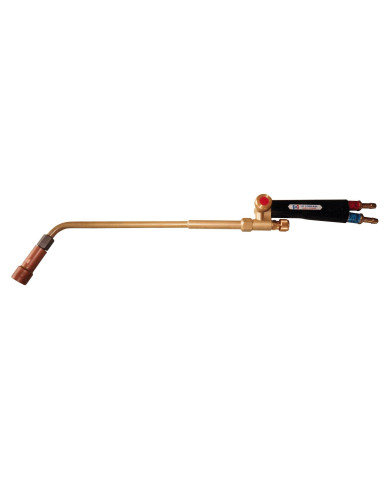
The torch consists of several essential components:
- Gas hoses (typically red for acetylene and blue for oxygen),
- Pressure regulators to control gas pressure,
- The cutting nozzle to focus the flame and oxygen jet,
- Adjustment valves for precise flow regulation.
Application Areas
- Heavy industry (shipbuilding, railways, civil engineering),
- Public works and demolition of metal structures,
- Boiler making and custom metal fabrication,
- Repair and maintenance of structures or machinery.
2. Advantages of Oxy-Fuel Cutting
Oxy-fuel cutting offers numerous advantages, making it a vital cutting technique in the industrial sector. One of its key strengths is its ability to cut very thick metals with high precision—something that other methods like laser or plasma cutting may struggle to achieve cost-effectively. This process also stands out for its excellent cost-efficiency ratio: it requires relatively low initial investment, inexpensive consumables, and minimal maintenance, making it a profitable solution especially for small businesses or welding workshops. Furthermore, oxy-fuel cutting is widely appreciated for its ease of use and flexibility in the field, as it can be operated in both workshops and on construction sites, even in demanding environments. Lastly, its compatibility with other industrial processes such as machining or welding makes it a highly versatile technique for heavy-duty and demanding cutting operations.
II. Practical Use of a Cutting Torch
1. Essential Safety Measures
Using a cutting torch requires close attention to safety measures. It is crucial to wear personal protective equipment (PPE), including safety goggles, heat-resistant gloves, and appropriate clothing to prevent burns or other injuries. A thorough equipment check is essential before use. This includes inspecting the torch itself, gas hoses, regulators, and gas cylinders to ensure they are in good working condition and free from leaks.
2. Key Steps for a Successful Cut
To ensure a high-quality cut using an oxy-fuel torch, it is essential to follow a precise protocol for both safety and efficiency. The process begins by gradually opening the fuel gas valve—usually acetylene—followed by lighting the flame using a piezoelectric igniter. The flame is then adjusted to achieve stable and controlled combustion. Once this is achieved, oxygen is introduced in a controlled manner to produce the ideal preheating flame, recognizable by its bright, well-defined inner cone. This step is crucial for the quality of the cut. When the metal reaches the necessary ignition temperature, the flame is carefully brought closer to the cutting zone, maintaining an optimal distance of 5 to 7 mm and an appropriate angle. After a few seconds of preheating, the oxygen cutting jet is activated, which rapidly oxidizes the metal and enables a clean, continuous cut. Mastering each step of this process is key to achieving professional results, avoiding cutting defects, and preserving equipment longevity.
III. Optimal Settings for Efficient Cutting
1. Gas Pressure Adjustment
Accurate gas pressure adjustment is crucial for effective and safe cutting. The fuel gas pressure must be tailored to the thickness of the metal being cut. Using manufacturer-provided pressure charts is highly recommended for precise calibration. Incorrect pressure—whether too low or too high—not only impacts cut quality but also introduces safety risks.
2. Optimizing the Gas Mix and Cutting Speed
A balanced mixture of oxygen and fuel gas is essential for an efficient flame. Specific manufacturer recommendations should be followed to adjust this ratio. Moreover, the speed at which the torch moves across the metal directly affects the cut’s finish. A well-adjusted speed ensures a clean, consistent cut, avoiding rough edges or metal deformation.
Conclusion
Mastering oxy-fuel cutting requires a deep understanding of safety procedures, precise equipment settings, and thorough preparation. By mastering these aspects, professionals can not only ensure precise and safe cutting, but also improve productivity and extend the lifespan of their tools. To support users in this process, it is essential to be equipped with reliable and high-performance tools. The full range of products dedicated to oxy-fuel cutting, including the renowned LE LORRAIN cutting torches, is available on our website. These tools, known for their durability and precision, meet the demands of the most exacting professionals.

 Français


_11zon.webp)


_14_11zon.webp)
_6_11zon.webp)