
 Français



_11zon.webp)


_14_11zon.webp)
_6_11zon.webp)



Positive vs. Negative Pressure: Guide to Choosing Respiratory Equipment
- Nada Iddouch
- 11 Sep, 2025
- Welding safety
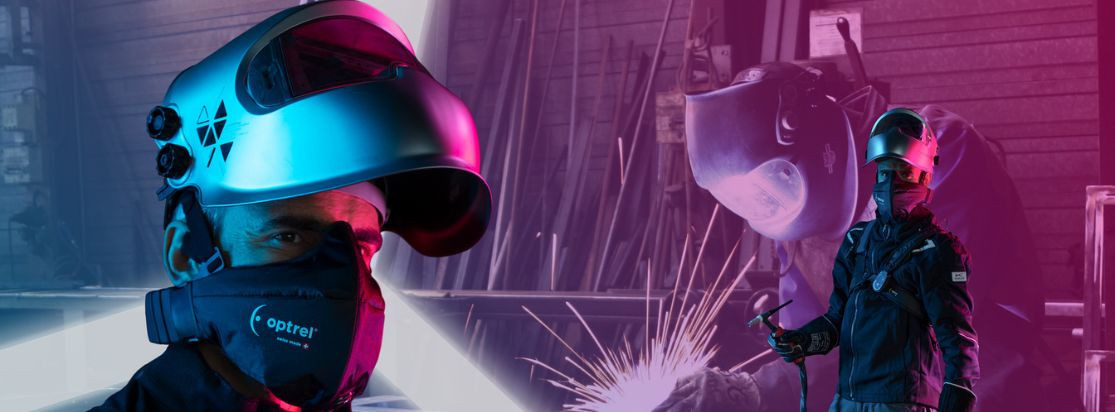
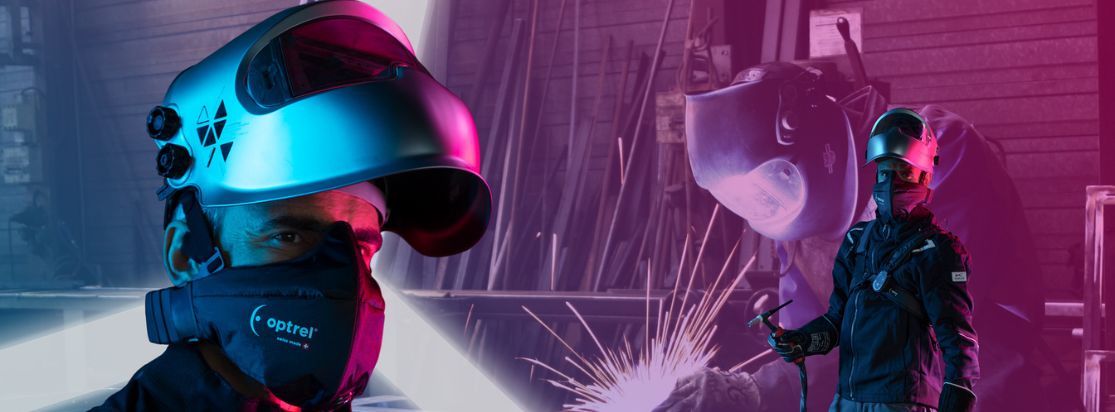
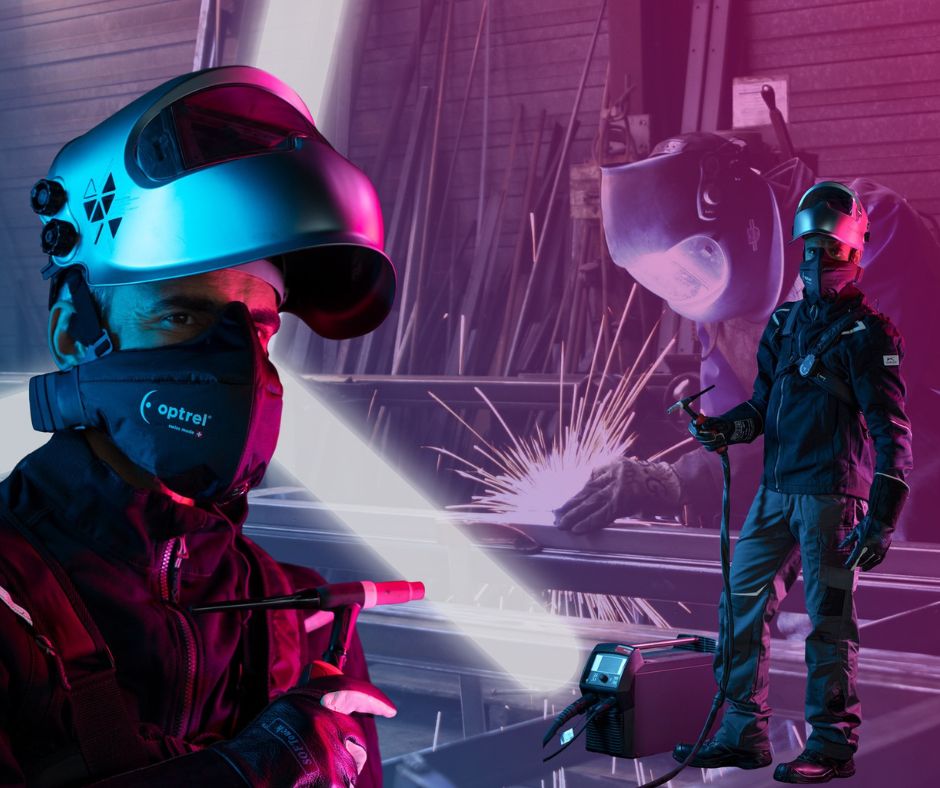
Differences Between Negative Pressure and Positive Pressure Respiratory Equipment
Respiratory protection is a major issue in demanding sectors such as welding, construction, or healthcare. Workers in these environments are exposed to multiple airborne toxic agents, making the use of suitable protection essential to limit the inhalation of dust, gases, or harmful vapors. Two main families of equipment dominate the market: negative pressure respirators and powered air-purifying respirators (PAPRs). Each has specific characteristics that influence its relevance depending on the professional context.
Operation and Advantages of Negative Pressure Respirators
Negative pressure devices work on a simple principle: each inhalation by the user draws ambient air through a mechanical filter, trapping hazardous particles. This category notably includes N95 masks and certain half-masks commonly used on construction sites or in industry.
Their effectiveness relies on a perfect seal around the face. The slightest gap allows contaminants to pass through, which excludes their use by people with beards or significant facial hair. Maintaining this seal also requires clean, dry skin; any compromise can significantly reduce filtration.
Among their strengths, these systems generally offer a moderate initial investment. Their compact and lightweight design facilitates mobility in confined environments or during short interventions requiring agility and speed. For example, on a site where several short tasks follow one another – drilling into concrete or quick handling – they prove practical thanks to their low bulk.
On the other hand, the pulmonary effort required to draw filtered air increases fatigue over time. For a welder working several consecutive hours under an N95 mask, fatigue can quickly set in: each breath involves added resistance. This factor limits their adoption during long sessions or for operators already suffering from respiratory difficulties.
Another constraint: these masks require strict filter replacement management. A saturated filter loses its efficiency without explicitly warning the user; it is therefore essential to establish a precise schedule based on the manufacturer’s recommendations and the level of exposure.
Some innovations improve this type of protection: Optrel, for example, offers transparent NIOSH-approved N95 masks that facilitate visual communication by allowing the wearer’s expressions to be seen – a valuable asset in healthcare or education sectors where human interaction and immediate understanding are crucial.
In summary, choosing this type of device means accepting that your own lungs provide all the energy needed for air filtration. This reality must guide the decision depending on the expected exposure duration and the physical condition of the personnel concerned.
Advantages of Positive Pressure Respirators and Their Adaptability
Unlike the manual operation described above, positive pressure systems incorporate a battery-powered motorized fan. This fan actively draws in ambient air, forces it through an efficient filter medium, and then continuously delivers purified air into a facepiece (full mask, lightweight hood, or helmet).
This constant airflow creates a slight internal overpressure: even if the facial seal is not perfectly tight – due to the presence of a beard or imperfect fit – the natural flow always pushes potential pollutants outward rather than allowing them to enter the respiratory tract.
This technology drastically reduces the inspiratory resistance felt by the user; wearing a PAPR for eight hours no longer taxes lung capacity as much as a standard mask. On a workstation alternating long welding sessions and repeated handling (such as in boiler-making), this radically transforms daily comfort while significantly reducing overall fatigue.
The gradual integration of smart sensors marks a notable evolution: some models monitor airflow and filter saturation in real time. As soon as replacement is required, a visual or audible alert immediately notifies the wearer; this prevents any insidious drop in filtration level while optimizing logistics management (neither too early nor too late replacement).
The positive-pressure design also ensures an additional barrier against accidental intrusions: if a minor defect remains in the facial fit (such as a fold in the protective hood after several hours), harmful aerosols are still expelled outward rather than entering your lungs.
Optrel illustrates this family with various solutions tailored to different industrial or medical site needs:
- Swiss Air System: ultra-light, worn directly on the torso without requiring a specific helmet; ideal when maximum flexibility is needed to move easily between workshops.
- E3000X: a solution dedicated to intensive applications such as high-frequency welding; compatible with Optrel helmets, extended autonomy thanks to a high-performance battery, and adjustable airflow depending on real conditions (presence of fine particles).
- Integrated cooling option to further enhance thermal comfort during work in high ambient heat.
In all these cases, there is not only a concrete improvement in user comfort but also an overall strengthening of protective performance against persistent airborne risks.
Choosing the Right Respiratory Equipment for Your Needs
No standard configuration can universally meet the varied requirements of each company or specific site. Wise selection therefore rests above all on a detailed analysis of both the hazards present and the operational constraints specific to your professional environment.
Selection Criteria Based on the Work Environment
The level of physical effort expected is often one of the first criteria distinguishing between passive (negative pressure) and active (positive pressure) solutions. In a workshop with occasional low-exposure cutting – for example, during quick assembly of metal frames – it is better to prioritize lightness and ease of donning. In this case, traditional N95 masks naturally stand out: compact and easy to put on or take off, they are perfectly suited for short sequences requiring frequent movement.
Conversely, when continuous protection is needed against high concentrations of fine particles generated by repeated grinding – typical of heavy industrial maintenance – PAPRs are the winning strategy. They allow almost zero respiratory fatigue, even under sustained pace or difficult thermal conditions (confined, poorly ventilated areas).
A concrete example can also be found in welders working several consecutive hours under a closed helmet: where a traditional mask would quickly become unbearable due to heat buildup and breathing effort, a motorized solution ensures constant fresh air supply until the end of the shift, without compromising the operator’s alertness or precision.
Systematically comparing these criteria not only facilitates technical choice but also optimizes field acceptance by the teams concerned: the less restrictive daily use is perceived, the more collective discipline around the actual wearing of provided protection will be respected.
Compliance Considerations and Fit Testing
OSHA standards in the United States have long required mandatory annual fit testing for all users of tight-fitting negative pressure devices covering the nose and mouth. The goal is to ensure a perfect seal despite seasonal morphological variations or changes in user weight and facial volume. For companies with high staff turnover – numerous temporary workers or successive contractors – this protocol quickly becomes a real logistical and administrative challenge.
PAPR models provide a pragmatic solution here, thanks to their “loose-fit” versions, which completely eliminate the costly obligation of annual fit testing. Each newly assigned worker immediately gains effective protection, regardless of facial hair or beard style.
Comparison: Negative Pressure vs Positive Pressure Respirators
| Features | Negative Pressure | Positive Pressure |
|---|---|---|
| Airflow | Driven by inhalation | Powered by fan |
| Seal test | Mandatory yearly | Generally not required |
| Beard allowed | No | Yes |
| Comfort | Medium/low | Excellent/extended |
| Max protection factor | 50 | 25–1000 |
| Frequent uses | General construction site | Intensive welding / laboratory |
Adjusting your PPE strategy often comes down to balancing the logistical and administrative simplicity offered by the latest-generation PAPRs with the lower cost of traditional negative pressure solutions. The choice ultimately depends on employee turnover rates as well as the specific nature of daily inhalation risks.
Optrel supports this process with a scalable range that combines patented innovations and broad compatibility with welding, construction, and healthcare environments.
To effectively select your new respiratory protection device:
- Carefully analyze exposed workstations
- List internal organizational constraints
- Seek personalized advice from a recognized expert
A precise assessment then makes it possible to smoothly deploy the most suitable equipment, ensuring long-term employee health while keeping budgets under control and complying with sector-specific regulations.
Need guidance in navigating the wide range of available configurations? Contact us today to benefit from dedicated technical support and build together a coherent, effective respiratory protection policy perfectly tailored to real-world working conditions.
Negative pressure respirators require the user to inhale in order to draw air through a filter, while positive pressure respirators use a motorized fan to continuously supply filtered air.
They are generally compact, lightweight, and have a moderate initial cost. They are ideal for short tasks requiring mobility and speed.
They require additional lung effort, which can become tiring over long periods. In addition, they demand a perfect seal, making them unsuitable for people with facial hair.
They reduce breathing resistance and are suitable for people with beards. They provide superior comfort for extended use.
Generally, no. Loose-fit models eliminate the requirement for annual seal fit testing.
The choice depends on exposure duration, physical effort required, the presence of facial hair, and the specific constraints of the work environment.
Consider exposure duration, ease of maintenance, compatibility with other equipment, noise level, and regulatory requirements.