
 Français



_11zon.webp)


_14_11zon.webp)
_6_11zon.webp)



Industrial Friction Welding: Techniques and Key Applications
- Nada Iddouch
- 12 Feb, 2026
- Welding techniques
Friction Welding: Principles, Techniques, and Industrial Applications
Friction welding meets strict reliability and performance requirements in industrial sectors where the quality of metal joints allows no compromise. This thermal joining process has experienced significant growth in aerospace, automotive, and energy industries. The method is based on a unique approach: using the heat generated by mechanical friction between two parts to achieve a homogeneous, strong, and durable weld, without filler metal or the use of an electric arc. This specificity limits defects related to impurities and significantly reduces the thermal stresses applied to materials during assembly.
Fundamental Principles of Friction Welding
Understanding the Thermal Friction Mechanism
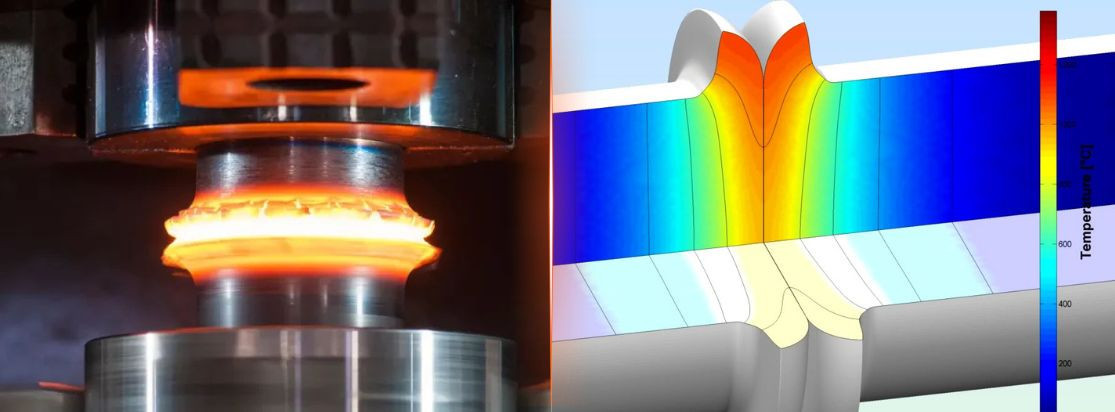
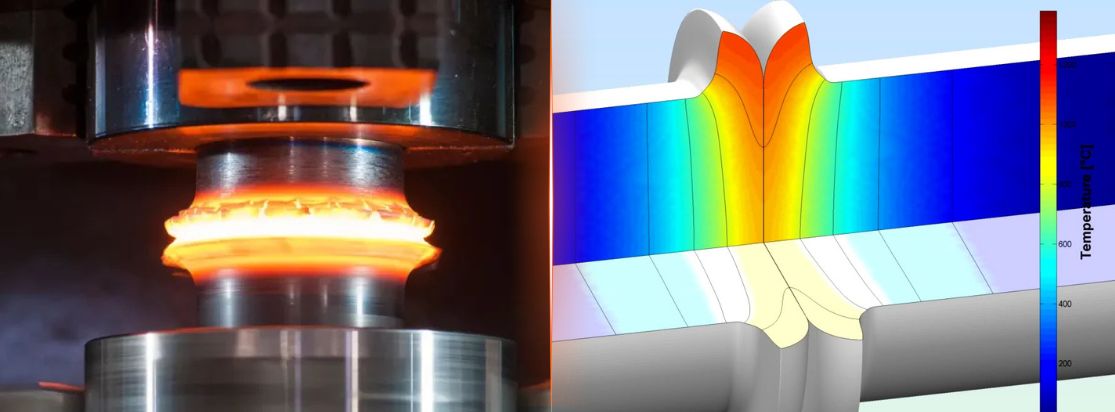
The foundation of friction welding lies in the controlled use of friction between two metal components. When these parts are brought into contact under pressure and subjected to rapid relative motion, they generate localized thermal energy. The higher the friction speed and the applied force, the faster the temperature rises at the contact point.
This temperature increase causes the surfaces involved to soften: the materials reach their plastic state without melting. At this stage, they become sufficiently malleable to allow interpenetration, enabling the formation of a strong joint without any external inclusion.
The absence of an electric arc or shielding gas significantly reduces the risk of introducing impurities into the molten zone. Thermal stresses remain limited because only a small portion of the material is heated for a short period. This precise control ensures excellent mechanical strength of the completed joints while also significantly reducing distortion or deformation after cooling.
Key Stages of the Friction Welding Process
The typical process begins with the simultaneous application of high axial pressure and rapid motion (rotation or linear movement) between the two parts to be joined. This action immediately generates intense heating precisely at the contact interface.
Once the temperature required to reach the plastic state is achieved, the relative motion is stopped while maintaining the applied pressure on the components. During this phase, atoms from the two softened surfaces interlock firmly as the joint cools progressively under constant pressure.
At the end of the cycle, the result is a homogeneous bond: no foreign inclusions disrupt the crystalline structure of the assembled metals. The resulting joint offers high mechanical strength against external loads and excellent long-term performance in demanding environments typical of advanced industrial sectors.
Various Friction Welding Techniques
All methods grouped under this term share the same general principle but differ in their specific operating mode and preferred application fields.
Rotary and Linear Friction Welding: Two Distinct Approaches
Rotary Friction Welding
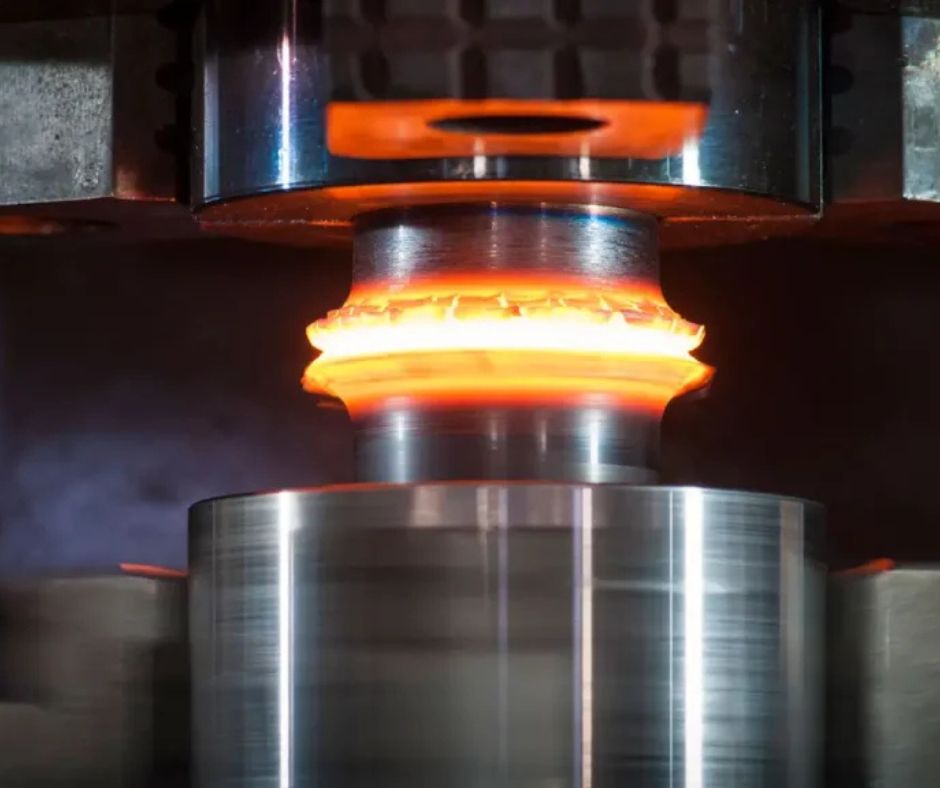
This process utilizes the rapid rotation of one component against its counterpart, which remains stationary or is held in opposing translation. The rotating interface experiences a rapid temperature increase due to concentrated friction combined with strong axial force.
When the surfaces reach the plastic state, rotation is abruptly stopped while maintaining the applied pressure. Sustained pressure without movement ensures complete interpenetration of the materials before final cooling. This condition is essential to guarantee a robust joint capable of effectively withstanding future mechanical stresses.
This technique is particularly effective for assembling geometrically compatible shapes (especially cylindrical parts), such as drive shafts or tubular elements commonly used in various industrial sectors.
Linear Friction Welding
In this variation, rapid reciprocating motion replaces traditional rotation: one part oscillates laterally against a fixed counterpart while additional continuous compression maximizes friction and generates localized heat.
The result remains similar: controlled softening followed by abrupt motion stoppage and consolidation under pressure. However, this method often makes it possible to effectively perform certain linear assemblies that cannot be achieved through pure rotation (for example, rails or structural beams).
| Process | Motion | Ideal Shapes |
|---|---|---|
| Rotary Friction | Rotation | Cylindrical / Circular |
| Linear Friction | Translation | Straight / Flat |
Friction Stir Welding and Its Specific Applications
So-called friction stir welding (often referred to as FSW) introduces even greater flexibility into advanced metal joining thanks to its specific tool: a non-consumable cylindrical pin inserted perpendicular to the joint line between the parts to be joined.
This tool rotates rapidly while moving slowly along the planned weld path. Its action combines localized heating (generated solely by friction) with intense mechanical stirring; it literally forces the softened materials to mix intimately just behind its passage.
No full melting occurs: only a very localized area, a few millimeters around the heating point, temporarily reaches a plastic state that allows homogeneous material mixing, without overall structural weakening or significant alteration of mechanical properties.
This process is particularly attractive when the goal is to:
- Ensure perfect continuity along the entire joint length,
- Drastically limit internal porosity or unwanted inclusions,
- Avoid any large external additions as required in conventional welding using filler wire/metal,
- Easily obtain a uniform weld bead on so-called difficult alloys (notably high-performance aluminum).
Spot Variants: Friction Stir Spot Welding
An adaptation consists of keeping the rotating tool stationary at a single location rather than moving it along a linear joint (“friction stir spot welding”). This option is mainly intended for repetitive operations where only an ultra-strong localized fastening is required (for example, modular automotive assemblies).
In these cases:
- Intense heating remains spatially confined,
- The tool is withdrawn after a few seconds, sometimes leaving a slight residual indentation,
- Precise control prevents any unwanted local degradation, even in sensitive multi-material structures.
Major Advantages of Friction Welding
All the methods mentioned offer several distinctive benefits that explain their growing adoption:
Facilitated dissimilar material joining
A real possibility of effectively joining different metals that are difficult to combine through traditional fusion; typical examples include aluminum–copper and aluminum–titanium.
Broad material compatibility
All forgeable metals can undergo this process, offering significant freedom to designers seeking maximum strength.
Superior energy efficiency
The absence of a massive external heat source (arc, furnace, flux gas) significantly reduces overall electricity consumption.
Remarkable operational speed
Short cycle times and a low defect rate translate into increased industrial productivity once implemented.
Reduced environmental impact
A less polluting process due to the near elimination of harmful emissions and toxic fumes during operation.
Preserved dimensional stability
Confined heat means less expansion and final distortion, ensuring tight tolerances are maintained after cooling.
Reliable and automatable production
Consistency is guaranteed in long production runs; ideal for high-volume manufacturing requiring constant quality.
Inherent Limitations of the Process
Despite its many advantages, certain constraints deserve attention:
1. Specialized Equipment Required
Machines capable of generating high pressure and speed are necessary, implying a significant initial investment.
Equipment size can also be substantial depending on the chosen industrial configuration.
2. Sensitivity to Process Parameters
Precise control of key parameters is essential: applied pressure, rotation or travel speed, and exposure duration.
Any incorrect adjustment directly affects the final quality of the joint.
3. Geometric Constraints
Ideally suited to straight lines or axisymmetric parts (cylindrical shapes).
Greater difficulty arises with irregular geometries or complex non-standard shapes.
Key Industries Using Friction Welding
The robustness and reliability offered by this process naturally lead to its adoption across several demanding industries:
| Sector | Concrete Examples |
|---|---|
| Aerospace | Turbine blades / lightweight fuel tanks |
| Automotive | Engine components / lightweight chassis |
| Energy | Turbines / high-pressure structures |
| Railway | Axles / precision-required rails |
| Medical | Biocompatible implants / reliable surgical instruments |
| Space | Structures resistant to extreme conditions |
The versatility demonstrated clearly shows that this operating method fully meets functional requirements while also satisfying safety and long-term durability standards.
Summary & Industrial Outlook
Today, the use of friction welding provides concrete solutions to the challenges posed by the constant evolution of modern industrial requirements: enhanced strength and durability of assemblies, combined with strict control over energy costs and environmental impact.
To further explore the possibilities for optimizing your welded mechanical assemblies using these high-performance technologies, or to assess their relevance in light of your specific technical specifications, contact our recognized experts today. They possess proven expertise across all friction welding processes currently available on the European industrial market.
Let’s talk about your project
An industry expert will respond within 24 business hours.
Friction welding is a thermal joining process that uses the heat generated by mechanical friction between two metal parts to create a strong and durable weld, without adding filler metal or using an electric arc.
The advantages include reduced impurities, lower thermal stresses, the ability to join dissimilar metals, superior energy efficiency, high operational speed, environmental friendliness, and dimensional stability.
This process is widely used in aerospace, automotive, energy, railway, medical, and space industries due to its robustness and ability to meet high-performance requirements.
The main techniques include rotary friction welding, linear friction welding, and friction stir welding (FSW), each with specific applications depending on the shape of the parts being joined.
Limitations include the need for costly specialized equipment, sensitivity to process settings, and geometric constraints that make certain complex shapes difficult to weld.
In rotary friction welding, one part rotates rapidly against a stationary part, generating heat through friction. Once the surfaces soften, rotation is stopped and pressure is maintained to form a strong weld.
Friction stir welding uses a non-consumable cylindrical pin that rotates and travels along the joint line, mixing the plasticized materials to create a continuous and homogeneous weld.