
 Français



_11zon.webp)


_14_11zon.webp)
_6_11zon.webp)



How to Weld Cast Iron: Techniques, Electrodes & Crack Prevention
- LAURENT DAROLT
- 17 Sep, 2026
- Welding techniques
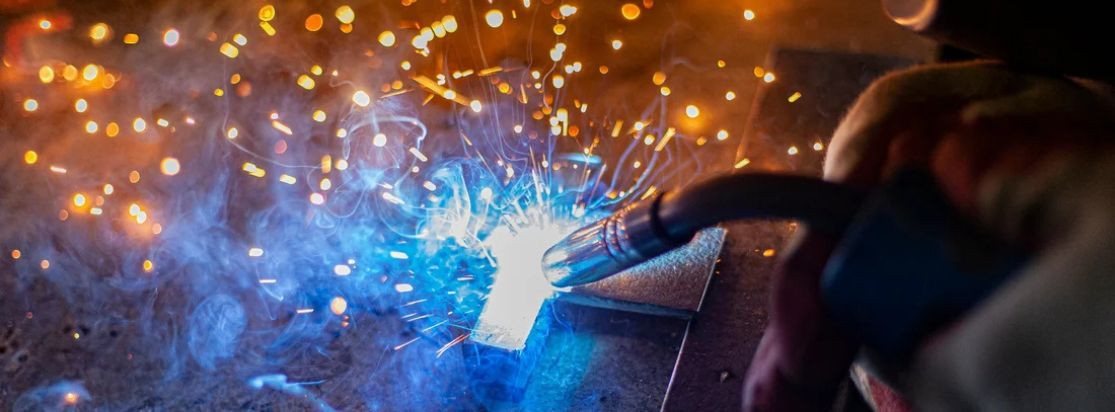
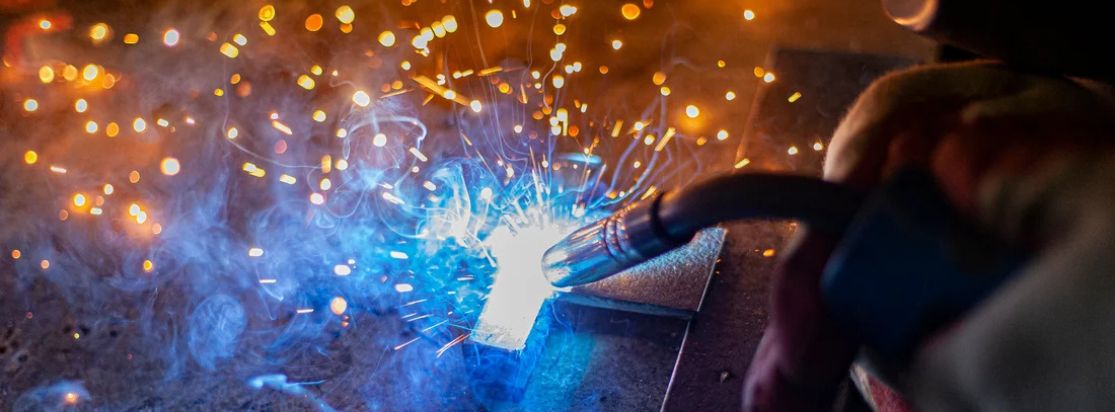
Repairing a cast iron component by welding requires overcoming a major metallurgical constraint: its high carbon content (above 2%), which makes conventional welding approaches highly prone to immediate cracking. A successful repair depends on strict thermal control and a rigorous methodology: accurate identification of the base material, mechanical preparation including drilling the ends of cracks, selection of a Nickel-rich filler metal for its ductility, and precise temperature management, either through full preheating or the use of short weld passes. Without this level of control, carbon migration into the weld pool can create a hard and brittle structure that is unable to withstand the contraction stresses generated during cooling.
Key Takeaways
- Material identification: Only grey cast iron (lamellar graphite, machinable) is considered suitable for welding. White cast iron (cementite), which is too hard and brittle, should be excluded from structural welding projects.
- Nickel ductility: Nickel-based filler metal is essential. Unlike steel, Nickel remains ductile at room temperature, allowing the weld to “stretch” and absorb the contraction stresses generated by the cast iron.
- Hot peening: To relieve internal stresses, the weld bead should be peened immediately after the arc is extinguished, while the metal is still very hot.
- Controlled thermal inertia: Successful hot welding requires a gradual temperature increase of 100°C per hour and extremely slow cooling at around 50°C per hour, ideally under an insulating material such as sand or vermiculite.
- Safety limitations: A repair never fully restores the component’s original structural integrity. Welding repair should therefore be avoided on safety-critical components such as braking or lifting parts, as well as on areas heavily contaminated with oil.
Understanding Metallurgy: Why Is Cast Iron Difficult to Weld?
As a welding professional, I often point out that cast iron is not simply a high-carbon steel. It is an iron-carbon alloy (C > 2%) whose internal structure reacts poorly to sudden temperature changes. Ignoring the chemical composition of the component can lead to structural failure before the first weld bead is even completed.
Difference Between Grey Cast Iron and White Cast Iron
The form in which carbon is present determines weldability. Grey cast iron, which contains graphite, has excellent castability and remains machinable, allowing good bonding with the filler metal. In contrast, white cast iron retains carbon in the form of cementite (iron carbide). This structure is so hard and brittle that it cannot tolerate local thermal expansion without cracking. It is generally considered unsuitable for conventional maintenance welding.
The Critical Role of Carbon in Cracking
The main risk lies in the Heat-Affected Zone (HAZ). When welding with conventional steel filler metal, carbon can migrate towards the weld and promote the formation of an extremely brittle martensitic layer at the joint. This is what can cause the characteristic sudden cracking sound: the component fractures because it lacks sufficient ductility to withstand the contraction stresses generated as the weld pool cools.
Diagnosis and Preparation: Securing the Joint Area
Surface preparation plays a major role in metallurgical bonding. Poorly cleaned porosity or an inadequately prepared crack can compromise the repair, regardless of the quality of the electrode being used.
Workshop Identification Tests
To distinguish cast iron from steel or to help identify the type of cast iron, I use three practical workshop tests:
- Spark test: When ground, steel produces a dense stream of bright sparks. Grey cast iron produces fewer, generally orange-coloured sparks. White cast iron produces very few sparks.
- Drilling test: A sharp drill bit in steel produces long, continuous spiral chips. Grey cast iron produces chips that immediately break into small fragments or powder. If the drill bit is unable to penetrate the material, the component may be white cast iron.
- Magnet test: Useful for confirming that the material is ferrous before ruling out the possibility of a non-ferrous alloy.
Mechanical Cleaning and Crack Preparation
- Thorough degreasing: Cast iron is porous and can absorb oil. Cleaning with a suitable solvent or steam treatment is therefore essential.
- Crack arrest: I generally recommend drilling a small hole at each end of the crack to help prevent further propagation caused by thermal stresses.
- Bevel preparation: Prepare a 60-90° V-groove to obtain sufficient penetration into the joint.
- Buttering: When joining cast iron to steel, first apply a Nickel-based buttering layer to the cast iron surface before completing the final joint.
Thermal Management Strategies: Preheating and Cooling
Thermal shock is one of the main causes of failure when welding cast iron. The thermal strategy must therefore be selected according to the size, geometry and complexity of the component.
Hot Welding: The Reference Method
This method is commonly used for critical components. It involves gradually increasing the temperature at approximately 100°C per hour until reaching a temperature between 250°C and 700°C. Maintaining the component at temperature reduces the thermal gradient between the weld pool and the base material. After welding, cooling must be even slower, at approximately 50°C per hour, in order to stabilise the metallurgical structure.
Cold Welding and the Short-Bead Technique
For large machine frames or components that cannot easily be moved or preheated uniformly, a "cold welding" approach may be used. The aim is to keep the component only slightly warm, generally below approximately 60-70°C. Deposit short weld beads of 20 to 30 mm and alternate between different areas of the joint rather than welding continuously from one end to the other. This technique limits heat accumulation in the HAZ.
Welding Processes and Consumables: Optimising the Metallurgical Joint
The choice of filler metal is mainly determined by its ability to absorb mechanical and thermal stresses without cracking.
MMA Welding and the Advantages of Nickel Electrodes
Manual Metal Arc welding (MMA/SMAW) remains one of the standard processes for cast iron repair. I recommend using suitable Nickel or Nickel-Iron electrodes, following the polarity specified by the electrode manufacturer. Nickel is widely used because it limits the formation of hard, brittle carbides and offers high ductility. This allows the weld metal to accommodate contraction stresses more effectively and reduces the risk of cracking. For repair work, use suitable consumables such as these cast iron welding electrodes.
Alternatives: Cast Aluminium Alloys and Braze Welding
- Stainless steel (309L): A lower-cost alternative for certain non-critical repairs, although it is generally less suitable than Nickel-based filler metals for cast iron.
- AC TIG welding for cast aluminium alloys: For what is sometimes referred to as "cast aluminium", AC TIG welding is commonly used because alternating current helps break up the aluminium oxide layer while providing precise control of the weld pool.
- Braze welding: A useful oxy-fuel solution for components that are not highly stressed, as the base material does not need to be fully melted. This helps reduce the risk of forming a hard and brittle heat-affected zone.
Finishing and Repair Limits: Ensuring a Safe Repair
Managing internal stresses continues after the arc has been extinguished and requires appropriate mechanical and thermal measures.
Peening and Thermal Insulation
Peening should be carried out immediately after depositing the bead, while the weld metal is still hot and sufficiently ductile. Lightly peening the bead helps stretch the deposited metal and compensate for thermal contraction. For components welded using a full preheating procedure, slow cooling can be achieved by insulating the component in dry sand, vermiculite or another suitable insulating material.
Assessing Repairability and Safety
As a general rule, I recommend avoiding welded repair in the following situations:
- Safety-critical components: Lifting equipment, braking components or parts subjected to extreme or repeated vibration.
- Severe contamination: If the weld pool continuously foams or becomes heavily contaminated because of deeply absorbed oil, oxidation or other contaminants that cannot be removed.
- Critical areas: Cracks located too close to threads, bores or precision-machined bearing surfaces where thermal distortion could make the component unusable. Any repaired cast iron component should be assessed carefully before being returned to service.
Essential Points
Welding cast iron requires patience, suitable Nickel-based filler metal and strict control of the thermal cycle. Gradual heating and slow cooling help reduce thermal stresses, while the use of ductile filler metals limits the risk of cracking. The main objective is to minimise the formation of hard and brittle structures within the heat-affected zone.
Recommended Next Step
Always identify the material as accurately as possible using practical methods such as spark testing or drilling before applying heat. Use appropriate industrial-quality MMA welding machines and assess the criticality of the component before deciding whether welding is an appropriate repair method.
SOURCES USED
- Inno SCHIA video: Cast iron-to-steel welding and polarity.
- Apprenti Soudeur article: Metallurgy of grey cast iron vs white cast iron.
- Expondo guide: Heating and cooling procedures (100°C/h and 50°C/h).
- Soudure & Métallerie video (Benoît): Spark testing and workshop diagnosis.