
 Français



_11zon.webp)


_14_11zon.webp)
_6_11zon.webp)



Stainless Steel Welding: The 3 Essential Steps Before You Start
- Nada Iddouch
- 23 Sep, 2025
- Welding techniques
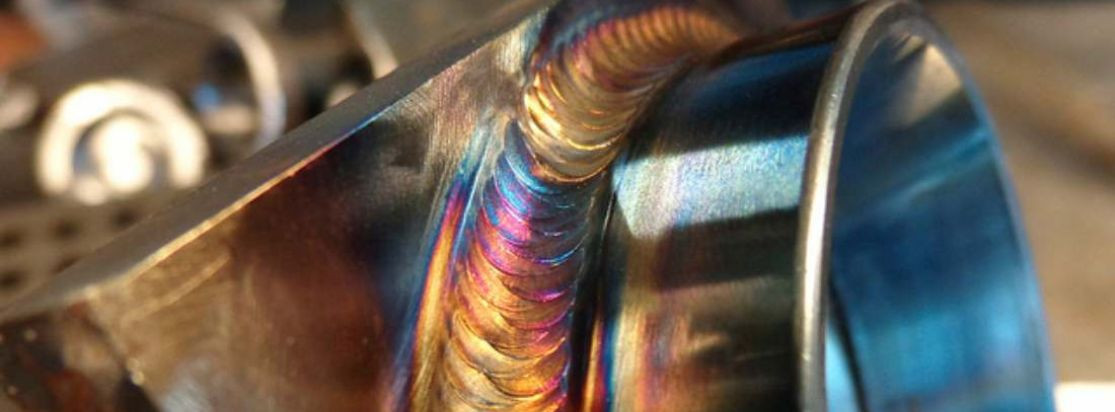
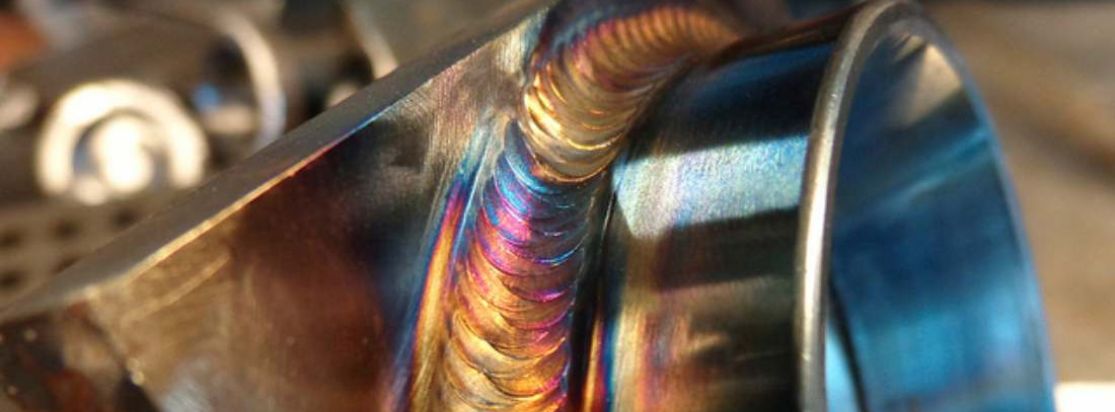

Welding professionals regularly encounter specific challenges when working with stainless steel. This material, ubiquitous in industry thanks to its robustness and aesthetics, requires a methodical approach to ensure reliable and durable joints. A lack of understanding of its chemical characteristics or an approximate choice of process can lead to premature corrosion, mechanical degradation, or visual defects. To optimize each intervention, it is therefore essential to master both the very nature of stainless steel and the appropriate joining techniques.
Analyzing the Chemical Composition of Stainless Steel
Stainless steel is primarily defined by its composition: an alloy dominated by iron, to which is added a significant proportion of chromium, generally between 12% and 30%. This component is not chosen at random; it is precisely what provides steel with its resistance to corrosion.
As soon as chromium comes into contact with atmospheric oxygen, it reacts to form, on the surface of the metal, a very thin yet particularly resistant oxide film. This barrier protects the underlying material from corrosive attacks and prevents deep oxidation. The exact chromium content subtly alters the final properties: the higher it is, the greater the resistance to aggressive environments.
For each industrial application—whether food-processing equipment, architectural structures, or medical devices—choosing the right grade of stainless steel directly depends on this chemical composition. Selecting steel with lower chromium content may be suitable for standard uses but quickly exposes it to risks in more demanding environments.
Exploring the Structural Advantages of Stainless Steel
Beyond its anticorrosion properties, this metal offers a remarkable balance between mechanical strength and visual elegance. Its longevity is valued in both construction and heavy industry: when subjected to repeated mechanical stress or exposed to the elements, it retains its shape without notable alteration.
Another major advantage lies in its ability to maintain its properties even after exposure to heat or common chemical agents. This stability enables its use in a wide range of environments: offshore platforms exposed to salt water, food-processing lines requiring absolute hygiene, or outdoor installations that must retain their shine for decades.
Finally, its naturally shiny finish adds aesthetic value, appreciated both for equipment visible to the public and for industrial works where design and functionality go hand in hand. Understanding these characteristics allows anticipation not only of the expected technical performance but also the desired visual outcome when selecting the stainless steel grade and associated welding process.
Mastering Stainless Steel Welding Techniques
Welding this alloy is not merely a matter of manual skill; it requires a rigorous selection of the process adapted to the industrial context as well as the constraints of the project at hand.
Choosing the Right Welding Process for Stainless Steel
Three main methods dominate the professional landscape today when it comes to assembling this material:
Shielded Metal Arc Welding (MMA)
This technique relies on the use of a coated electrode whose role goes far beyond simple metal transfer. Once positioned close to the workpiece using a dedicated clamp, it creates an electric arc that locally heats both the metal and the coating to their melting point. The coating then progressively breaks down, releasing protective gases and slag that temporarily cover the molten area.
Main advantages:
- No need for external gas
- Suitable for outdoor work (relatively unaffected by wind)
- Compact and easily transportable equipment
- Cost-effective solution, ideal for mobile worksites or tight budgets
Special attention must be given to electrode selection: only electrodes specifically designed for stainless steel ensure durability and metallurgical compatibility with the base material.
MIG/MAG Welding
This method significantly speeds up production without sacrificing quality or mechanical consistency. It involves continuously feeding a special wire electrode through an adapted torch (often equipped with a Teflon or carbon liner up to 3 meters) while simultaneously shielding the weld area with an appropriate gas mixture—typically argon with occasional additions of CO₂ or O₂ (1–3%).
Specific requirements include:
- Use of stainless-steel-specific wires only
- Precise gas adjustment (pure argon + small CO₂/O₂ content)
- Machine settings tailored to thickness/positioning
This process is particularly well suited for industrial needs where speed equals productivity, while still ensuring structural integrity over long welds.
TIG Welding (GTAW)
TIG stands out for its unmatched ability when it comes to:
- Achieving clean joints with minimal imperfections,
- Working on thin materials from as little as 0.5 mm,
- Delivering highly aesthetic results (uniform weld beads).
The operator uses a non-consumable tungsten electrode under gas shielding (pure argon or helium/hydrogen mixtures in special cases). The filler metal comes exclusively from stainless-steel rods matched to the grade being welded.
Although this approach demands proven dexterity and experience—handling the TIG torch and filler rod simultaneously requires coordination—it remains essential whenever fine finishing is more important than raw speed.
| Process | Key strengths | Main constraints |
|---|---|---|
| MMA | Mobility / no shielding gas | Slag / post-weld finishing |
| MIG/MAG | Speed / automation | Precise settings / dedicated wire |
| TIG | Precision / aesthetics | Skill required / slower throughput |
Optimizing Preparation and Finishing for a Perfect Weld
The final success depends above all on flawless preparation followed by meticulous post-weld treatment:
Initial Preparation
The superficial layer naturally formed by the air-chromium reaction must be removed before any thermal operation; neglecting this detail not only risks imperfections but also permanently weakens any joint made thereafter.
The only truly suitable solution: vigorously brush each affected area using a tool made exclusively of… stainless steel! Absolutely avoid standard brushes, whose residual traces would quickly cause rust to appear due to cross-contamination between different metals.
Post-Weld Cleaning
Once all passes are completed:
- Systematically remove the cooled slag generated during the MMA process.
- Treat the discoloration caused by local heating.
- Eliminate all stray spatter that could affect the overall appearance or the future use of the treated part.
Special care during these steps guarantees both structural durability and long-lasting uniform appearance—two decisive criteria whether your work is intended for public display or intensive professional use.
Summary & Specialized Contact
Thoroughly understanding the internal chemistry and the structural advantages of each grade already makes it possible to effectively anticipate many potential challenges in stainless steel welding. Combining this technical expertise with the right processes, then strictly following the preparation and cleaning steps, ensures optimal performance—both mechanical and aesthetic—on every industrial project, whether small batches or large assemblies.
Need specialized support? To quickly obtain a personalized quote or targeted advice tailored to your business constraints, contact our dedicated stainless steel welding experts today!
Let’s talk about your project
An industry expert will respond within 24 business hours.
Stainless steel is an alloy mainly composed of iron and chromium, the latter providing excellent resistance to corrosion. It is widely used in industry for its robustness, durability, and aesthetics, making it ideal for applications ranging from food-processing equipment to architectural structures.
Chromium is crucial because it reacts with oxygen to form a protective oxide layer on the surface of stainless steel. This layer prevents corrosion and ensures the material’s durability, especially in harsh environments.
The main welding processes for stainless steel are Shielded Metal Arc Welding (MMA), MIG/MAG welding, and TIG welding. Each comes with specific advantages and limitations, making them suitable for different industrial contexts.
The choice depends on several factors, such as the working environment, productivity requirements, and the importance of the final appearance. For example, TIG is ideal for high-quality finishes, while MIG/MAG is preferred for its speed and efficiency.
Before welding, it is crucial to remove the natural oxide layer on the surface of stainless steel using stainless steel brushes. This preparation prevents defects and ensures strong, durable joints.
After welding, it is essential to remove slag, treat discoloration caused by heat, and eliminate any spatter. These steps not only guarantee a clean, uniform appearance but also enhance the structural durability of the welded assembly.
Selecting the right grade of stainless steel is vital to meet the specific requirements of each application. Using the wrong grade can lead to corrosion risks or mechanical failure, particularly in demanding environments.