
 Français



_11zon.webp)


_14_11zon.webp)
_6_11zon.webp)



2026 Welding Fume Extraction Grant: Finance Up to 70% of Your Equipment
- LAURENT DAROLT
- 15 Sep, 2026
- News and innovations , Welding safety
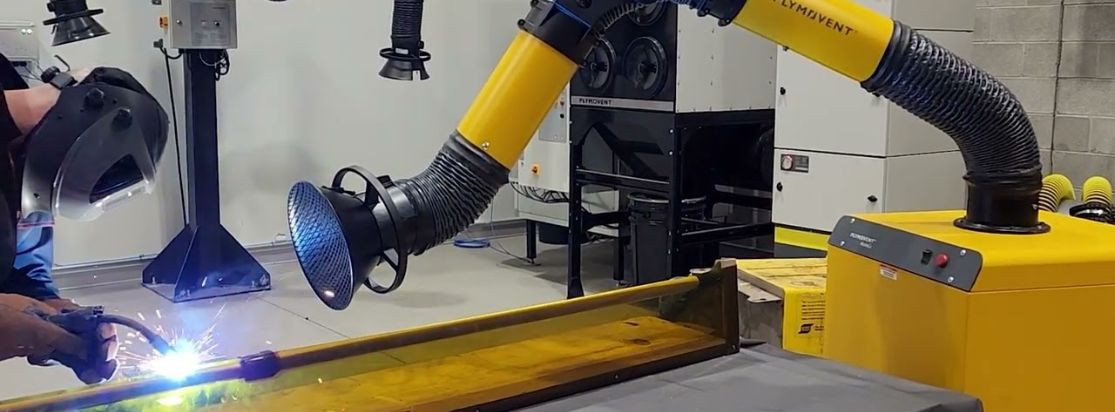
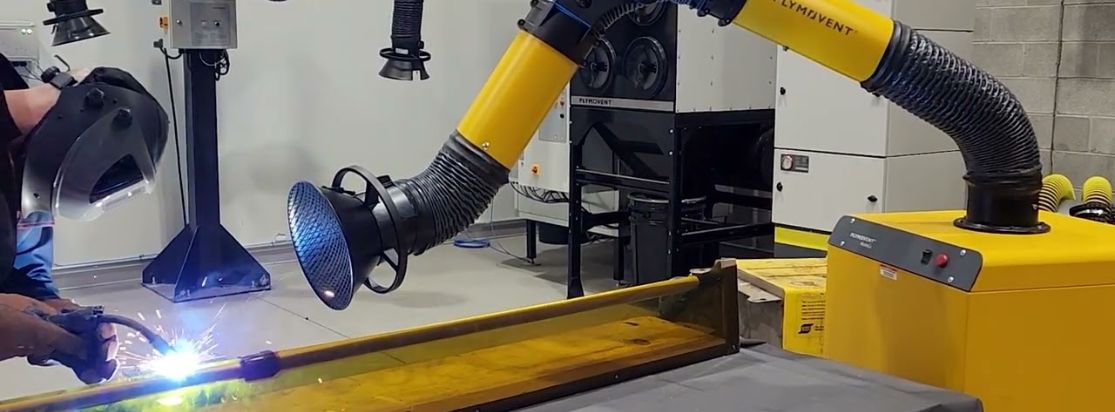
To qualify for the “Welding Fume Extraction” grant in 2026, companies with fewer than 50 employees covered by the general Social Security scheme must submit their application through the AT/MP account on the net-entreprises.fr portal. From January 1, 2026, the funding rate increases to 70% of the pre-tax investment amount, enabling very small businesses and SMEs to finance the purchase of compliant localized extraction systems (torches, arms, tables, and robotic welding enclosures) to eliminate operators’ exposure to fumes classified as known carcinogens.
Key Takeaways
- 70% funding rate: From January 1, 2026, funding for chemical risk prevention equipment increases from 50% to 70%.
- New €500 minimum grant: The minimum grant amount is reduced to €500, making the scheme available for investments starting at €715 excluding VAT.
- Extraction hoods excluded: The scheme strictly excludes extraction hoods in favor of solutions that capture fumes as close as possible to the emission source.
- Mandatory outdoor exhaust: Every installation must discharge filtered fumes outside the work premises.
- €300,000 “de minimis” ceiling: The total public aid received by the company (SIREN) may not exceed €300,000 over a rolling three-year period (source: EU Regulation 2023/2831).
Company Eligibility Criteria and Administrative Compliance
Bringing the company into compliance beforehand is not merely a formality, but a strategic imperative to secure payment of the funds. For French Health Insurance – Occupational Risks (CNAM), these criteria form the pillars of its prevention policy. An incomplete administrative file or one that fails to meet current regulatory requirements will result in the immediate rejection of the application.
Conditions Relating to Workforce Size and Social Security Scheme
The grant is available exclusively to companies with 1 to 49 employees (at SIREN level) that are covered by the general Social Security scheme. According to ameli.fr, applicants must be up to date with their Urssaf contributions and must not be subject to an outstanding formal notice or additional contribution. In addition, the company must not have an active prevention contract or have benefited from one during the two years preceding the application.
Regulatory Prevention Obligations and the Single Risk Assessment Document
Eligibility depends on having a Single Occupational Risk Assessment Document (DUER) that has been updated within the past year, except where the annual-update exemption for companies with fewer than 11 employees applies. In accordance with the “Conditions for Awarding the Welding Fume Extraction Grant – 2026 Version,” the company must also provide evidence of its membership in an Occupational Prevention and Health Service (SPST) and must have formally informed its employee representative bodies (IRP) of the planned investments.
This administrative rigor enables the business to meet the conditions for the exceptional financial benefits introduced by the 2026 funding schedule.
Financial Terms and Funding Caps under the 2026 Scheme
The change in funding rates as of January 1, 2026, reflects a determination to accelerate investment in prevention among very small businesses. Lowering the minimum grant amount now enables small workshops to access advanced equipment while keeping their remaining out-of-pocket costs to a minimum.
A Funding Rate Increased to 70% and New Thresholds
The main change in 2026 is the increase in the grant funding rate from 50% to 70% for chemical risks. According to net-entreprises.fr, the minimum grant amount is now €500, making any investment of €715 excluding VAT or more eligible for funding. The aggregate cap per establishment (SIRET) remains set at €25,000 for the 2023–2028 period, including services to verify airflow and acoustic performance.
European Framework and Rules on Combining Financial Aid
The scheme complies with European Regulation 2023/2831 (“de minimis”), which limits public aid to €300,000 over three years. One crucial point requiring attention concerns the DCRA Act: if the cumulative amount of grants received by the company exceeds €23,000 during the previous 12 calendar months, an agreement must be signed with the regional fund (source: ameli.fr). This threshold is assessed based on all CNAM grants received, rather than on an individual application.
Access to this funding is nevertheless conditional on selecting equipment whose airflow performance meets the technical specifications.
Technical Specifications and Eligible Equipment
In occupational risk prevention engineering, extraction at source is the overriding priority for compliance with Article R4222-12 of the French Labour Code. The choice of technology must not only be ergonomic; it must also guarantee specific air velocities that extract contaminants before they reach the welder’s breathing zone.
Localized Extraction Solutions and Airflow Performance
To qualify, high-performance MIG/MAG fume-extraction torches must achieve an induced air velocity at the emission point strictly greater than 0.25 m/s (current ≤ 200 A) or 0.35 m/s (current > 200 A). TIG source-extraction systems require a velocity > 0.35 m/s. For extraction arms, tables, and backdraft panels, the capture velocity must always be greater than 0.5 m/s. The scheme also funds extraction jigs, ventilated booths, and enclosures for robotic welding (inward air velocity > 0.3 m/s).
Installation and Outdoor Exhaust Requirements
The requirement to discharge fumes outside the premises following P3-type filtration is absolute. Alternative solutions such as general ventilation (minimum 2,000 m³/h per welder) or supplied-air respirators (minimum TH3 or TM3 leak-tightness class) are eligible only as optional additions to a localized extraction system. The use of extraction units that meet CNAM requirements is therefore a technical prerequisite for any supplementary funding.
This rigorous technical selection forms the basis of the evidence package required for payment of the grant.
Net-entreprises Application Process: From Funding Reservation to Payment
The process is fully online through the AT/MP account. Securing funding through the reservation option is a strategic imperative, as funds are limited and allocated in chronological order based on the receipt of complete applications.
Preparing the Application and Mandatory Supporting Documents
To confirm its eligibility, the company must provide an Urssaf compliance certificate issued less than six months ago, the “de minimis” declaration, and bank account details (RIB) in the company’s name. Important: if the name shown on the RIB differs from the establishment’s registered legal name, the company’s stamp must be affixed to the document to prevent the application from being rejected. Quotations and purchase orders must explicitly state that the equipment complies with CNAM’s technical specifications.
Approval Stages and Performance Verification
The process consists of three phases: application, funding reservation (approved by the regional fund within two months), and payment. Once the reservation has been confirmed, the company has six months to submit paid invoices. The certificate of compliance, signed by the supplier or an approved organization, must certify the actual airflow performance measurements (air velocities) recorded when the system was commissioned.
The rigor applied to this final measurement verification determines how quickly and reliably the funds are paid.
Conclusion
The 2026 edition of the “Welding Fume Extraction” grant represents a major opportunity for very small businesses and SMEs. By increasing its financial support to 70%, French Health Insurance is making it easier to comply with the legal requirement for collective protective measures under Article R. 4222-12 in relation to carcinogenic risks. Extracting welding fumes at source therefore becomes a financially affordable solution, provided that the application procedure is followed rigorously. The project’s success depends above all on selecting equipment that fully meets the airflow performance requirements specified in the national technical specifications.
Official Sources Used:
- Net-entreprises.fr (news item dated January 8, 2026).
- Ameli.fr – Chemical Risk Grants: Welding Fume Extraction (2026 version).
- “Soudage + sûr” (“Safer Welding”) specifications – Appendices 1, 4, and 5.
- French Labour Code – Article R4222-12.
- Commission Regulation (EU) 2023/2831 (“de minimis” rule).
- DCRA Act (Citizens’ Rights in Their Relations with Public Authorities).