
 Français



_11zon.webp)


_14_11zon.webp)
_6_11zon.webp)



Hydraulic Welding Table: Less Effort, More Productivity
- Nada Iddouch
- 10 Sep, 2025
- Welding equipment
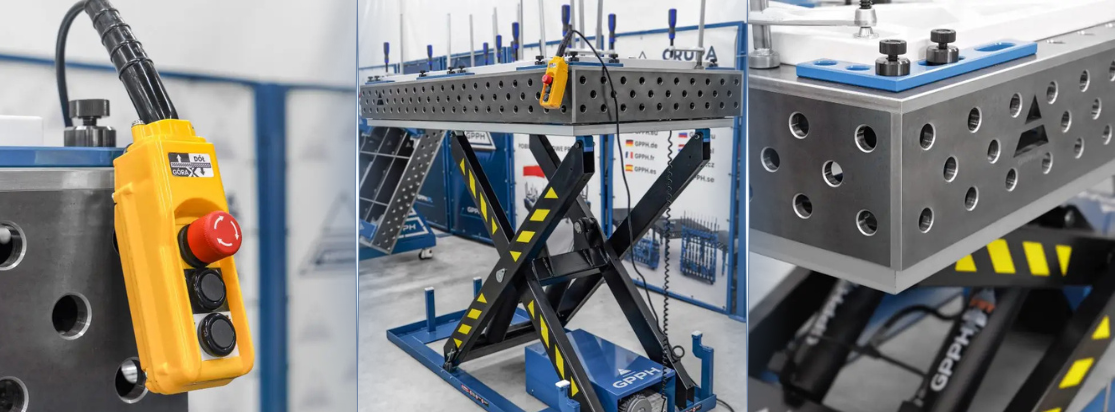
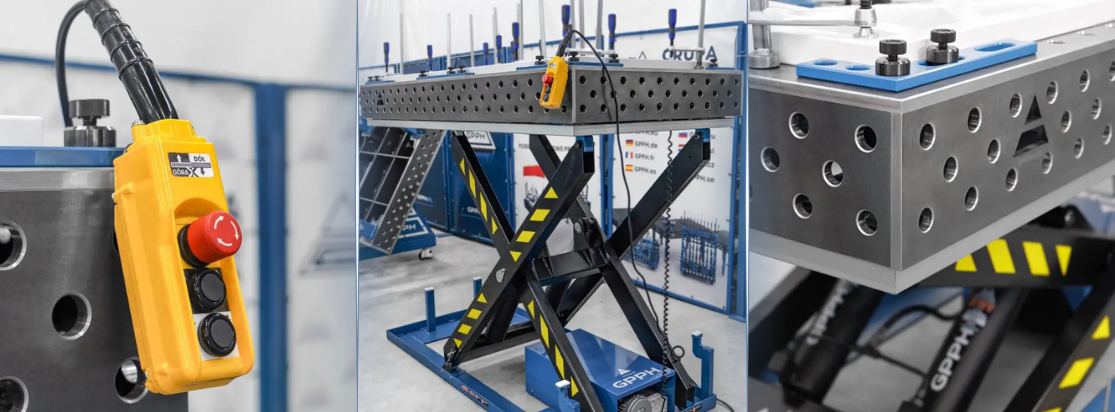
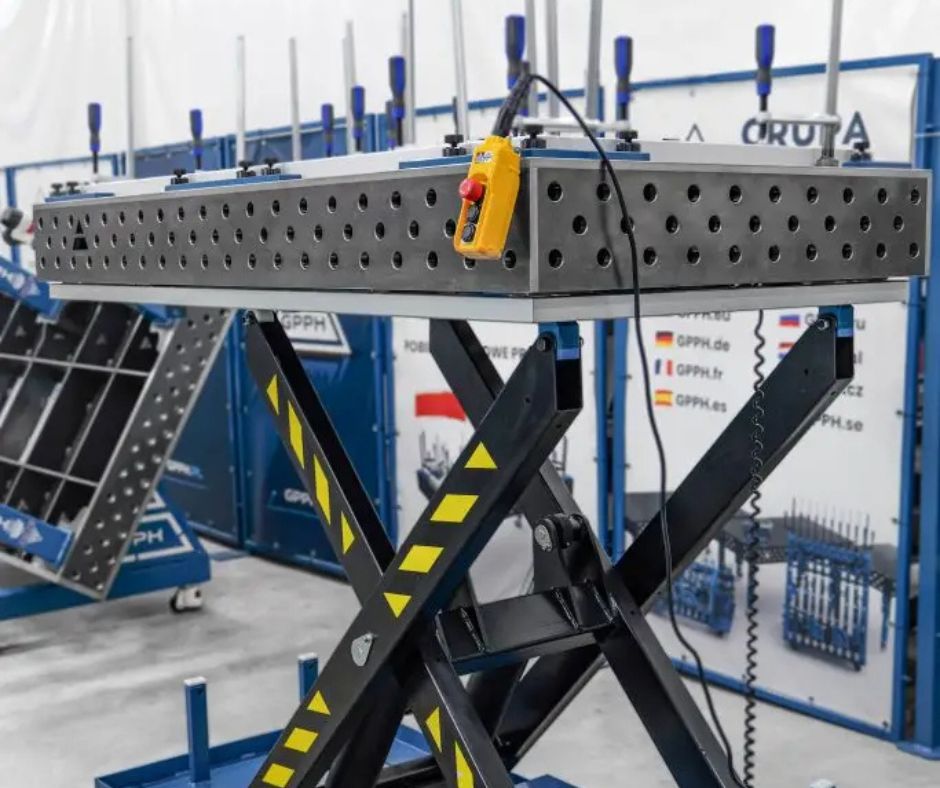
The day-to-day practice of welding exposes operators to sustained physical intensity. Repeated handling of heavy parts, extended work in constrained postures, and the lack of workstation adjustment cause back pain, joint strain, and overall fatigue. These constraints are not just about comfort: they affect long-term health and undermine workshop productivity. In response to these challenges, integrating technical solutions such as a welding table equipped with a hydraulic system radically transforms professionals’ daily work.
Ergonomic Optimization of Welding Tables for Comfort
Reducing Physical Fatigue with a Hydraulic System
Manual lifting of metal components accounts for a considerable share of the effort required from welders. Introducing a height-adjustable platform via a hydraulic mechanism changes the equation: the operator no longer needs to constantly lift or reposition heavy parts or adopt awkward postures to access weld areas.
On a table equipped with an advanced hydraulic system, adjustment is as simple as pressing a button on an intuitive panel. This setup enables instant adjustment—between 460 mm and 1,150 mm—without additional physical effort. Even with gloves, each adjustment remains precise thanks to the ergonomic design of the control box: visible markers, responsive controls, and natural handling become part of the workflow.
Immediate adjustability eliminates long hours spent bent over a structure or forced into a rigid posture. The station adapts to individual requirements—body type, handling preferences, or the specific nature of the work—promoting optimal positioning for each task. This flexibility significantly reduces muscle strain and limits micro-traumas associated with repetitive motions.
By way of example, during a complex assembly requiring several successive passes on different horizontal and vertical planes, the ability to raise or lower the surface in seconds removes any interruption caused by manual repositioning. The pace remains smooth; the physical load drops markedly while precision improves.
Improving Working Conditions and Preventing Health Risks
An environment where each operator can adapt their station helps prevent musculoskeletal disorders (MSDs) over the long term. Years spent bent in an unsuitable posture frequently lead to serious conditions such as herniated discs or chronic low back pain.
Regular use of a height-adjustable surface with a hydraulic cylinder not only immediately relieves strain on the back but also protects the joints from the repeated mechanical stresses inherent to the trade. In this way, the spine benefits from better alignment during work, while the upper limbs are less exposed to excessive effort.
Health prevention is strengthened: a notable decrease in sick leave due to persistent physical pain, and fewer accidents caused by muscle exhaustion or awkward movements when manually moving bulky loads.
This advanced ergonomics supports long-term fitness; it directly helps limit premature wear caused by daily postural stress. The positive effects are also measurable at the organizational level: fewer unplanned production interruptions and more consistent delivered quality.
Finally, offering this additional comfort fosters a calmer professional climate: attention can focus on technical execution rather than the continual relief of physical discomfort—which translates into fewer operational errors and less rework.
Safety and Reliability of Modern Welding Tables
Stability and Strength: The Advantages of Steel Frames
The central factor in ensuring safety and efficiency is, unquestionably, the structural robustness of the industrial equipment used. XWT tables illustrate this perfectly thanks to their frame made entirely of high-strength steel.
This solid construction gives each model the capacity to easily support metal assemblies weighing several hundred kilograms and more, without failure. No parasitic movement disrupts the operation: neither unexpected slippage under maximum load nor progressive deformation under continuous stress is observed.
The optimal rigidity of these metal structures ensures minimal transmission of vibrations generated during intensive welding—an essential condition for each weld bead to remain uniform throughout the production cycle.
Across all variants (EXPERT 25 mm; PRO 15 mm; PLUS 12 mm; ECO 8 mm; the INOX model dedicated to applications requiring stainless steel), each tabletop remains stable regardless of its configuration or the thickness selected to suit the specific needs of the site or workshop.
Comparison of Welding Table Models
| Model | Tabletop Thickness | Primary Use |
|---|---|---|
| EXPERT | 25 mm | Complex projects & heavy loads |
| PRO | 15 mm | Versatile production |
| PLUS | 12 mm | Medium series / standard projects |
| ECO | 8 mm | Light-duty work & optimized budget |
| INOX | Variable | Food industry / chemicals / stainless steel |
This broad range allows precise alignment between the required mechanical constraint, the type of metal being worked, and the financial requirements specific to each industrial company.
Integrated Safety Systems for Safe Operation
The systematic presence of integrated protective devices sets these modern pieces of equipment apart. Each XWT table therefore includes two major types: overpressure relief valves dedicated to the hydraulic circuit, as well as so-called “safety” valves.
The former act as safeguards against any accidental excess related to internal operation: should excessive pressure be applied to the cylinder (through human error or a temporary fault), they automatically release this surplus before it can damage any mechanical component.
In parallel, the “safety” valves play a decisive role during electrical incidents (power outage) or unforeseen malfunctions: they then allow the loaded platform (sometimes heavily loaded) to descend in a controlled manner throughout its vertical travel, without a sudden drop or loss of user control.
This dual safety net thus acts not only as a material shield but, above all, provides constant assurance of the operator’s physical integrity at their hydraulically assisted workbench—an invaluable source of peace of mind during delicate phases requiring maximum concentration (fine welding; critical alignment, etc.).
These measures in no way weigh down the user experience, since their activation remains completely transparent—nothing hinders or slows the natural flow of daily professional movements while ensuring full anticipation of unlikely but potentially serious accident scenarios without appropriate protection.
Summary & Contact
The widespread adoption of XWT hydraulic tables radically transforms both individual ergonomics and overall safety levels in all types of welding shops—from small outfits to specialized industrial production lines. Less physical exposure thanks to intuitive automatic adjustment, better protection against technical contingencies via robust integrated devices: users consistently benefit from tangible improvements in health, quality, and cost.
To receive a personalized assessment tailored to your current technical constraints (specific projects; stainless-steel requirements; optimized budget, etc.), get in touch with our technical team today to obtain a detailed, tailored quotation or to arrange a practical demonstration targeted to your real on-site needs.
A hydraulic welding table is a height-adjustable workstation powered by a hydraulic system. It improves ergonomics and reduces operators’ physical fatigue by making it easy to adjust the working position.
The hydraulic system lets you set the table height between 460 mm and 1,150 mm at the press of a button, reducing the need to manually lift heavy parts and to adopt constrained postures.
Hydraulic welding tables reduce muscle strain, limit micro-traumas caused by repetitive motions, and help prevent musculoskeletal disorders (MSDs) by enabling optimal adjustment of the working position.
Regular use helps prevent serious conditions such as herniated discs and chronic lower back pain by relieving strain on the back and protecting joints from the repeated mechanical stresses inherent to the job.
Modern welding tables feature high-strength steel frames and safety systems such as overpressure relief valves and safety valves, ensuring risk-free use even in the event of malfunctions.
Several models exist, such as EXPERT (25 mm for complex projects), PRO (15 mm for versatile production), PLUS (12 mm for medium runs), ECO (8 mm for light-duty work), and INOX (for applications requiring stainless steel).
By reducing interruptions due to manual repositioning and lowering physical fatigue, hydraulic welding tables enable a smoother working rhythm and greater precision, which improves productivity and work quality.