
 Français



_11zon.webp)


_14_11zon.webp)
_6_11zon.webp)



Adjustable Welding Tables: Enhance Workshop Ergonomics
- Nada Iddouch
- 17 Dec, 2025
- Welding equipment
.jpg)
Ergonomic Optimization of Height-Adjustable Welding Tables
Improving Comfort and Occupational Health
The traditional configuration of welding workstations often imposes physical constraints on operators. When a table has a fixed height, each user must adapt to a work surface that takes into account neither their body type nor the changing requirements of the project. This lack of adjustability results in repeated uncomfortable positions, leading to muscle tension, premature fatigue, and sometimes even the development of musculoskeletal disorders or back problems. Over time, the impact on health can become serious.
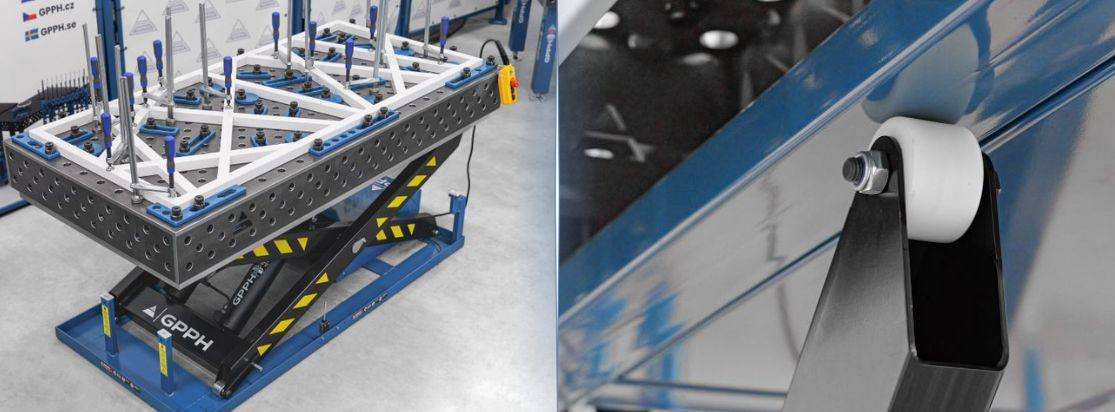
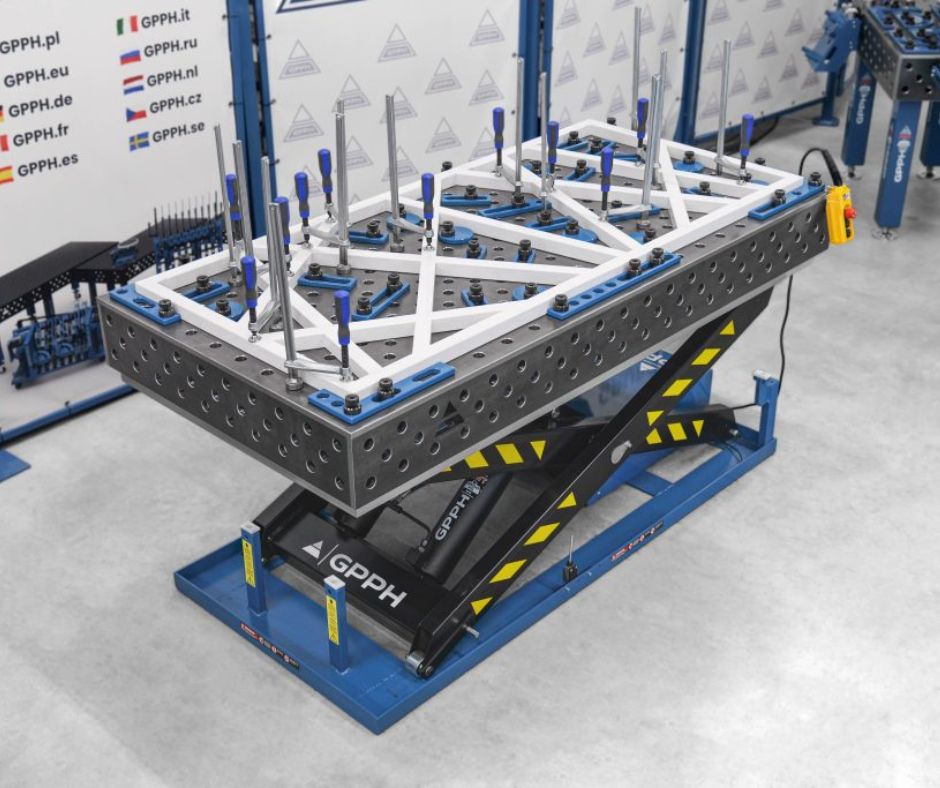
The introduction of height-adjustable welding tables revolutionizes this approach. Thanks to a smooth hydraulic or motorized system, each welder can adjust the table height to their size and preferences in just a few seconds. This rapid adjustment eliminates the need for tedious handling or the use of auxiliary elements to compensate for an unsuitable height.
In practice, this personalized adjustment frees the operator from equipment-related constraints. They no longer need to maintain a forced posture throughout the task: they can easily alternate between seated and standing positions depending on the part being worked on or the type of operation required. The result is a significant reduction in muscle pain, a lower risk of chronic injuries, and an overall improvement in daily well-being.
This universal ergonomics also benefits companies where multiple users rotate on the same workstation throughout the day or over several weeks. The ability for each person to instantly adjust their workspace prevents time losses caused by systematic workstation reconfiguration and helps maintain a healthy environment for all team members.
Positive Impact on Productivity and Precision
Operational efficiency is significantly enhanced when workstation layout is no longer a constraint but becomes a true performance driver. With a height-adjustable table, the operator can fully focus on their primary task: welding. Eliminating discomfort-related issues allows operations to flow smoothly, without unnecessary interruptions or loss of pace.
Fast adjustment—often completed in just a few seconds via a simple control—makes it easy to switch from a configuration for large parts to a position suited for the precise assembly of small components. This immediate flexibility greatly reduces the time required to prepare the workstation, both at the start and during operations.
In terms of precision, working in a comfortable position clearly limits manual errors. Less affected by physical strain, the welder gains stability and better control of their movements. Over the course of a full week, these small gains add up: fewer reworks due to posture-related defects and more consistent assembly quality.
Finally, this ergonomic improvement helps reduce absenteeism linked to chronic pain or workplace accidents—an essential factor in improving overall industrial productivity.
Safety and Adaptability of Modern Welding Tables
Integration of Advanced Safety Systems
Current technologies applied to adjustable tables go beyond ergonomics alone: their design incorporates a comprehensive range of systems aimed at fully securing every operation. It is common to find several levels of protection integrated directly into the structure:
- Overpressure relief valves: ensure hydraulic pressures remain under control during adjustment.
- Limit switches: prevent excessive movement that could damage either the equipment or the user.
- Emergency stop controls: instantly accessible so that any technical incident can be neutralized without delay.
These safety features not only provide additional peace of mind for operators but also drastically reduce the risks inherent to the profession (accidental pinching during mechanical movement, unexpected drops due to improper locking, etc.). All systems strictly comply with current standards relating to safety in demanding industrial environments.
This confidence in their equipment gives welders peace of mind: they can work calmly without fearing that a malfunction could jeopardize their physical integrity—naturally helping to minimize errors caused by stress or constant concern for immediate safety.
Flexibility and Adaptation to Diverse Production Environments
Modern workshops are continually evolving, driven in particular by frequent changes in production volumes or types (short/long runs, single parts/complex projects, etc.). Faced with these shifting realities, having industrial furniture capable of “supporting” all these transitions becomes crucial to ensure agility and long-term competitiveness.
The universal design inherent to GPPH adjustable tables enables seamless integration regardless of the industrial context encountered:
| Environment Type | Main Advantage |
|---|---|
| Traditional manual workstation | Reduced fatigue and easier part rotation |
| Automated / robotic line | Fast and smooth synchronization with robots |
| Multi-format projects | Quick switching between small and large parts |
Thanks to the simple and intuitive adjustment of these modular systems, every operator—whether beginner or experienced—can instantly adapt their workstation to the tasks at hand. For example, it is possible to quickly switch from a precision assembly that requires a higher table position to handling a heavy frame that calls for the table to be lowered to its maximum height in order to ensure perfect stability during structural welding.
This high level of versatility effectively supports the company’s internal growth, such as workforce expansion, as well as adaptation to new markets and new product ranges. Companies thus gain greater organizational autonomy and improved human performance, thanks to this innovative furniture, which becomes a central element of the modern welding workstation.
For any company looking today to sustainably improve workshop conditions—both in terms of team health and overall profitability—investing in height-adjustable tables represents far more than a simple technical upgrade. It is a strategic choice that helps establish a solid foundation for the long-term, optimal use of human and material resources.
Let’s talk about your project
An industry expert will respond within 24 business hours.
A height-adjustable welding table is a workstation whose height can be modified to suit the needs of each user, thereby improving ergonomics and comfort during welding operations.
These tables help reduce muscle strain and the risk of musculoskeletal disorders by allowing users to work in comfortable postures, whether seated or standing.
By eliminating interruptions caused by physical discomfort, these tables enable operators to focus fully on their task, reducing errors and increasing work precision.
Modern tables incorporate overpressure relief valves, limit switches, and emergency stop controls to ensure user safety during height adjustments.
Yes, thanks to their flexibility, they can be integrated into both traditional manual workstations and automated production lines, easily adapting to different types of production.
Investing in these tables helps improve working conditions, reduce absenteeism related to physical pain, and optimize productivity and assembly quality.
They integrate advanced safety systems that minimize the risk of accidents, allowing welders to work with confidence and without stress.