
 Français



_11zon.webp)


_14_11zon.webp)
_6_11zon.webp)



Comprehensive Guide to Welding Magnets: Features & Uses
- Nada Iddouch
- 03 Dec, 2025
- Pipefitting tools
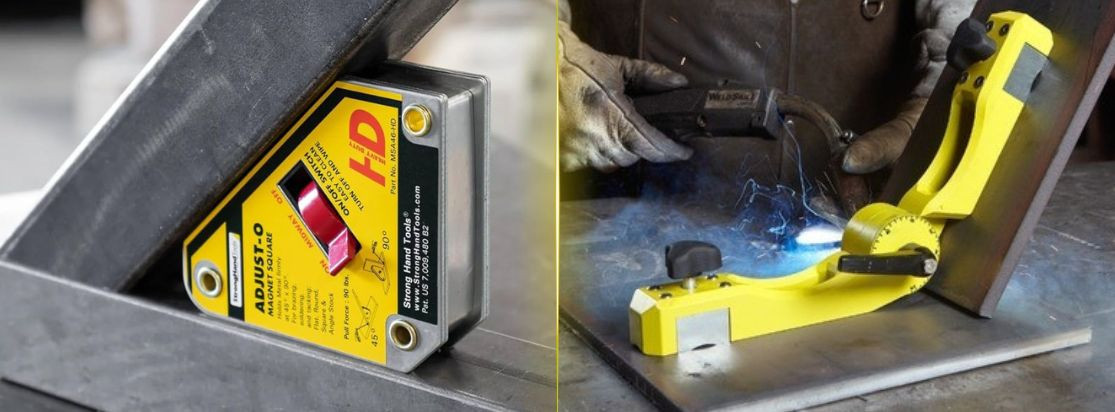
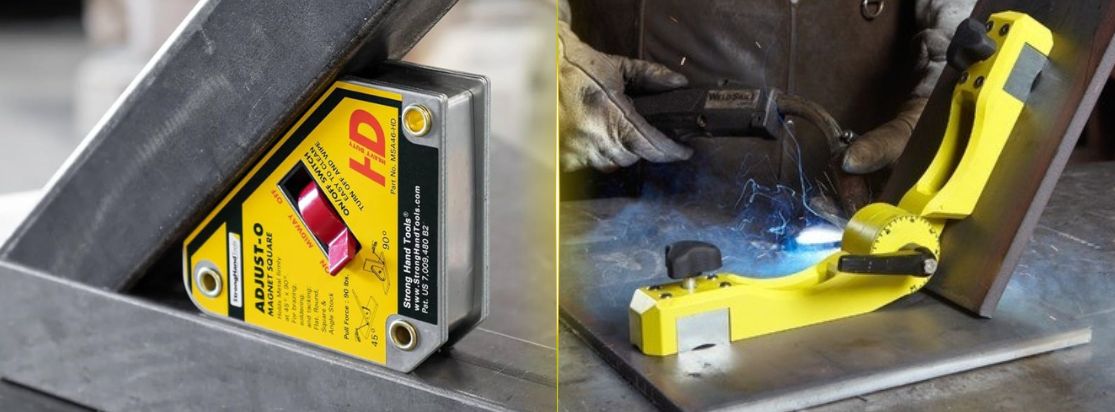
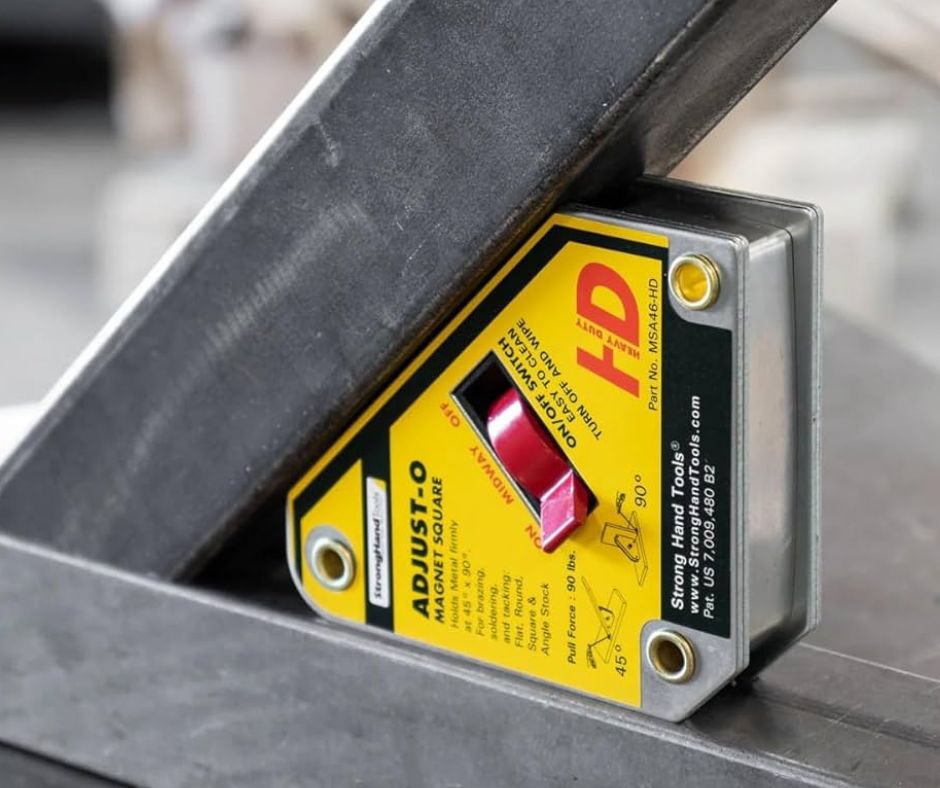
The assembly of metal parts requires precision, stability, and safety. To meet these requirements, welding magnets hold a prime position in the toolkit of both professional welders and skilled DIYers. Keeping ferromagnetic elements at the exact angle during preparation or tack welding not only ensures perfect alignment but also reduces the risk of accidents or structural defects caused by poor positioning. Without these accessories, manual holding quickly becomes a source of error, especially during operations that require two free hands or involve complex geometries.
Understanding welding magnets and their importance
Magnets specifically designed for welding are built to combine robustness and practicality. They always consist of an internal magnetic core surrounded by external metal plates. This structure meets two major requirements.
First, the magnetic core must be protected from the extreme conditions encountered in workshops: hot sparks, intense heat, or accidental contact with freshly welded parts can permanently damage the magnet if it is not insulated. The external plates therefore act as an effective shield against these potential hazards.
Another key point: the outer design allows the creation of precise angles when positioning the magnet on the parts to be assembled. Depending on the model selected, configurations of 45°, 90°, or even 135° can be achieved effortlessly. This versatility greatly facilitates the preparation of tubular frames, structures, or supports where geometric accuracy determines the final success of the project.
Essential features of welding magnets
The two components that make up each magnet—internal and external—each play a specific role in everyday use:
- Magnetic core: generates the magnetic field needed for temporarily holding parts in place.
- External metal plates: designed to extend slightly beyond the core to ensure a dual protective function (against heat/impacts) and structural function (angular guidance).
The metal casing helps extend the device’s lifespan by preventing the magnetic energy from being excessively dispersed outward or inadvertently absorbed when working on a metal workstation.
| Type of Magnet | Main Function | Achievable Angles |
|---|---|---|
| Magnetic square | Standard orthogonal holding | 90° |
| Single positioner | Quick fastening on flat surfaces | Variable depending on design |
| Double positioner | Simultaneous multi-piece assemblies | Multiple possible angles |
| Magnetic corner | Work in tight corner areas | 45°, 90°, sometimes 135° |
| ON/OFF model | Simplified activation / deactivation | Depends on integrated mechanism |
The selection therefore depends as much on the desired geometry as on the total weight supported by each tool.
Functions and applications of welding magnets
Thanks to their powerful magnetic field, these accessories firmly hold ferromagnetic components while leaving enough free space around the joint to easily operate a MIG/MAG/TIG torch or an MMA electrode. Their main advantage lies in their ability to completely free both hands during the initial tack-welding stage.
In common practice:
- Fast assembly of steel frames,
- Precise preparation before continuous welding on tubes,
- Multiple adjustments during the temporary assembly of scaffolding or provisional structures,
- Secure holding for tasks requiring several successive passes without unintended shifting.
However, attention must be paid to the materials used: only those with high magnetic permeability (mild steel, grey cast iron, etc.) fully benefit from the stabilizing effect. Alloys such as aluminum or certain austenitic stainless steels do not interact with the magnetic field; in such cases, alternative mechanical systems must be used.
Optimal use and maintenance of welding magnets
Correct handling is essential to achieve a clean result while preserving both the equipment and the operator. Strictly following a few key steps greatly reduces the risks of sudden slipping under load or electrical anomalies caused by prolonged magnetic interference.
Steps for effective use of welding magnets
1. Thorough preparation
Careful cleaning is always the essential preliminary step. Even a thin residual layer—old paint, rust spots, greasy film—can significantly disrupt the magnetic action, leading to partial or total loss of adhesion if this preparation stage is overlooked.
2. Careful positioning
Once the surfaces are perfectly clean, position each part at the desired angle and apply a few quick tack welds. The goal is to ensure sufficient holding strength without locking the assembly permanently or risking deformation caused by localized thermal stress.
3. Systematic removal before final welding
The main weld bead should never be continued or completed while a magnetic device remains next to the joint. If kept too close during active arc welding, the magnet may not only affect the normal trajectory (“arc blow,” a well-known phenomenon) but also cause unwanted inclusions leading to future mechanical defects.
4. Proper storage away from active zones
Once finished, all magnetic devices should be stored away from main metal surfaces to prevent the worktable from gradually turning into a large, unwanted magnetic field source. Long-term storage directly in contact with metal surfaces progressively amplifies this effect over multiple sessions.
Proper care at each stage significantly reduces the following risks:
- Poor final alignment,
- Weakened structure after delayed magnet removal,
- Deviated electric arc making precise tracking difficult,
- Safety hazards caused by an element slipping unexpectedly under high thermal load.
Cleaning and maintenance techniques for welding magnets
Intensive use inevitably leads to a gradual buildup: ferrous dust attracted by the magnetic field accumulates around the external/internal core and can eventually degrade performance if not removed regularly.
Two effective methods exist depending on available equipment:
- Targeted compressed-air blowing
A short but powerful jet quickly removes particles trapped between the plates without effort or disassembly.
- Alternative manual method
Temporarily placing the accessory in a sealed plastic bag and shaking it vigorously before gradually removing it allows for near-complete particle extraction without specialized equipment; an ideal method when working outside a fully equipped workshop.
After a full cleaning, immediately store each element in an airtight container to prevent accidental contamination during long-term storage. This method ensures consistent cleanliness from one session to the next and significantly increases operational lifespan.
Maintaining this impeccable state not only prevents future loss of magnetic strength but also avoids accidental introduction of particles onto a freshly prepared surface. This virtuous cycle is essential for maintaining optimal industrial consistency.
Technical summary & expert advice
Welding magnets offer outstanding efficiency when chosen wisely based on required strength, target angle, and used methodically—from preparation to post-operation storage. Regular maintenance ensures long-term reliability, while attention to material compatibility avoids incidents related to parasitic magnetic effects during welding.
To choose the model best suited to your constraints (specific dimensions, load capacity, required angles), it is recommended to consult a specialist who can provide a personalized quotation based on your real environment and frequency of use. This allows you to optimize every step, from planning to final completion.
Let’s talk about your project
An industry expert will respond within 24 business hours.
A welding magnet is a tool used to hold metal parts at a precise angle during welding, ensuring perfect alignment and increased safety.
Welding magnets make it easier to hold metal pieces in place, freeing the welder’s hands for other tasks and reducing alignment errors.
There are several types, including magnetic squares, single positioners, double positioners, magnetic corners, and on/off models, each suited to specific needs.
It is important to clean welding magnets regularly to remove ferrous dust, either by using compressed air or by applying a manual method with a plastic bag.
Ferromagnetic materials such as mild steel and grey cast iron are compatible. Alloys like aluminum and certain stainless steels are not.
Ensure the surface is clean before positioning the magnet, apply quick tack welds for holding, and remove the magnet before completing the main weld bead.
On/off models offer simplified activation and deactivation, making positioning easier and improving safety during welding operations.