Français



_11zon.webp)


_14_11zon.webp)
_6_11zon.webp)



Pipework tooling: understanding the tools used for preparation, assembly and welding
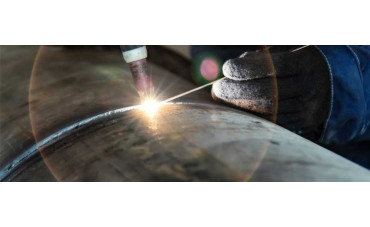
Pipework tooling includes all the equipment used to prepare, position, hold, cut, mark or assemble tubes before welding, installation or maintenance operations. These tools are essential in many professional environments: workshops, worksites, industry, maintenance, boiler making, industrial pipework or on-site interventions.
This blog category aims to help you better understand the role of the different tools used in pipework, their main applications and the best practices to know in order to work with precision, safety and efficiency. The goal is not only to choose a tool, but also to understand at which stage it is used when preparing a part or an assembly.
Why is tooling important in pipework?
In pipework, the quality of the work depends heavily on preparation. Before welding or assembling two elements, it is often necessary to measure, mark, cut, align, hold and check the parts. Poor positioning, an inaccurate cut or insufficient holding can make assembly more difficult, increase intervention time or affect the final quality of the weld.
Pipework tools therefore help secure each stage of the work. They help achieve better tube alignment, make edge preparation easier, stabilise parts during the operation and improve the repeatability of tasks. They are particularly useful when assemblies need to be precise, consistent or carried out in demanding conditions.
Preparing, cutting and positioning tubes
Tube preparation generally begins with identifying dimensions, marking reference points and cutting. Depending on the requirements, different tools can be used to mark an area, guide a cut, hold a tube or make handling easier. This stage is important because it directly affects the quality of the final assembly.
A clean cut and correct positioning help reduce adjustments before welding. Holding tools, supports, guides and alignment systems then play an important role in stabilising the parts and making the professional’s work easier, whether the operation is carried out in a workshop or directly on site.
Alignment, clamps and holding: key tools before welding
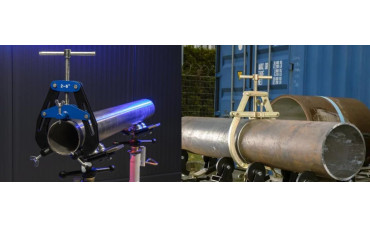
When two tubes need to be assembled or a flange positioned, alignment is an essential step. Clamps, pliers, supports and holding devices help keep the parts in the correct position before and during tack welding. They help reduce gaps, improve precision and make the welder’s or pipefitter’s work easier.
These tools are particularly useful for repetitive operations, complex assemblies or interventions requiring good part stability.
Purging and weld protection in pipework
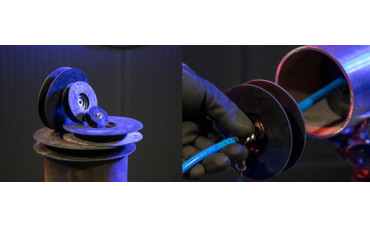
In certain applications, particularly on stainless steel, preparation does not only concern the outside of the tube. The inside of the pipework may also require protection during welding. Purging consists of using a shielding gas to limit internal oxidation and improve the quality of the root weld.
Choosing the right tooling according to the intervention
The choice of tooling depends on the type of tube, diameter, material, working environment, expected level of precision and frequency of use. A one-off requirement on a worksite will not necessarily require the same equipment as regular workshop use or an intervention on an industrial installation.
Before selecting a tool, it is useful to identify the steps to be carried out: marking, cutting, deburring, alignment, tack welding, purging, inspection or handling. This approach makes it possible to choose equipment that is consistent with the work to be performed and to avoid preparation errors.
Safety, precision and workstation organisation
Pipework tooling must also be chosen with safety in mind. Tube handling, cutting operations, welding, grinding or the use of holding tools can present risks if the workstation is not properly organised.
Good preparation helps limit poor working postures, improve part stability and reduce unnecessary rework. Using suitable equipment contributes to better working conditions, greater precision and improved quality of the assemblies produced.
Our advice to better understand pipework tooling
Through this category, HD Soudage helps you understand the tools used in pipework, from tube preparation through to welding. You will find advice on alignment, purging, part holding, welding magnets, preparation methods and best practices to adopt depending on the application.
Whether you are a pipefitter, welder, boiler maker, maintenance technician or professional working on site, this section will help you better understand the role of pipework tooling and prepare your assemblies in the right conditions.