The 'inerting' technique is essential in many industrial processes, particularly in welding reactive metals such as titanium and zirconium. This method involves creating a protective atmosphere around the welding zone to prevent contamination by oxygen, nitrogen, or hydrogen present in the ambient air. Understanding the principles of inerting and mastering its implementation is crucial to ensuring the quality and integrity of welds on these sensitive materials.
I. What is inerting and why is it necessary?
Inerting is a process that aims to replace the reactive atmosphere of an enclosed volume with an inert gas, typically argon. This technique is particularly important when welding highly reactive metals such as titanium and zirconium. These materials tend to oxidize rapidly upon contact with air, which can severely compromise the quality of the weld and the mechanical properties of the assembly.
The gas shielding provided by inerting plays a crucial role at several levels:
- It prevents the formation of oxides on the molten metal and in the heat-affected zone.
- It prevents contamination of the weld pool by nitrogen and hydrogen.
- It stabilizes the electric arc and promotes better weld penetration.
- It contributes to the controlled cooling of the weld bead.
Without adequate gas shielding, welds on titanium or zirconium would exhibit unacceptable defects such as inclusions, porosities, or metal embrittlement. Inerting is therefore an essential step to achieving high-quality assemblies in these demanding applications.
II. The different types of gas shielding
The implementation of inerting involves several levels of gas shielding, each serving a specific function:
1. Primary shielding
Primary shielding is provided by the gas exiting the welding torch. It creates a protective envelope around the electric arc and the weld pool. The flow rate and purity of the gas used are critical parameters for the effectiveness of this shielding.
2. Secondary shielding
Secondary shielding complements primary shielding by extending the protected area beyond the weld pool. It can be achieved using devices called "trailing shields" that follow the welding torch. This protection is particularly important to prevent oxidation of the still-hot metal after the torch passes.
3. Backside shielding
As the name suggests, backside shielding protects the opposite side of the weld. It is essential for through-welds or when heat could cause oxidation on the backside of the joint. Specific devices direct protective gas to the rear of the welded part.
4. Inerting enclosed volumes
Proper inerting applies to enclosed volumes such as piping or tanks. The process involves completely replacing the internal atmosphere with an inert gas before, during, and after welding. This operation requires careful attention and specific techniques to ensure complete removal of air and moisture.
III. Equipment required for inerting
Implementing inerting relies on the use of specific equipment, each playing a precise role in ensuring the process's effectiveness. These can be categorized into three main groups: gas distribution equipment, shielding devices, and monitoring instruments.
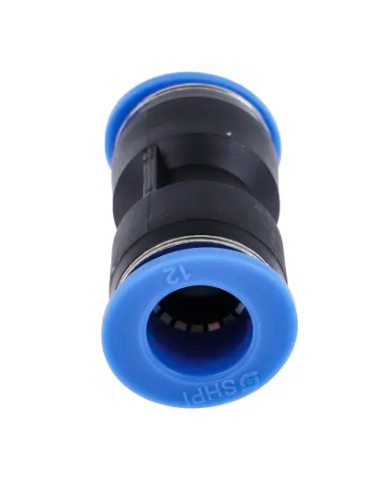
Gas distribution equipment includes gas cylinders or tanks that supply the gas, as well as regulators and pressure gauges that control pressure. Flowmeters are essential for precise gas flow control, while hoses and fittings designed for inert gases ensure secure connections between system components.
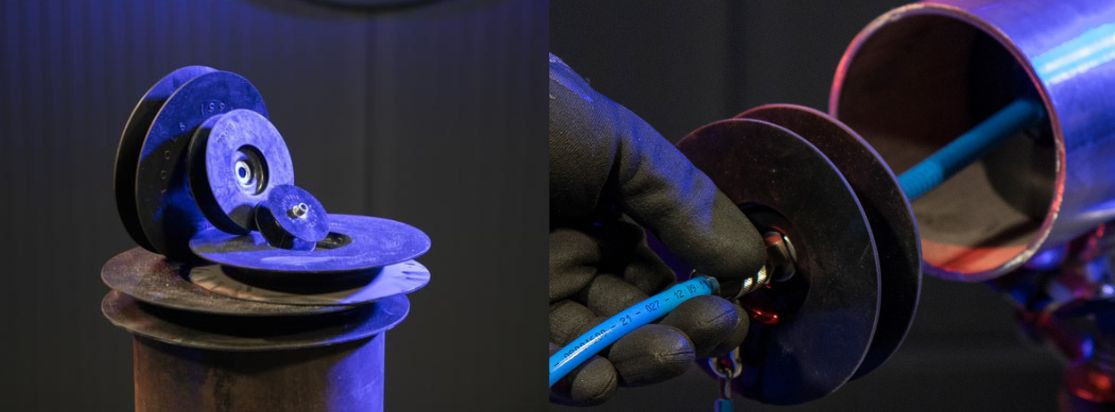
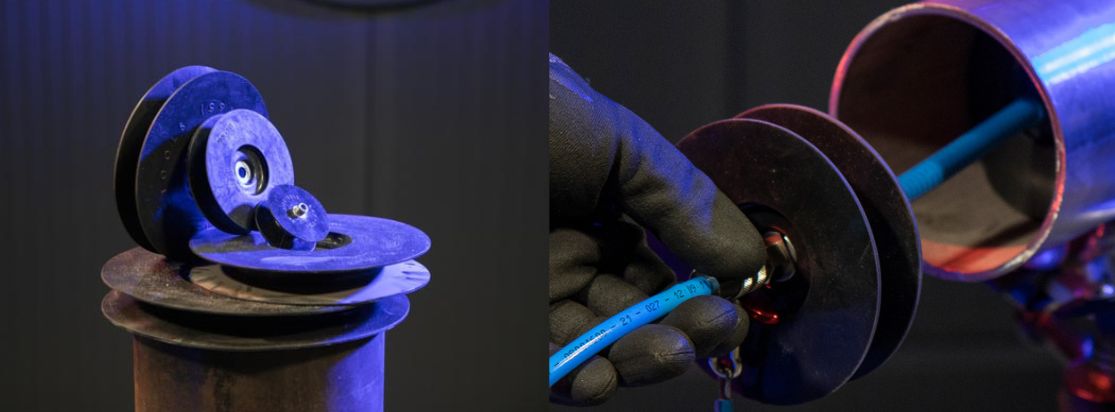
Shielding devices are key to maintaining an inert atmosphere. Nozzles and diffusers provide primary shielding, while trailing shields contribute to secondary protection. Other systems, such as rings, felts, and foams, enhance backside shielding. Enclosures or inerting bags are used for enclosed volumes, ensuring effective isolation.
Monitoring instruments are essential for supervising and adjusting the inerting process. Timers help manage inerting durations precisely, while dew point meters monitor residual humidity. Oxygen meters verify the absence of oxygen in the inerted atmosphere, ensuring a perfectly safe environment.
The quality and condition of this equipment are crucial factors in ensuring effective inerting. Regular maintenance and frequent inspections are necessary to ensure their proper functioning and prevent failures that could compromise the process.
VI. Inerting techniques for enclosed volumes
Inerting enclosed volumes, such as piping or tanks, is a delicate operation requiring a methodical approach. Here are the main steps to follow:
- Thorough cleaning of the volume to remove all contaminants.
- Verification and reinforcement of the volume’s sealing.
- Introduction of inert gas through the lowest point of the volume.
- Evacuation of air through the highest point.
- Monitoring the dew point at the outlet to ensure complete moisture removal.
- Maintaining a slight overpressure in the volume throughout welding.
Several factors influence inerting effectiveness:
- Initial cleanliness of the volume.
- Shape and geometric complexity of the volume.
- Method of gas introduction.
- Density of the gas used.
Special attention must be paid to areas that may trap air or moisture, such as corners or sudden changes in section. In some cases, the use of baffles or mixing devices may be necessary to ensure even distribution of the inert gas.
V. Special case: Inerting sandwich assemblies
Welding sandwich assemblies, where two sheets are welded with a space between them, poses a particular challenge for inerting. The space between the sheets is difficult to purge and protect effectively. Specific techniques must be employed:
- Drilling injection and evacuation holes for the gas.
- Using spacers to facilitate gas circulation.
- Strict control of gas flow rates and inerting times.
- Ensuring the total absence of oxygen before welding.
The quality of inerting is especially critical in this type of assembly, as any contamination within the sandwich would be impossible to detect visually and could compromise structural integrity.
1. Safety and precautions during inerting
Using inert gases for welding requires specific precautions:
- Asphyxiation risk: Argon, heavier than air, can accumulate in low areas and displace oxygen. Proper ventilation is essential.
- Gas cylinder handling: High-pressure gas cylinders must be handled and stored carefully.
- Personal protection: Wearing appropriate protective equipment (masks, gloves) is necessary during welding and inerting operations.
- Personnel training: Operators must be trained in the specific risks of using inert gases and emergency procedures.
Mastering inerting is fundamental for welding reactive metals such as titanium and zirconium. A thorough understanding of the physical principles, rigorous selection of equipment, and methodical application of procedures ensure high-quality and reliable welds.

 Français



_11zon.webp)


_14_11zon.webp)
_6_11zon.webp)