
 Français



_11zon.webp)


_14_11zon.webp)
_6_11zon.webp)



Aluminum Welding: The Complete Guide to Successfully Completing Your Projects
- LAURENT DAROLT
- 25 Jun, 2026
- Welding techniques
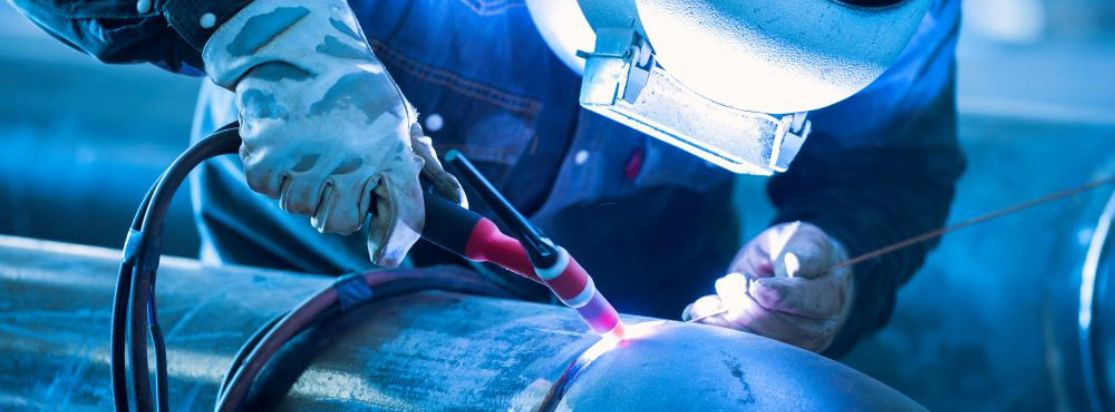
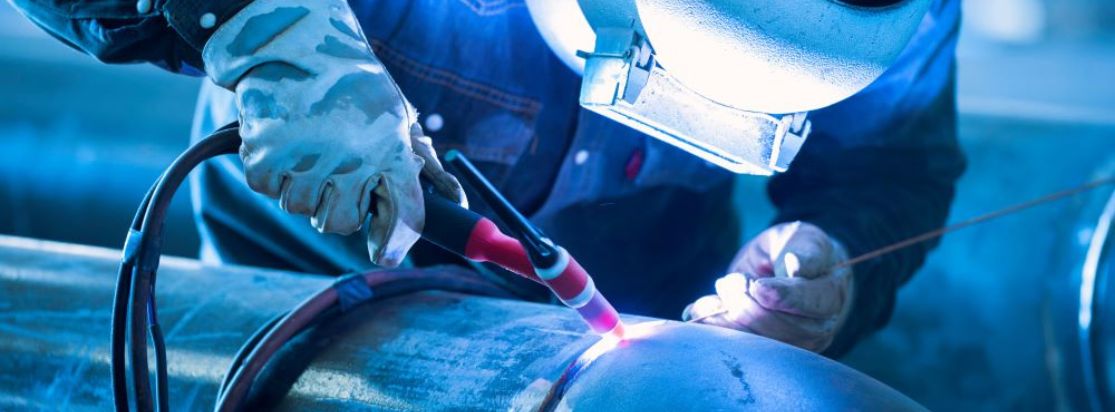
Aluminium is a fascinating metal: lightweight, corrosion-resistant, and widely used across modern industries. Yet for many craftsmen and enthusiasts, aluminium welding is often a source of deep frustration. The challenge is significant: unlike steel, aluminium does not change colour before melting, and it is covered by an invisible oxide layer that acts as a thermal shield. This guide aims to turn these technical obstacles into keys to success by providing the rigour and expertise of metallurgy professionals.
Discover the fundamental pillars for moving from unpredictable results to professional-quality welds.
Key takeaways
- Careful preparation: Brushing with a stainless steel brush in one direction only, followed by degreasing with acetone.
- Endurance: aim for a 20 to 30% duty cycle for DIY use, and 60% at the amperage used for semi-professional or industrial applications.
- Environment: use MIG/MAG gas for clean work in the workshop, and No Gas flux-cored wire for outdoor repairs exposed to wind.
- Technology: choose an Inverter welding machine with a synergic function for a more stable arc and simpler settings.
- Brands: STAHLWERK offers good value for money for private users, while EWM is better suited to intensive professional welding.
Understanding the challenges: Why aluminium requires a unique approach
Mastering the theory behind aluminium’s properties is not optional; it is an essential prerequisite for avoiding material waste and ensuring the strength of your workpieces.
Misleading thermal properties
Aluminium has a low melting point, around 660°C, but its thermal conductivity is extremely high. This creates a confusing visual paradox for the welder: the surface of the part appears “frozen” and motionless, while the core is already completely liquid. With no colour change, unlike the red glow seen on steel, burn-through is common. It is therefore necessary to anticipate this sudden collapse by applying a high amount of energy at the start, then quickly adjusting it.
The alumina wall: An invisible barrier
The real enemy is alumina (Al₂O₃), an oxide layer that forms instantly. Its melting point is close to 2050°C. If you do not “break” this shell mechanically or through the polarity of the welding machine, you will melt the aluminium inside without ever successfully fusing the two parts together.
Success therefore depends on your ability to choose the process capable of breaking through this barrier.
The reference processes: Choosing between TIG and MIG
Your welding strategy should be chosen according to the thickness of the parts and the required finish.
TIG (AC/DC): The excellence of precision
TIG is the leading method for fine work, such as marine and automotive applications. For aluminium, alternating current (AC) is mandatory. The positive phase of the cycle “cleans” the alumina, while the negative phase ensures penetration. This is the process that provides the most complete control over the appearance of the weld bead.
MIG: The power of productivity
Ideal for heavy structures and long weld beads, MIG offers a higher working speed. However, aluminium wire is extremely soft. In a standard steel liner, it tends to buckle and tangle, a phenomenon known as bird-nesting. The use of a Teflon liner and, ideally, a push-pull torch is essential to ensure consistent wire feeding.
Essential equipment: Preparing for success
Investing in quality consumables is far more cost-effective than repeatedly failing with undersized equipment.
The welding machine and its specific settings
For expert-level work, your welding machine should include:
- HF ignition (High Frequency): To start the arc without touching the metal, preventing contamination of the tungsten electrode.
- Pulse mode: Essential for managing heat input on thin sheets and avoiding distortion.
- AC balance adjustment: To adjust the ratio between oxide cleaning and penetration.
Gas and filler metals: Purity above all
The use of pure Argon is the strict standard, with a flow rate set between 8 and 15 L/min depending on the nozzle. For the filler metal, the choice of alloy is important:
- 4043 (Aluminium-Silicon): Offers excellent fluidity and reduces the risk of cracking.
- 5356 (Aluminium-Magnesium): Ideal for assemblies requiring greater mechanical strength.
“Consumable cleanliness is the first line of defence against porosity. Poorly prepared aluminium or impure gas will compromise the weld before the arc is even struck.”
Metal preparation: 70% of the final result
The quality of an aluminium weld is determined before the arc is even switched on. Strict discipline during preparation is the only guarantee of long-lasting results.
The rigorous cleaning protocol
Cleaning must follow two essential steps:
- Chemical degreasing: Use acetone with a lint-free cloth to remove oils and moisture.
- Mechanical cleaning: Use a stainless steel brush dedicated exclusively to aluminium. The expert tip is to brush in one direction only. If you use back-and-forth movements, you risk “folding” the soft metal over the contaminants and alumina, trapping them beneath the surface.
Fit-up and tack welding
For thick parts, a bevel is mandatory to ensure full penetration. Tack welding must be close and secure, as aluminium has significant thermal expansion: without firm holding, your parts will move apart during welding.
Mastering settings and technique
This is the “control” phase, where coordination between the eye and the hand determines the strength of the weld bead.
Amperage and heat management
A golden rule is to set approximately 30 to 50 amps per millimetre of thickness. Start with a strong current to create the weld pool instantly, thanks to HF ignition, then increase your travel speed as the part accumulates heat.
Travel technique and torch angle
Maintain a torch angle between 10 and 15°. The travel speed must be smooth and faster than on steel. You literally need to “chase the heat” to maintain a stable weld pool without allowing it to collapse.
Safety and defect correction
Welder protection and weld integrity are inseparable from sustainable welding practice.
Identifying common defects
| Defect | Probable cause | Solution |
|---|---|---|
| Porosity (bubbles) | Moisture or insufficient gas flow (< 8 L/min) | Check the flow rate and degrease with acetone |
| Lack of fusion | Amperage too low or alumina not removed | Increase the amperage and perform unidirectional brushing |
| Cracks | Incorrect alloy choice, for example no 4043 filler metal used | Match the filler metal to the base metal |
Safety: Radiation and fumes
Aluminium welding arcs emit extremely intense UV and IR radiation; a high-quality auto-darkening welding helmet is essential. As for fumes, aluminium releases harmful fine particles. General ventilation is not enough: choose source extraction — a localised extraction system — to professionally protect your respiratory system.
Aluminium welding is an art of precision, cleanliness, and timing. It allows no room for approximation, but it generously rewards the rigorous craftsperson with joints of unmatched strength and lightness.
By following this protocol — from unidirectional stainless steel brushing to the fine adjustment of the Argon flow rate — you will move from being a frustrated beginner to an accomplished expert. Now that you have mastered the theoretical and technical fundamentals, are you ready to audit your current equipment or launch your first test project on a sample piece?
Let’s talk about your project
An industry expert will respond within 24 business hours.
Aluminium welding is more technical than steel welding because aluminium does not change colour before melting. Its surface may appear solid while the core of the metal is already liquid. In addition, aluminium is covered by an oxide layer, called alumina, which melts at around 2050°C, while aluminium melts at around 660°C.
The main obstacle is alumina, an invisible oxide layer that naturally forms on the surface of aluminium. This barrier prevents proper fusion if it is not removed mechanically by brushing or cleaned using the appropriate polarity of the welding machine.
AC/DC TIG is recommended for precise work, thin materials, and aesthetically pleasing welds. MIG is better suited to heavy structures, long weld beads, and work requiring higher productivity. The choice therefore depends on the thickness of the parts, the expected finish, and the desired welding speed.
To weld aluminium with TIG, alternating current — AC — is essential. The positive phase helps clean the alumina, while the negative phase ensures penetration. An AC/DC TIG welding machine with HF ignition also allows the arc to be started without touching the metal, which prevents contamination of the tungsten electrode.
For aluminium welding, pure argon is the standard. The flow rate should generally be set between 8 and 15 L/min, depending on the nozzle used. Impure gas or insufficient flow can cause defects such as porosity in the weld bead.
Aluminium preparation must be rigorous. First, the part should be degreased with acetone using a lint-free cloth to remove oils and moisture. Then, the surface should be brushed with a stainless steel brush dedicated exclusively to aluminium, brushing in one direction only.
Brushing in one direction helps properly remove alumina and contaminants. Back-and-forth movements should be avoided, as they can fold the soft metal over impurities and trap them beneath the surface, which reduces weld quality.
Cracks can be caused by choosing the wrong filler alloy. To avoid them, the filler metal must be matched to the base metal. In some cases, using a filler metal such as 4043 helps reduce the risk of cracking.
When welding aluminium, it is recommended to maintain a torch angle between 10 and 15°. Travel should be smooth and faster than on steel in order to keep up with heat accumulation and maintain a stable weld pool.