
 Français



_11zon.webp)


_14_11zon.webp)
_6_11zon.webp)



Welding Gas: An Expert Guide to Optimizing Performance and Profitability
- LAURENT DAROLT
- 30 Jun, 2026
- Welding techniques
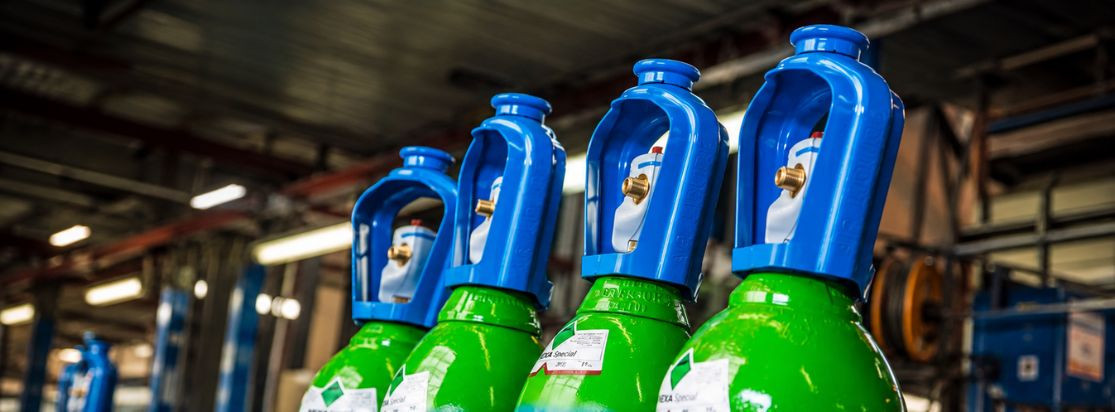
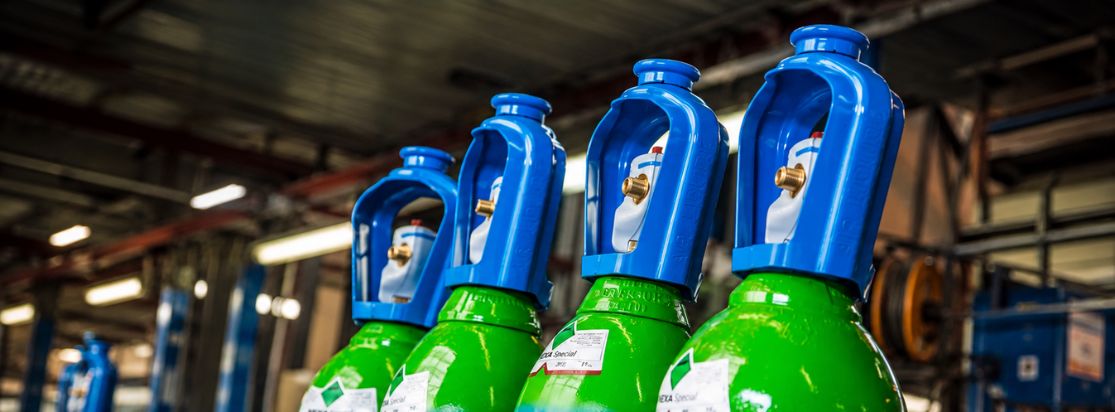
In the world of metal fabrication, shielding gas is too often seen as a simple interchangeable commodity, a minor cost line on an invoice. Yet, for engineering experts, it represents the “invisible parameter” that quite literally holds the weld bead together. Although it is physically intangible, its influence on arc stability, weld pool penetration, and metallurgical quality is complete. For industrial decision-makers, mastering this parameter is not only a matter of technical compliance; it is a strategic lever for transforming the overall profitability of a workshop by acting on hidden costs and operational performance.
Key Takeaways
- Systematically adapt the choice of gas according to the material, welding process, and filler wire in order to preserve the metallurgical integrity of the assembly.
- Reduce finishing costs by optimizing the gas mixture to limit grinding and spatter, which are major financial drains.
- Improve repeatability through technical and ternary gas mixtures capable of generating significant productivity gains in series production.
- Protect operator health by acting on the transfer mode to limit metal vaporization and welding fume emissions.
- Secure the value chain by auditing the installation to eliminate leaks and excessive flow rates, while ensuring reliable supply.
The Real Economic Impact: Much More Than Just an Invoice
Focusing only on the price per litre of gas is a strategic analysis mistake. While gas generally represents less than 5% of the total cost of a weld, its influence on the remaining 95% — including labour, energy, and consumables — is decisive. For a consultant, the calculation is simple: a 1% saving on the purchase price of gas is insignificant compared with a 1% gain in welder productivity or a reduction in rejects.
Beyond the Price per Litre: The Hidden Cost of Non-Quality
Unsuitable shielding gas shifts costs towards expensive areas: excessive spatter, intensive grinding of overly convex weld beads, and rework after non-compliant inspections. Investing in a technical gas often makes it possible to eliminate costly finishing stages, thereby increasing the overall efficiency of the workstation. Gas only becomes expensive when it generates non-quality.
The Logic of Association and the Inertia of Habits
Gas should not be selected in isolation. The golden rule is to consider it as part of a system: material, welding process (MIG/MAG/TIG), and filler wire. However, optimisation often runs up against the “inertia of habits” in the workshop. Operators and training centres frequently stick to basic gases out of convenience or fear of making a mistake. Yet ignoring the synergy between gas and wire means exposing yourself to penetration defects or cracking risks.
To break this inertia, it is essential to understand how the chemistry of gas mixtures physically modifies the electric arc.
Decoding Gas Mixtures: Chemistry in the Service of Performance
The composition of a gas modifies the dynamics of metal transfer and heat input. Choosing the right mixture means precisely controlling the geometry of the weld pool.
Fundamental Gases and Their Technical Functions
- Argon: The inert base of most gas mixtures. It isolates the weld pool from the atmosphere (oxygen, nitrogen, humidity) to prevent oxidation, nitriding, or porosity.
- CO₂: An active gas essential to MAG welding. It increases penetration but can also increase spatter and the risk of cracking if incorrectly dosed in relation to the transfer mode.
- Oxygen: Added in small proportions to stabilise the arc and improve wetting — the spreading of the molten metal.
- Helium: Increases heat input. Valuable for welding speed and thick materials, despite its higher cost.
- Hydrogen: Used specifically on certain austenitic stainless steels to boost productivity. Its use is strictly prohibited where there is a risk of embrittlement.
The Advantage of Technical and Ternary Gas Mixtures
Ternary mixtures (argon/CO₂/O₂) offer greater precision. By adjusting these three parameters, metal transfer can be stabilised, drastically reducing fumes and spatter. Switching from a standard gas to a technical mixture can transform workshop productivity by optimising the visual appearance of the weld and the speed of execution.
“There is no miracle gas. Welding remains a world of compromises: the right balance must be found between the process, the material, the cost, and the expected performance.”
This technical mastery translates into measurable productivity gains after the arc has been extinguished.
Increased Productivity: Efficiency After the Arc Is Extinguished
True efficiency is not limited to the travel speed of the torch, but to the total time spent on the workpiece, from preparation through to final inspection.
Reducing Finishing Work: The Welder’s Invisible Enemy
Grinding is a demanding task involving noise, dust, and vibration, and it adds no direct value. An optimised gas acts on the geometry of the weld bead to avoid excessive convexity. By reducing the need for finishing work, it helps protect operator health and frees up machine time, increasing workshop throughput.
Energy Optimisation and Repeatability
A high-performance gas ensures consistent quality, reducing the need for additional inspections. Stabilised transfer makes it possible to consume less energy per welded part and guarantees the repeatability required for profitability, particularly in tight production flows.
These repeatability challenges become crucial with process automation.
Process Modernisation: Robotics, Cobotics, and Laser Welding
Industry 4.0 requires flawless gas stability in order to maximise the value of technological investments.
Robotics and Cobotics: Leveraging Repeatability
Robotics increases the value of technical gases. In a large-scale production context, a balanced ternary gas has made it possible to achieve productivity gains of 8% across millions of parts. While robotics focuses on speed, cobotics makes it easier to identify gas-related variations thanks to the repeatability of assisted movement.
The Challenge of Manual Laser Welding: Speed and Safety
Manual laser welding is emerging as a response to labour shortages and the need for productivity on simple applications. Gas is vital in this process to prevent porosity and blowholes. Although this process is fast, it does not remove the need for rigorous metallurgical analysis and strict laser safety.
Health, Safety, and Logistics: A Global Approach
Industrial performance is inseparable from operator safety and the reliability of supply.
Acting on Fumes and Welder Exposure
Gas does not create fumes — these come from the wire and the base metal — but it does influence metal vaporisation and the transfer mode. Certain mixtures, unlike the sometimes unsuitable M21 standard, limit emissions at the source. This is an essential part of prevention, complementing extraction and ventilation.
Controlling the Installation and Securing Supply Independence
Performance begins with control over the entire chain:
- Installation: The use of cylinders with integrated pressure regulators guarantees flow stability and reduces errors. Gas lost through leaks or excessive flow produces “zero compliant welds”.
- Supply independence: While Argon and Oxygen are extracted from air locally, CO₂ and Helium depend on complex industrial recovery flows. Supply independence for these gases is strategic: without gas, production stops instantly.
Welding gas is a major competitiveness lever. Switching from a standard gas to an optimised technical solution makes it possible to unlock margins by reducing post-weld work and stabilising processes.
Beyond the price of the cylinder, have you measured the real impact of your gas on grinding time and welder comfort?
Let’s talk about your project
An industry expert will respond within 24 business hours.
Welding gas protects the weld pool from the surrounding air, particularly oxygen, nitrogen, and humidity. It helps limit oxidation, porosity, and metallurgical defects. Depending on its composition, it also influences arc stability, penetration, weld bead appearance, and the level of spatter.
The choice of welding gas has a direct impact on weld bead quality, productivity, and finishing costs. An unsuitable gas can cause more spatter, rework, grinding, or non-compliance issues. Conversely, an optimized gas mixture helps stabilize the process and reduce hidden costs related to post-weld operations.
The right welding gas should be chosen based on three main criteria: the material to be welded, the welding process used, and the filler wire. A gas suitable for TIG welding will not necessarily be optimal for MIG/MAG welding, and a mixture that performs well on steel may be unsuitable for stainless steel or aluminium.
In MIG welding, the gas is inert and does not react with the weld pool. It is used in particular for aluminium and certain non-ferrous metals. In MAG welding, the gas is active: it generally contains CO₂ or oxygen mixed with argon, which influences penetration, arc stability, and metal transfer.
TIG welding mainly uses pure argon because it provides good protection for the weld pool and excellent arc stability. For certain demanding applications, especially on thick materials or materials with high thermal conductivity, argon-helium mixtures can be used to increase heat input.
Argon is an inert gas widely used in welding. It protects the weld pool from the atmosphere, makes arc ignition easier, and helps produce a clean weld bead. It forms the base of many gas mixtures used for TIG, MIG, and MAG welding.
CO₂ is an active gas used in MAG welding. It promotes penetration and can be useful for welding steels. However, too high a CO₂ content can increase spatter, fumes, and the need for finishing work.
An argon/CO₂/O₂ mixture helps balance arc stability, penetration, wetting, and spatter reduction. These ternary mixtures are particularly useful in industrial production because they improve weld bead consistency and can reduce the time spent on grinding or rework.
Yes. Even though gas represents only a limited share of the direct cost of a weld, it strongly influences the total time spent on the workpiece. A better-suited gas can reduce spatter, limit grinding, improve welding speed, and reduce rework after inspection.