
 Français



_11zon.webp)


_14_11zon.webp)
_6_11zon.webp)



Industrial Revolution: Robotic Plasma Cutting
- Nada Iddouch
- 02 Oct, 2025
- Plasma cutter
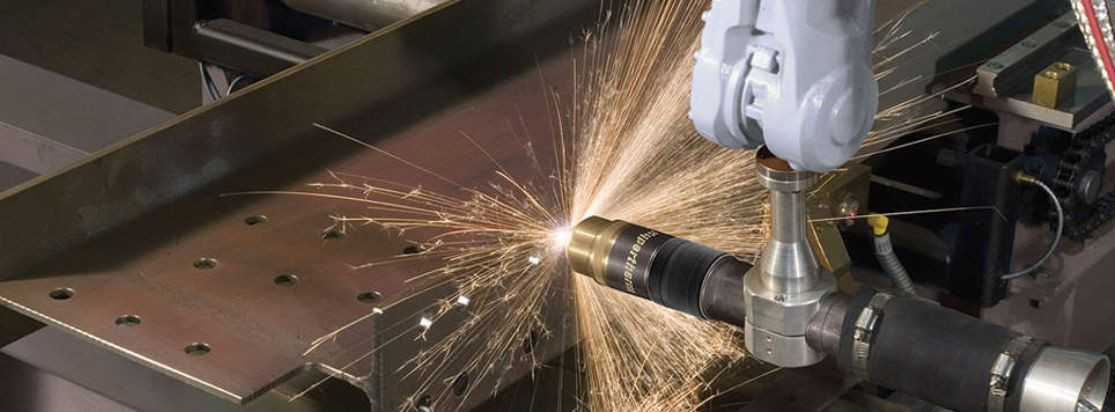
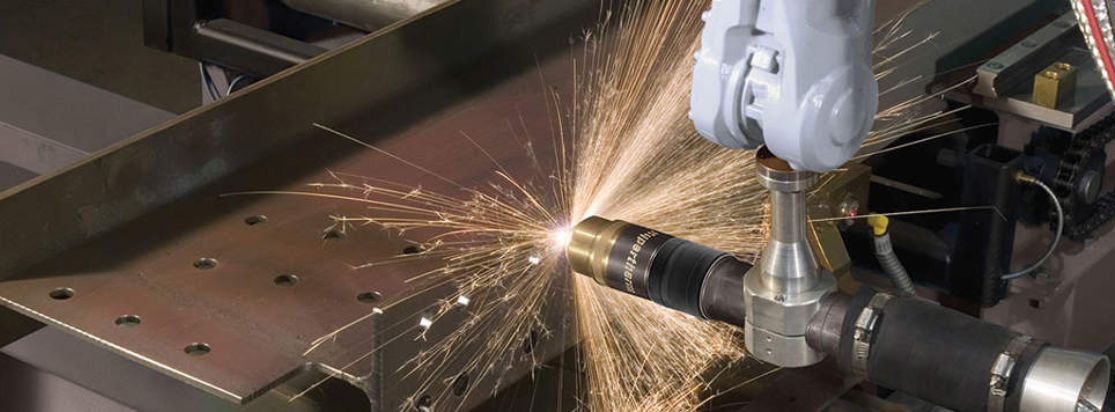
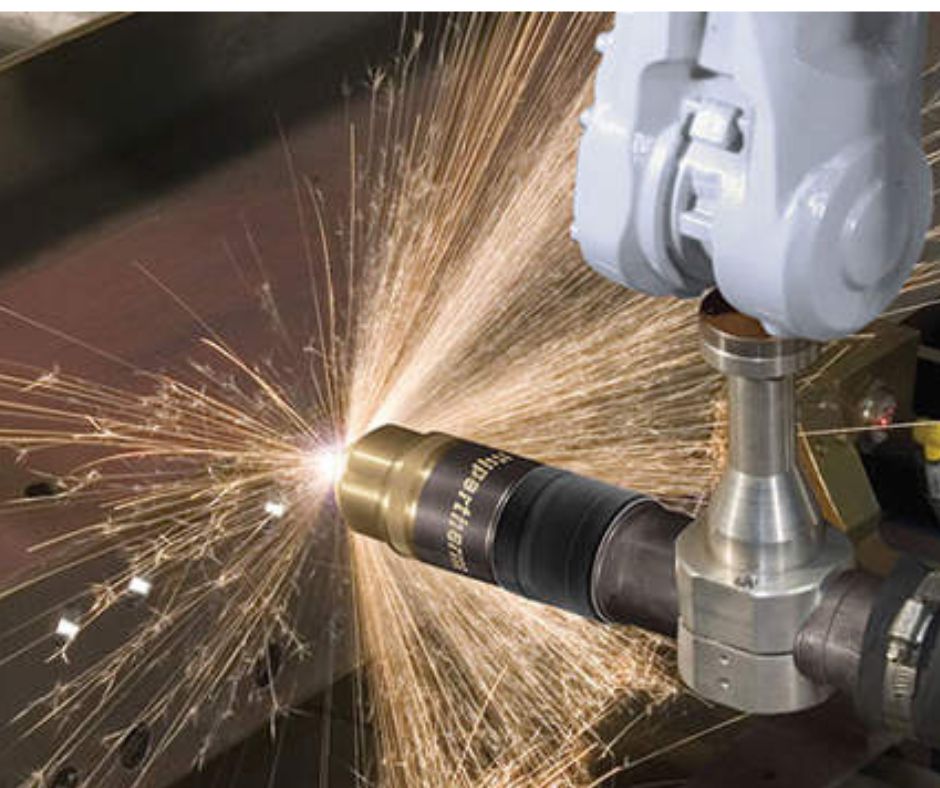
The metallurgical industry faces daily demands for precision and productivity, particularly in sheet metal and boiler-making. Increasing expectations in terms of quality, shorter lead times, and adaptability are driving companies to invest in advanced technological solutions. The automation of plasma cutting through robotics has now become a direct response to these challenges: it ensures reliable cutting even on complex geometries, while maintaining an efficiency level unattainable with traditional methods.
The Impact of Robotic Plasma Cutting in the Metallurgical Industry
Transforming Sheet Metal and Boiler-Making through Plasma Automation
The fusion of plasma technology and robotics has profoundly reshaped the industrial landscape of metal processing. The use of articulated arms equipped with plasma torches enables effortless handling of cuts with varied shapes, whether on stainless steel, aluminum, or specific alloys.
Thanks to this advanced automation, each operation becomes faster: cycles are continuous, the pace accelerates, all while maintaining remarkable consistency in cut quality. Software-assisted programming makes it possible to handle both prototypes and large series without heavy reconfiguration.
This level of accuracy enables the production of customized components for tailor-made manufacturing or the rapid creation of complex parts for prototyping. By eliminating many manual steps that are prone to error, the system drastically reduces the scrap rate. Safety also improves: fewer operators are exposed to electric arcs or hot projections.
Workshops thus benefit not only from increased productivity but also from a significant reduction in waste and the costs associated with material loss. Even when processing multiple thicknesses or different materials simultaneously, a robotic arm combined with plasma maintains its precision throughout the chain.
Strategic Advantages for the Automotive and Aerospace Sectors
The automotive sector fully exploits the potential of this technology to meet its strict dimensional tolerance requirements. Structural elements such as chassis or exhaust systems require absolute regularity: any variation can directly affect overall performance and vehicle safety.
In bodywork, where each panel must fit perfectly with other components, robotic plasma cutting provides a clean and uniform finish that facilitates both assembly and subsequent quality control. The high production rates demanded by this sector are easily sustained thanks to continuous automation.
In aerospace, where lightness must combine with strength, machining parts often made from difficult materials such as titanium or special aluminum alloys is essential. The plasma jet, precisely controlled by a robotic arm, performs these delicate cuts without altering the original mechanical properties or generating excessive heating in neighboring areas.
Critical components – whether engine parts or structural elements – thus benefit from consistent quality that meets the strict standards imposed by this highly demanding field. The ability to quickly execute multiple complex shapes not only optimizes time but also fosters design innovation: there is no longer any need to limit designs to adapt to outdated technical constraints.
Essential Components and Innovations in Robotic Plasma Cutting
Advanced Control Systems and Software Technology
At the heart of the system is a coordinated ensemble consisting of an articulated arm, an advanced plasma torch, and a highly configurable logic system. Overall efficiency depends heavily on the embedded digital tools that allow rapid programming, dynamic adaptation during the process, and continuous monitoring via integrated sensors.
Specialized software such as Robotmaster greatly simplifies each preparatory stage: it offers an intuitive interface to convert CAD/CAM (computer-aided design/manufacturing) files directly into usable robot instructions. Optimized trajectories help reduce premature wear and excessive consumption while anticipating potentially problematic singular points.
Digital simulation plays a key role here: it allows repeated virtual tests before actual implementation in order to detect any anomaly likely to cause defects or costly interruptions during effective cutting. Fine adjustments of linear/angular speeds, attack angles, or gas/plasma parameters are then made without risk or material loss.
Automated control goes beyond mere motion guidance; it also integrates energy monitoring (currents and voltages), torch and material temperature tracking, as well as proactive anomaly detection (consumable wear, etc.). Such embedded intelligence guarantees process stability, even during long operations or multiple, varied series.
Innovations in Plasma Systems and Future Outlook
Recent developments have seen the emergence of various ranges, each capable of meeting a specific spectrum of industrial applications:
| Solution | Main strengths | Preferred applications |
|---|---|---|
| XPR | High precision / automatic gas control / monitoring | High-value fine cutting |
| HyPerformance | Superior performance / versatility | High-volume production |
| Powermax | Portability / high speed / adaptability | Mixed manual / robotic use |
XPR systems in particular push the limits thanks to their automated gas flow management: they instantly adjust the parameters according to the thickness and type of material in order to consistently achieve a clean edge, free of burrs or pronounced thermal distortion.
The HyPerformance range, on the other hand, focuses on maximum robustness combined with high speed. It is ideal in environments where frequent alternation between long, simple parts and small, complex ones requires total flexibility without compromising hourly output.
Finally, Powermax solutions meet the growing need for portability and multifunctionality: they adapt perfectly to occasional interventions while remaining compatible with full robotic integration, if required for future workshop upgrades.
As these technologies gain in software sophistication—particularly through embedded intelligence and progressive self-learning capabilities via AI—they are converging towards native integration into Industry 4.0: IoT interconnection, predictive maintenance based on field data analysis, enhanced traceability of the parts’ lifecycle, and centralized production flow management via a secure cloud.
This direction further strengthens process reliability while actively contributing to environmental initiatives: optimizing energy consumption according to real needs, automated selective sorting of waste, and extending the lifespan of critical consumables.
By combining advanced mechanical performance with evolving digital intelligence, robotic plasma cutting is now redefining every key stage—from preliminary study to post-production monitoring—ensuring a lasting competitive advantage wherever high standards meet technological innovation.
To precisely identify the systems that match the specific needs of your metallurgical activity—whether modernizing an existing workshop or creating a new specialized line—request a personalized analysis from our expert teams today. You will benefit from targeted advice as well as a detailed technical quote perfectly tailored to your industrial objectives.
Let’s talk about your project
An industry expert will respond within 24 business hours.
Robotic plasma cutting is a technology that combines plasma cutting with robotics to achieve precise and complex cuts on various metallic materials.
This technology provides greater precision, reduced waste, improved safety, and increased productivity through the automation of cutting processes.
Robotic plasma cutting can be applied to a wide range of materials, including stainless steel, aluminum, and specific alloys.
By automating the cutting process, robotic plasma cutting reduces operator exposure to electric arcs and hot projections, thereby lowering the risk of accidents.
The automotive and aerospace sectors benefit greatly from this technology due to their strict requirements for dimensional tolerances and cutting quality.
The systems mentioned include XPR, HyPerformance, and Powermax, each offering specific advantages for different industrial applications.
Advanced software enables fast and accurate programming, digital simulation to test cuts before execution, and continuous monitoring to ensure process stability.