
 Français



_11zon.webp)


_14_11zon.webp)
_6_11zon.webp)



Welding Fume Extraction in Confined Spaces
- Nada Iddouch
- 29 Oct, 2025
- Welding safety
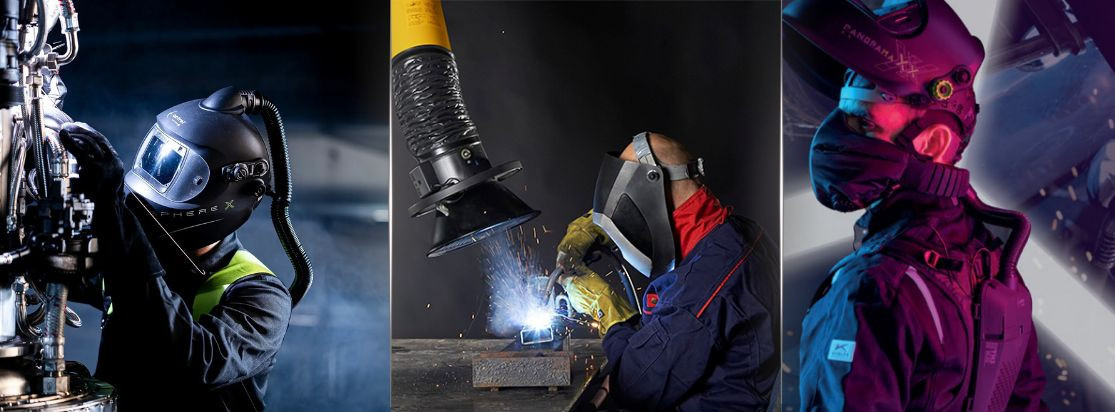
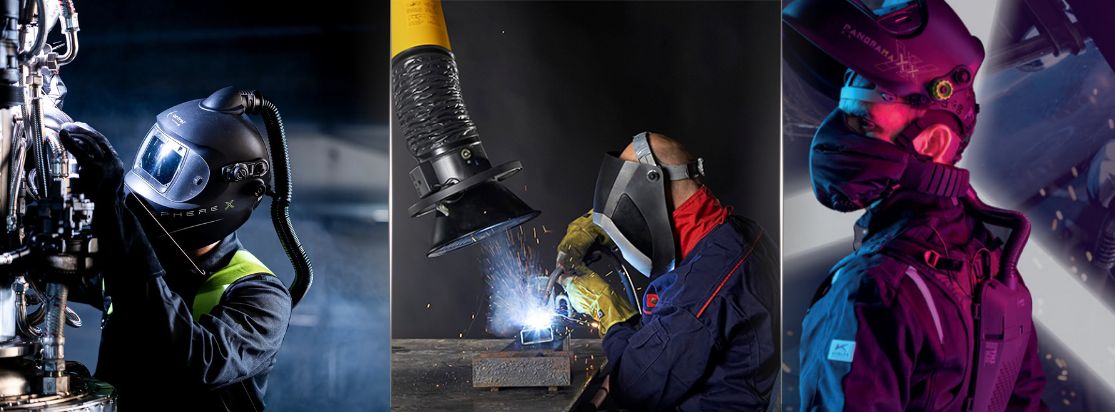
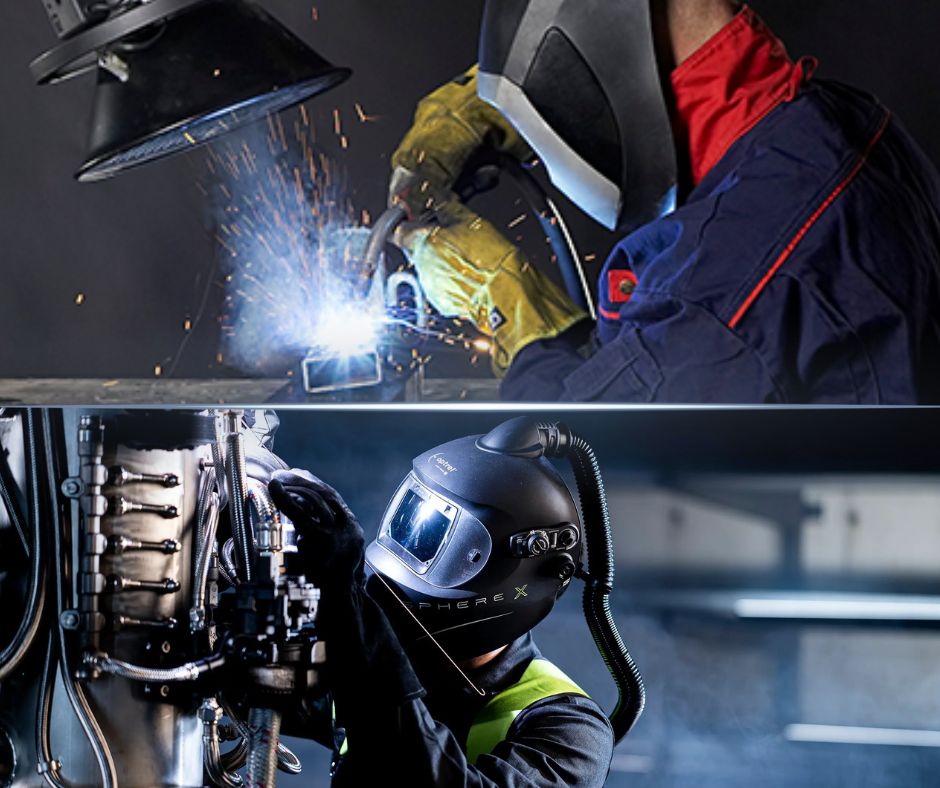
Welding operations in confined spaces raise major safety concerns, amplified by poor air circulation. In such restricted environments, fume management becomes essential to protect operators’ health and comply with strict regulatory requirements. The risks associated with prolonged exposure to toxic emissions and the danger of serious accidents make the adoption of efficient and suitable technical solutions imperative.
Understanding the Challenges of Welding Fume Extraction in Confined Spaces
Risks Associated with Welding Fumes in Confined Environments
Unlike open workshops, closed spaces drastically limit air renewal. This lack of ventilation promotes the rapid buildup of fine particles and hazardous gases from welding, such as manganese or hexavalent chromium. The high concentration of these substances in the surrounding atmosphere greatly increases health hazards: neurological disorders caused by manganese, carcinogenic effects of hexavalent chromium, or other chronic damage due to repeated inhalation of metallic aerosols.
The lack of natural air evacuation is not only a health issue. When certain flammable gases accumulate without dilution, the risk of explosion rises significantly. Likewise, fluctuations in oxygen levels can lead to critical asphyxiation situations—a latent danger that can occur suddenly during prolonged or intensive operations.
The extreme concentration generated under these conditions requires constant vigilance: every minute spent in a poorly ventilated space increases the likelihood of irreversible health effects or even fatal incidents.
Regulatory Compliance and Legal Safety Obligations
Given these hazardous conditions, regulations strictly govern welding operations in confined environments. Organizations such as EU-OSHA prohibit any welding activity without effective systems ensuring that legal exposure thresholds are never exceeded.
Employers are therefore required not only to equip their workers with adequate extraction systems but also to continuously monitor pollutant concentrations to ensure they remain below legal limits. Failure to meet these obligations exposes the company to various penalties: significant fines, temporary suspension, or even administrative shutdown of the site.
Beyond the legal framework, neglecting this responsibility means deliberately endangering welders’ physical integrity: recognized occupational diseases (for example, related to chromium VI), serious accidents caused by explosive or oxygen-deficient atmospheres... Ignoring this issue directly threatens the long-term sustainability of the industrial site itself.
Innovative Solutions for Welding Fume Extraction
Advanced Source Extraction Techniques
Direct capture is now the preferred approach to immediately limit the spread of contaminants in a confined space. Several technologies now allow efficient interception right at the source:
MIG Guns with Integrated Extraction
These specialized tools combine electric welding and localized suction through an integrated handle system. From the moment the fumes are formed, each plume is captured and transported outside the breathing zone via the built-in system. This method offers two major advantages: it prevents fumes from spreading throughout the workspace and drastically reduces direct inhalation by the operator.
Mobile External Nozzles
For certain processes (TIG, coated electrode) where MIG extractors cannot be used, an articulated nozzle can be placed near the hot spot to locally capture the metallic vapors generated. Although slightly less efficient than an integrated source system, this alternative remains highly relevant for quickly reducing overall airborne pollution levels.
Portable or Central Units
The choice between a mobile unit—easily movable around or inside a tank or confined space—and a connection to a centralized network mainly depends on the volume to be treated and the number of active workstations. A central unit efficiently manages multiple large airflow streams, while a portable unit is better suited for occasional interventions on multiple or hard-to-reach sites.
| Method | Compatible Process | Efficiency Level | Flexibility |
|---|---|---|---|
| MIG Extractor Gun | MIG | Very High | Medium |
| Mobile Nozzle | TIG / Electrode | High | High |
| Central Unit | All | Variable | Low / Medium |
| Portable Unit | All | Medium / High | Excellent |
Each configuration requires an optimized solution tailored to the geometric or organizational constraints specific to the worksite.
Efficient Ventilation Systems and Respiratory Protection
Targeted fume extraction must be complemented by a global strategy to ensure regular air circulation within the confined atmosphere:
General Mechanical Ventilation
The installation of a duct connected to a powerful fan allows either the injection or the extraction of large volumes of contaminated air from or to a clean area outside the confined space (for example: a manhole or a tank). This setup creates a continuous directional airflow that efficiently removes residual gases and aerosols away from the operator’s workstation.
The air intake must always be located outside the contaminated area to ensure that only clean air circulates inside. Air drawn from a polluted zone would increase the risk of exposure.
AIHA recommendations suggest a minimum of twenty complete air changes per hour to effectively dilute any toxic load present. This rate prevents the prolonged stagnation of harmful vapors or particles.
Continuous monitoring of air quality (O₂, CO₂, hydrocarbon analyzers) allows real-time adjustment of ventilation power or mode and enables immediate evacuation if critical thresholds are exceeded or explosive gases are suddenly detected.
Appropriate Personal Respiratory Protection
Even with the best collective systems available, certain welding processes still occasionally release hazardous substances that require suitable PPE.
- Helmet-mounted filtering respirators: effective against fine dust, heavy metals, and acidic gases depending on the filter cartridge used.
- Powered Air-Purifying Respirator (PAPR) helmets: premium technology integrating a motorized blower that actively filters up to 99.98% of particles before inhalation. Comfort is enhanced through positive pressure, reducing breathing effort.
Example: the SWISS AIR OPTREL TH3/TM3 kit provides superior filtration while reducing neck and back fatigue thanks to an ultralight ergonomic harness. It also ensures extended autonomy (over 8 hours without recharging).
Two main configurations:
- TH3/TM3: maximum protection against aerosols, fumes, and dust; adjustable airflow rate; visual and audible alerts for filter and battery status; washable face mask; compatible with OPTREL helmets (Panoramaxx, Clearmaxx, etc.).
- ABE1P: combined protection against organic, inorganic, and acidic vapors, as well as fine particles and sulfur; suitable for chemical, pharmaceutical, construction, and industrial cleaning sectors.
These solutions ensure multi-level safety:
- Immediate capture at the source,
- Continuous pollutant evacuation,
- Additional individual protection against residual fumes,
- Dynamic atmosphere monitoring with alerts in case of anomalies.
The final selection must always be based on a detailed analysis of the pollutant type, exposure duration, and the specific constraints of the worksite.
Operational Summary and Action Plan
Combining efficient source extraction with properly dimensioned general ventilation enables industrial operators working in confined spaces to comply with regulations while ensuring long-term protection of their teams against metallic fumes.
For any technical information, equipment selection advice, or customized study (MIG extractor guns, mobile nozzles, assisted ventilation systems, OPTREL filtering helmets, etc.), the HD Soudage experts are available to help. Contact us for precise recommendations and a configuration perfectly suited to your needs and working conditions.
Let’s talk about your project
An industry expert will respond within 24 business hours.
Welding fume extraction is crucial in confined spaces to prevent the accumulation of fine particles and toxic gases such as manganese and hexavalent chromium, which can cause serious health problems and increase the risks of explosions and asphyxiation.
The main risks include neurological disorders, carcinogenic effects, chronic damage caused by inhaling metallic aerosols, as well as explosion and asphyxiation hazards due to the buildup of flammable gases and variations in oxygen levels.
Employers must equip workers with effective extraction systems to ensure legal exposure limits are not exceeded. They must also continuously monitor pollutant concentrations to avoid penalties such as fines or site closure.
Recommended solutions include using MIG guns with integrated extraction, mobile external nozzles, portable or central extraction units, and mechanical ventilation systems to ensure efficient air renewal.
Source extraction captures fumes as soon as they are emitted using tools like MIG guns with integrated extraction or mobile nozzles, reducing their spread and inhalation by the operator.
General mechanical ventilation helps to blow in or extract large volumes of contaminated air, creating a directional flow that removes residual gases and aerosols away from the workstation, ensuring a safer environment.
Recommended equipment includes helmet-mounted filtering respirators and powered air-purifying respirators (PAPR), which protect against fine dust, heavy metals, and acidic gases while improving comfort and reducing fatigue.