
 Français



_11zon.webp)


_14_11zon.webp)
_6_11zon.webp)



Welding Safety and Risk Prevention: A Guide
- Nada Iddouch
- 20 Nov, 2025
- Welding safety
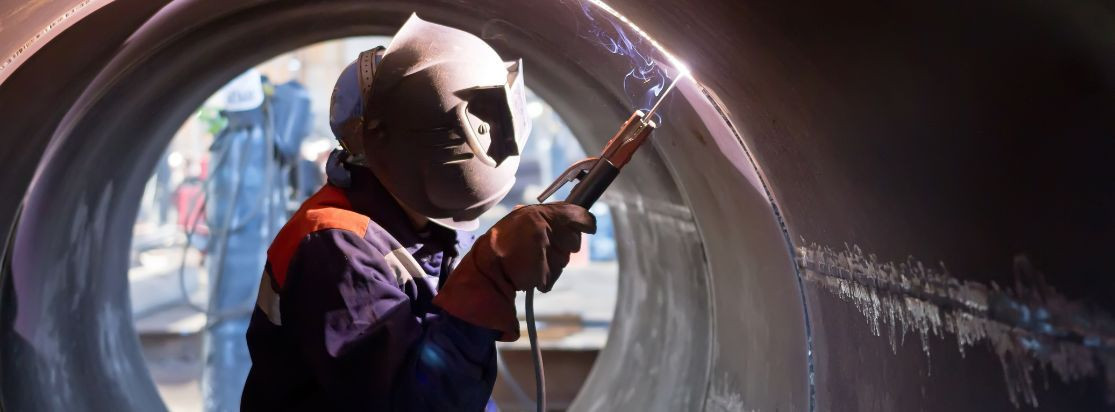
Understanding Chemical and Physical Hazards in the Welding Profession
Welding activities are essential in sectors as diverse as construction, heavy industry, and automotive maintenance. However, this professional environment comes with multiple health threats, often invisible to the naked eye. The main dangers welders face stem both from the chemical agents contained in welding fumes and from physical nuisances such as noise.
Toxic fumes and their impact on welders’ health
Working with metals inevitably exposes workers to a complex mix of harmful gases and particles released during welding. These emissions come not only from the welded metal but also from the consumables used (rods, flux, etc.) and may contain:
- Toxic agents: lead, manganese, cadmium, or ozone.
- Carcinogenic substances: hexavalent chromium, beryllium, or nickel.
- Compounds responsible for “metal fume fever”: zinc, copper, or magnesium.
- Common allergens in this context: chromium, colophony, or diisocyanates.
- Asphyxiating gases: acetylene, argon, or carbon oxides.
- Fibrogenic dusts such as asbestos or silica.
- Numerous irritants that may originate from metal oxides or acids.
Regular inhalation — even in low doses — of these pollutants can trigger a series of acute and chronic disorders: persistent eye and respiratory irritation, unexplained muscle aches, recurring nausea. Over time, some workers develop occupational asthma, dermatitis resistant to standard treatments, or even serious kidney damage. Pulmonary complications appear in various forms: siderosis (iron oxide deposits), stannosis (tin oxide inhalation), anthracosis (carbon dust), or berylliosis (beryllium fumes). In the long term, certain compounds can even promote the development of digestive or lung cancers.
To reduce these major health risks:
| Preventive Step | Desired Effect |
|---|---|
| Search for alternatives | Reduction in the use of polluting materials |
| Operation isolation | Localized containment of emissions |
| Low-fume processes | Direct reduction of inhaled substances |
| Consumable selection | Intrinsic limitation of toxic emissions |
| Dedicated extractors | Effective source-capture of fumes |
| Ergonomic adjustment | Direct distancing between operator and fumes |
| Efficient ventilation | Rapid dilution of pollutants in the workspace |
| Use of appropriate PPE | Individual barrier against exposure |
The smart combination of technical devices, such as welding fume extraction systems, and individual equipment, such as ventilated welding helmets, forms the main barrier against these insidious toxic exposures.
Risks related to noise exposure and their consequences
The noise generated by certain techniques—plasma cutting, air-arc gouging—sometimes reaches the highest sound levels encountered in industrial environments. On top of the direct noise produced by the process itself come the sounds generated by secondary tasks: manual grinding to remove slag, intensive shot blasting, or occasional hammering after intervention.
Prolonged exposure to this commotion does not only result in temporary discomfort but accelerates irreversible hearing loss. Often preceded by a constant sensation of tinnitus (chronic ringing), this occupational deafness progressively deprives the worker of an essential part of sensory alertness. Mental fatigue and ongoing stress also appear, undermining concentration and psychomotor reflexes—conditions that can lead to potentially serious operational mistakes.
The surrounding noise also affects overall well-being: amplified irritability after several hours in a noisy environment; creeping anxiety; reduced resistance to common infections; possible onset of cardiovascular issues linked to acoustic stress.
Reducing the harmful impact of noise relies on several complementary measures:
- Whenever possible, choose more recent, quieter equipment; regular maintenance often significantly reduces noise levels.
- Install anti-noise partitions or acoustic screens around critical areas to absorb a significant portion of propagated sound waves.
- Systematically provide custom-molded earplugs or noise-cancelling earmuffs adapted to the actual noise levels measured in each relevant zone.
- Organize schedules wisely by alternating high-exposure periods with calmer tasks, allowing essential physiological recovery.
Essential Safety Measures to Prevent Welding Accidents
Beyond the invisible risks inherent to chemical emissions or noise exposure, welders also face a series of immediate mechanical dangers—high electrical currents passing through the body without warning; glowing projections reaching hands or face; sudden burns caused by accidental contact with red-hot metal. Strict adherence to proven protocols is vital for every worker.
The dangers of electric shocks and how to prevent them
Daily handling of equipment capable of delivering several hundred amperes increases the risk of a sudden current passing through soft tissues and vital organs if no precautions are taken. An electric shock can cause anything from violent muscle contractions to sudden cardiac arrest depending on its intensity.
Symptoms may include intense pain at the moment of contact; involuntary spasms that can in turn cause dangerous secondary falls; deep internal burns not always immediately visible from the skin surface. Electrical incidents can even temporarily halt breathing or trigger fatal cardiac fibrillation if no emergency assistance is provided.
Effectively reducing this hazard requires:
- Systematic prior inspection of the equipment’s overall condition, connections, and cables before each use;
- Permanent use of approved insulating gloves and appropriate antistatic footwear;
- Ongoing practical training covering safe daily practices as well as specific first-aid procedures in case of accidental contact;
- Regular, thorough maintenance to ensure constant equipment reliability over time.
A strong collective safety culture greatly reduces this silent but omnipresent threat whenever an electric arc ignites between the electrode and the metal workpiece.
Protecting welders from particle projections and burns
The crackling sparks produced during welding reveal a very real danger: each micro-droplet of molten metal can reach several hundred degrees Celsius upon contact with bare skin, causing instant local burns that may be deep enough to require urgent specialized care. Dust from grinding or polishing operations is equally deceptive, as it can irritate the skin and penetrate the eye, causing severe lesions or even partial and permanent vision loss depending on the severity of the impact.
The immediate environment must therefore be designed to channel and limit the dispersion of incandescent fragments:
- Wraparound shock-resistant goggles, complemented by full-face visors during exposed operations;
- Thick, heat-treated gloves to protect hands and wrists;
- Long, fire-resistant, well-fitted clothing to minimize any openings where flying particles could penetrate;
- Installation of mobile barriers or fireproof curtains around active workstations to limit the spread of hazards outside the secured perimeter.
Combined, these individual and collective measures prevent many superficial injuries that can quickly develop into local infections if not treated, not to mention the irreversible eye trauma too often observed when protection is not adapted to real workshop or worksite conditions.
Long-term risk control in the welding profession requires a comprehensive approach that integrates precise knowledge of specific hazards (chemical, mechanical, acoustic, etc.), properly adapted and regularly inspected equipment, and a collective commitment to strictly following safety best practices. These efforts directly benefit the physical health and psychological well-being of personnel, while also improving the overall productivity of the industrial site.
Let’s talk about your project
An industry expert will respond within 24 business hours.
Welders are primarily exposed to toxic agents such as lead and manganese, carcinogenic substances like hexavalent chromium, compounds responsible for “metal fume fever” such as zinc, as well as asphyxiating gases like argon.
Regular inhalation of welding fumes can cause eye and respiratory irritation, muscle pain, nausea, and in the long term, lung diseases such as siderosis, as well as digestive or lung cancers.
Exposure to toxic fumes can be reduced by using air extractors, choosing processes that generate fewer fumes, and wearing appropriate personal protective equipment such as filtering masks.
Noise exposure can cause irreversible hearing loss, tinnitus, mental fatigue, and continuous stress, which can affect welders’ concentration and psychomotor reflexes.
Welders can protect themselves from electric shocks by checking the condition of equipment, wearing insulating gloves and antistatic footwear, and receiving ongoing training on safe practices and first aid.
To prevent burns, welders should wear protective goggles, thick heat-resistant gloves, flame-resistant clothing, and install mobile barriers around the work area.
Effective ventilation helps quickly dilute toxic fumes in the workspace, reducing welders’ exposure to pollutants and improving overall air quality in the workshop.