
 Français



_11zon.webp)


_14_11zon.webp)
_6_11zon.webp)



Manual Laser Welding: Innovations and Safety Gear
- Nada Iddouch
- 04 Dec, 2025
- Laser welding
.jpg)
Innovations and Safety Challenges in Manual Laser Welding
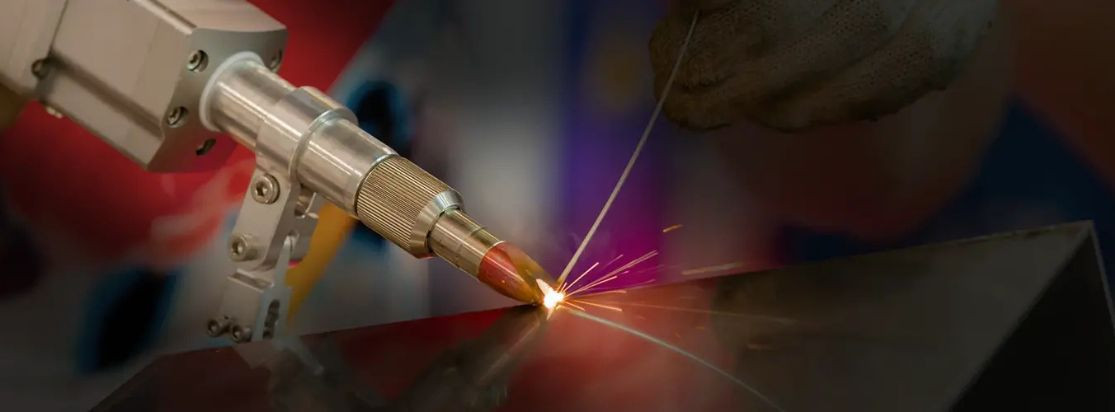
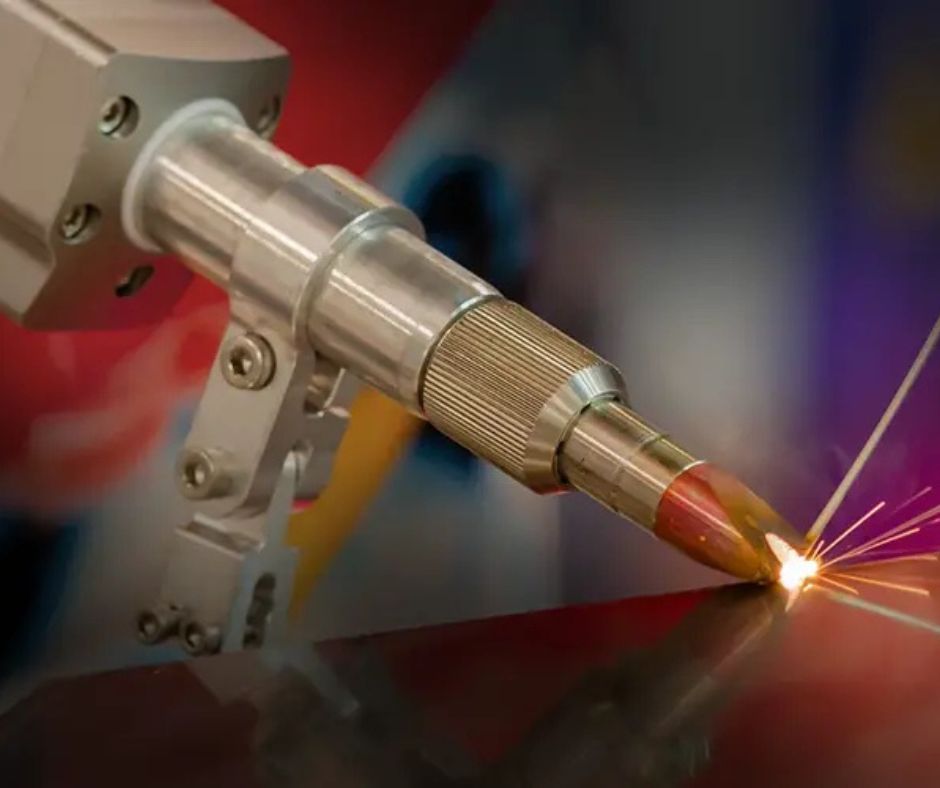
The rise of manual laser welding is transforming industrial practices while exposing operators to new health risks. Although these processes attract interest due to their efficiency and performance across a wide range of materials, they also highlight the limits of current personal protective equipment and the need for evolving standards.
Evolution of Portable Laser Welding Systems
The industry has recently seen massive adoption of portable equipment for fiber laser welding. This shift is driven by several operational advantages sought in modern workshops: a significant reduction in overall operating costs, simple installation with minimal site downtime, intuitive use even for less experienced operators, and easy adaptation to confined or complex environments.
These systems drastically reduce the use of consumables and minimize post-weld finishing operations. Manufacturers benefit not only from optimized productivity but also from greater flexibility when working on parts with varied geometries or made from dissimilar materials. Portable laser welding enables the efficient assembly of both similar steels and different metals—regardless of their thickness.
Despite this technological progress, many industrial players still face a major concern: ensuring complete safety during manual operation remains challenging. The operator’s proximity to the laser beam’s focal point—often between 100 and 200 mm—significantly increases exposure to direct radiation as well as strong reflections generated by the molten metal surface. These factors require protection far more rigorous than what is typically used for conventional welding.
Current Safety Standards for Laser Welding
In response to these challenges, many naturally turn to existing standards governing welder protection. Several texts currently define ocular and facial safety requirements in this context:
- ISO 16321-1 specifies the essential physical and optical criteria for all protective equipment used in general professional environments.
- ISO 16321-2 complements this standard with additional requirements related to material selection, design, and mandatory markings, particularly for mechanical hazards such as hot particle projection or flying debris.
- ISO 16321-3 details the requirements for mesh-type systems designed to protect the eyes and face.
However, these standards explicitly exclude any reference to laser-specific hazards. For optical radiation emitted by a powerful industrial laser—such as those used in portable welding—two other standards apply:
- EN 207 regulates the use of specific ocular filters against accidental laser beam emissions; each filter receives an LB rating depending on the radiation characteristics.
- EN 12254 applies to the protective screens installed around laser workstations, assigning an AB rating based on the hazard type.
None of these standards explicitly require a device that covers the entire facial area against laser risks. Users are therefore forced to combine multiple pieces of equipment: a traditional certified helmet (for protection against projections and impact) worn together with dedicated laser-filter safety glasses.
This multi-equipment approach leads to discomfort and, more importantly, potential human error: it becomes easy to “forget” the laser-safety glasses under a conventional helmet during repeated handling. As long as this regulatory gap persists between the requirements of conventional manual welding and the specific hazards of powerful industrial lasers, no truly satisfactory market solution exists to combine simplicity, ergonomics, and total safety.
Towards an Integrated PPE Solution for Laser Welding
The rapid evolution of these processes requires specialized suppliers to rethink the development—and future certification—of a combined solution that radically simplifies welders’ daily work while ensuring their physical safety against the multiple hazards of the technique.
Designing an Innovative Laser Welding Helmet
To address this growing need, specialized suppliers have mobilized their R&D teams to design a groundbreaking piece of equipment: a helmet integrating an advanced filter capable of effectively blocking the various harmful radiations associated with industrial laser beams (UV, IR…), while preserving the clear vision essential during operation.
The main innovation lies in integrating the filter directly into the helmet (no longer only into separate eyewear). This multilayer filter, produced through successive deposition of technical coatings under controlled atmosphere, provides:
- Highly precise selective blocking around hazardous wavelengths (notably D LB9 @ 1070 nm),
- Controlled attenuation according to different “Shade” values,
- Superior mechanical and chemical resistance thanks to its intrinsic hardness,
- Adaptability to specific needs expressed by field operators (intermediate shades requested directly by welders).
Unlike commonly used materials until now (polycarbonate, ABS, or carbon fiber), which deform rapidly under intense irradiation due to diffuse infrared heat, manufacturers—after a series of rigorous comparative tests—have selected a new-generation thermoset plastic. It combines high thermal and mechanical resistance with lightness, ensuring optimal wearing comfort even during several hours of continuous use.
Challenges and Perspectives for Standards Harmonization
The commercial launch of this type of laser welding helmet clearly illustrates how industrial innovation is now advancing faster than the current regulatory framework. Although this personal protective equipment provides effective facial and eye protection against all identified risks in recent applications, whether in workshops or during field operations, it remains officially mandatory—as long as the ISO/EN standards have not been updated—to supplement its use with EN 207 or EN 12254 certified laser-filtering eyewear worn underneath the helmet.
The temporary maintenance of this redundant configuration highlights the need for the industry to accelerate normative convergence between requirements inherited from “conventional welding” and the new realities arising from the widespread introduction of portable high-power laser welding technologies.
- Urgent clarification expected regarding the official recognition of combined multi-protection helmets,
- Harmonization of testing/certification criteria specifically focused on close-range exposure risks,
- Gradual reduction in the number of PPE items required simultaneously through the adoption of scientifically validated integrated solutions…
As long as international standardization bodies (ISO/EN) delay reaching consensus, operators will have to rely on the simultaneous use of several pieces of equipment. This leads to additional handling and an increased risk of forgetting a critical protective element during rapid task changes or on-site interventions.
Yet, progress made over the past two years demonstrates the real potential of hybrid solutions designed to meet the daily constraints of modern workshops: significant reduction of logistical complexity linked to PPE and reinforced safety against combined hazards inherent to next-generation laser welding environments.
In summary, while manufacturers increasingly rely on the technical versatility of high-performance portable systems designed to deliver flawless assembly quality even in confined spaces, operator demand is shifting toward intelligent protective devices that combine everyday ease of use with comprehensive coverage against all physiological risks associated with prolonged exposure to powerful energy beams or persistent metallic reflections.
Manufacturers are already anticipating future international regulatory evolutions by developing ranges of certified helmets ready to support the transition toward unified standardization. To ensure maximum safety for your teams today while benefiting from the productivity gains of modern portable laser welding technologies, it is recommended to consult a specialist capable of identifying the complete solution best suited to the real requirements of your working environment.
Let’s talk about your project
An industry expert will respond within 24 business hours.
Manual laser welding is a welding technique that uses a laser beam to join materials. It offers advantages in terms of efficiency and performance across a wide range of materials.
Portable laser welding systems reduce overall operating costs, offer simple installation, intuitive use, and easy adaptation to complex environments. They also minimize consumable use and post-weld finishing operations.
The main risks include exposure to direct laser radiation and strong reflections generated by molten metal surfaces, requiring strict protective measures.
Standards ISO 16321-1, ISO 16321-2, ISO 16321-3, EN 207, and EN 12254 regulate protective equipment safety for laser welding, although some do not explicitly cover laser-related hazards.
Because no existing standard covers all laser-related risks simultaneously, operators must use several pieces of equipment—such as helmets and laser-filtering eyewear—to ensure full protection.
New helmets integrate advanced filters capable of blocking harmful radiation while maintaining clear visibility. They use next-generation thermoset materials for improved thermal and mechanical resistance.
A harmonization of standards is expected to officially recognize combined multi-protection helmets, which could reduce the number of required protective devices and simplify daily use.