
 Français



_11zon.webp)


_14_11zon.webp)
_6_11zon.webp)



Tungsten Sharpening: Performance and Safety
- LAURENT DAROLT
- 07 Jul, 2026
- Welding techniques
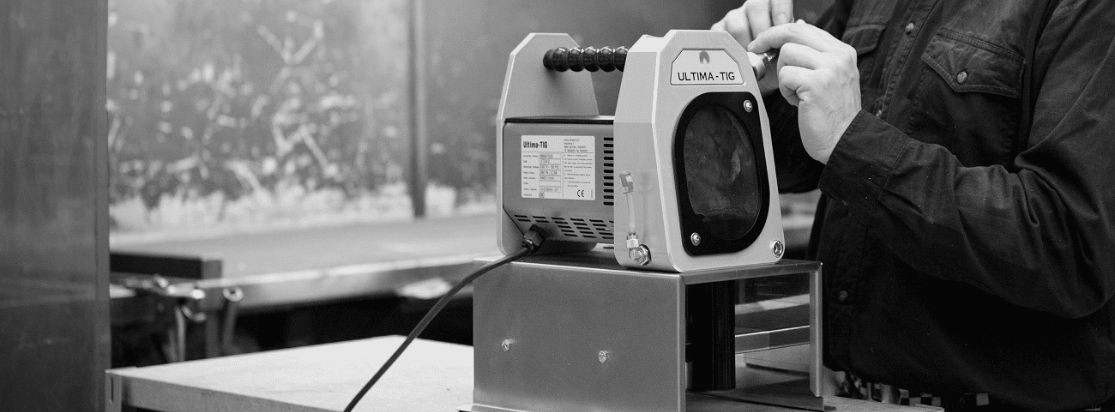
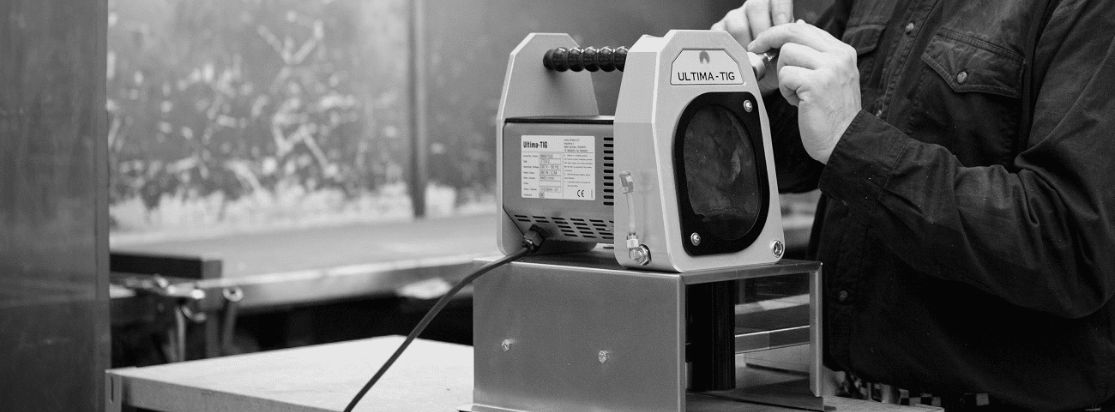
For a welding engineering expert, the electrode is not just a simple consumable; it is the anchor of the entire TIG process. Yet in many workshops, sharpening is still treated as a secondary chore. Neglecting this step is a major strategic mistake: imprecise geometry is a “hidden cost” that undermines the profitability of major investments made in robotic cells and high-precision equipment.
Why accept that a high-value assembly should fail because of an unstable arc? Precision sharpening is not a technical option; it is the foundation of industrial repeatability. This guide defines what now constitutes “The New Standard”: an approach where mastery of the electrode tip redefines weld quality and operator safety.
Key Takeaways
- Maximization of Consumables: Reduction of the discard threshold from 50 mm to just 8 mm, enabling almost complete use of the raw material.
- Guaranteed Metallurgical Integrity: Use of EP770 grinding fluid to eliminate thermal stress and microcracks responsible for tungsten inclusions.
- Elimination of Respiratory Risks: Complete isolation of harmful dust through a sealed chamber and a dedicated collection receptacle.
- Total Geometric Precision: Exclusively longitudinal grinding and perfect centering for a stable arc column and consistent penetration.
- Immediate Profitability: Up to 50% reduction in electrode wear, validated by precise ROI analysis tools.
Why Grinding Redefines the Quality of Your Welds
In modern industry, performance is measured by repeatability. The geometry of the electrode tip is the critical variable that determines energy concentration. Manual grinding or belt grinding produces irregular surfaces and off-center tips, making the arc position unpredictable—a disaster for aerospace or nuclear specifications.
The Direct Impact on Electric Arc Stability
A stable arc requires perfect longitudinal grinding. Grinding lengthwise facilitates electron flow and stabilizes the plasma column. Inelco Grinders systems use a collet device and precise angle adjustment to ensure that every regrinding operation is identical to the previous one. This precision ensures that the arc forms exactly at the programmed position, eliminating erratic deviations.
Consumable Durability: Extending the Life of Your Electrodes
Traditional management is synonymous with waste: a 150 mm electrode is often discarded at 50 mm because it becomes impossible to grind manually. With the Ultima-TIG, you can use your electrodes down to a length of 8 mm. In addition, using the Ultima-TIG-Cut or the cut-off unit allows precise cutting before grinding, preventing clean breaks at the tip during short-circuit transfers. By losing only 1 to 2 mm per grind, you double the service life of your components.
Technical excellence requires looking beyond the visual appearance of the tip and focusing on its internal structure, which leads us to the thermal management of machining.
The Technology Match-Up: Wet Grinding vs Dry Grinding
Modernizing your workshop means abandoning dry grinding. Current industrial standards require complete temperature control during preparation in order to preserve the integrity of the tungsten.
Thermal Control and EP770 Fluid
Dry grinding generates excessive heat, creating thermal stress and microcracks that are invisible to the naked eye. These weaknesses make the tip brittle, causing tungsten particles to fall into the weld pool. The Ultima-TIG solves this problem through wet grinding using EP770 fluid. This constant cooling ensures a smooth and structurally sound tip, essential for automated applications and plasma welding where the thermal load is extreme.
Productivity and Assembly Repeatability
In a robotic cell, every stop required to recalibrate an unstable arc costs a fortune in machine time. Wet grinding provides consistent metallurgical properties, allowing welding speeds to be increased without risking premature electrode degradation. It guarantees smooth productivity and perfect repeatability over production runs of several thousand parts.
Health and Safety: Eliminating Invisible Risks in the Workshop
Exposure to tungsten dust is a major risk that is often ignored. A company’s legal responsibility is engaged as soon as fine particles are dispersed into the surrounding air.
The End of Harmful Dust Inhalation
Traditional grinding on a stationary grinding wheel is a direct source of atmospheric pollution in the workshop. Inelco solutions are based on a closed-circuit system. Whether using the Ultima-TIG in the workshop or the Neutrix, the portable version for on-site welding, machining takes place inside a sealed chamber. The particles are fully captured and directed into a collection receptacle, eliminating any possible inhalation by the welder.
Accident Prevention and Legal Protection
Automating the grinding process eliminates the risks of direct contact with rotating discs and projections of metal debris. By choosing a secure solution, the company not only protects its employees but also reduces its exposure to disputes related to occupational diseases and workplace accidents.
"The New Standard is not limited to arc geometry; it defines an industrial culture where safety drives economic performance."
The Economic Equation: Profitability and Sustainability
Investing in technology such as the Ultima-TIG is not a comfort expense; it is a direct lever for profitability.
Drastic Waste Reduction and ROI
Thanks to a 50% reduction in wear, the savings on tungsten purchases are substantial. Inelco Grinders offers an ROI Calculator that analyzes your specific variables: electrode cost, machine downtime for regrinding, and scrap rates linked to broken tips. By minimizing loss to 1 mm per grind, the equipment is generally paid off in just a few months.
Environmental Commitment and Recycling
Tungsten is a valuable resource whose extraction is costly for the planet. By extending the life of each electrode and taking part in the collected dust recycling program offered by Inelco, your company minimizes its carbon footprint while optimizing its logistics chain.
Precision grinding is the non-negotiable starting point for any high-quality weld. By adopting “The New Standard,” you transform a preparation step into a measurable competitive advantage. The benefits are cumulative: absolute arc stability for your robots, total safety for your operators, and a drastic reduction in consumable costs.
It is time to diagnose your own hidden costs: how much do you spend each year on electrodes discarded prematurely? How many production hours do you lose because of unstable arcs? And what is the value of your team’s respiratory safety?
Let’s talk about your project
An industry expert will respond within 24 business hours.
Grinding the tungsten electrode plays an essential role in TIG weld quality. The geometry of the tip directly influences arc stability, energy concentration, and penetration consistency. Imprecise grinding can cause an unstable arc, weld defects, and reduced repeatability, especially in industrial, robotic, aerospace, or nuclear applications.
The best result is achieved with longitudinal grinding, performed along the length of the electrode. This method promotes a consistent electron flow and helps stabilize the arc column. Unlike manual or belt grinding, precision longitudinal grinding limits arc deviation and ensures better repeatability between each weld.
Dry grinding generates significant heat, which can create thermal stress and invisible microcracks on the electrode tip. These weaknesses can lead to tungsten inclusions in the weld pool. Wet grinding, especially with EP770 fluid used on the Ultima-TIG, cools the electrode during machining in order to preserve its metallurgical integrity and produce a more reliable tip.
The service life of tungsten electrodes can be extended through precise, consistent grinding that removes very little material. With a solution such as the Ultima-TIG, electrodes can be used down to a length of 8 mm, compared with around 50 mm in traditional practice. By removing only a small amount of material with each grinding operation, wear is reduced and consumable waste is significantly decreased.
Traditional grinding can disperse fine tungsten dust into the workshop air. These particles represent a respiratory risk for operators, especially in cases of repeated exposure. Closed-circuit grinding systems, such as the Ultima-TIG or Neutrix, allow work to be carried out inside a sealed chamber and collect the dust in a dedicated receptacle, thereby limiting the risk of inhalation.
A tungsten electrode grinder makes it possible to achieve a consistent angle, precise centering, and a regular tip each time an electrode is prepared. In the workshop, it improves weld quality and assembly repeatability. On site, a portable solution such as the Neutrix helps maintain a high level of precision while protecting the operator from harmful dust.
Yes, precision grinding is a direct profitability lever. It reduces electrode wear, limits scrap, decreases production downtime caused by unstable arcs, and improves assembly quality. By optimizing tungsten use and reducing material loss with each grinding operation, the investment in a professional solution can be paid back quickly.