
 Français



_11zon.webp)


_14_11zon.webp)
_6_11zon.webp)



Electrolytic Pickling of Stainless Steel: Restoring Corrosion Resistance After Welding
- LAURENT DAROLT
- 08 Sep, 2026
- Passivation
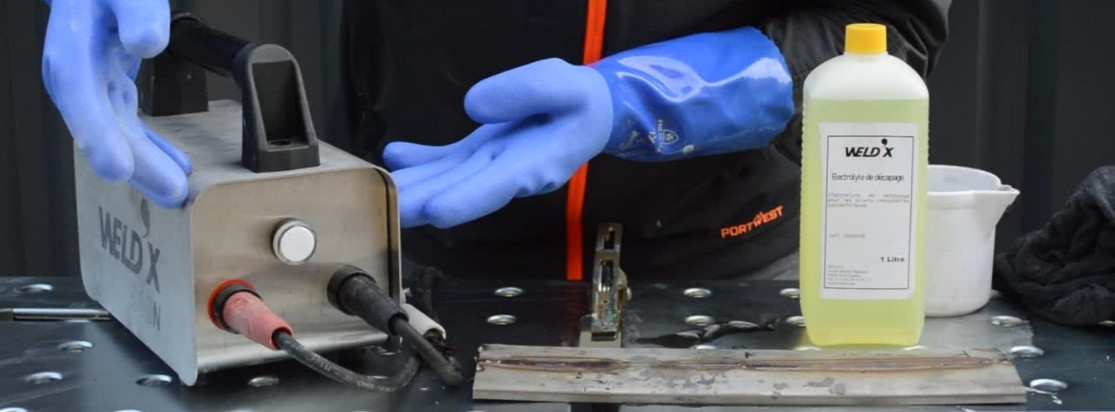
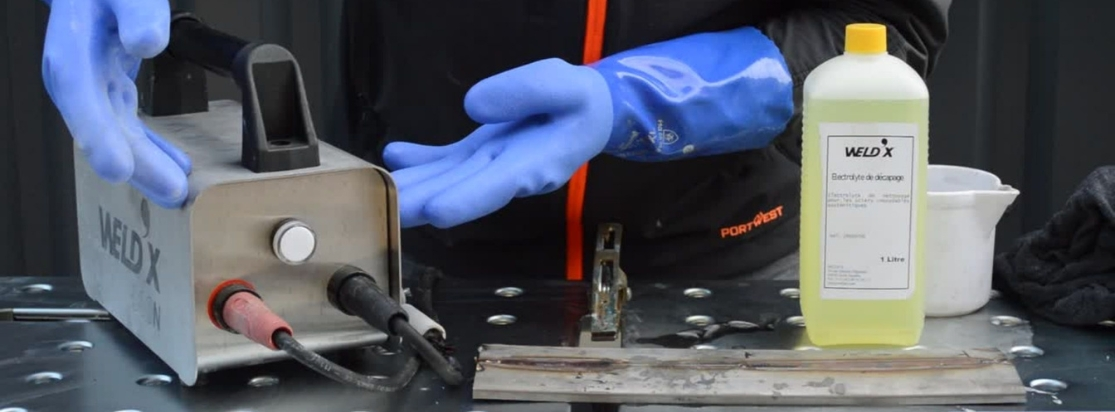
Restoring the integrity of stainless steel after welding is not merely a matter of aesthetics; it is essential to preserving the metal’s resistance in corrosive environments. Electrolytic stainless steel cleaning and pickling has become one of the most effective solutions for treating heat-affected zones (HAZ), where conventional methods often fail to restore the passive layer without damaging the workpiece. By rapidly removing oxidation and heat tint, this process helps meet stringent sanitary and industrial requirements while improving workshop productivity.
Key Takeaways
- Electrolysis mechanism: The process combines an electric current with a solution of acids and salts to break down oxides almost instantly.
- Structural restoration: Beyond visual cleaning, the treatment removes the underlying chromium-depleted metal layer, allowing effective passivation.
- Precision and surface protection: The localized action of a conductive brush protects adjacent areas and preserves the original surface roughness of the steel.
- Safety and REACH compliance: Compared with traditional acid gels, the electrolytes used are less hazardous, simplifying risk management and effluent handling.
- Industrial versatility: Modern equipment can also include polishing, permanent marking, and electroplating functions for a complete finishing process.
Source: HD SOUDAGE YouTube Channel
Understanding the Origin of Surface Alterations After Welding
The heat input required for welding disrupts the chemical balance of stainless steel at the surface. For industrial decision-makers, understanding the vulnerability of the heat-affected zone (HAZ) is essential when assessing the need for a high-quality surface treatment.
- Heat tint: Under the effect of high temperatures, chromium migrates towards the surface and reacts with oxygen, forming a thicker and more porous oxide layer. These temper colours, ranging from yellow to blue, are not merely an aesthetic issue: they indicate a significant alteration of the protective barrier.
- Oxidation and the chromium-depleted zone: Immediately beneath this oxide layer lies an area depleted in chromium. Since chromium is what gives stainless steel its passive properties, this zone becomes particularly vulnerable to pitting corrosion.
A discoloured surface is a technically vulnerable surface. Ignoring this phenomenon means accepting premature deterioration of the component, particularly in the food-processing and pharmaceutical industries.
Cleaning, Pickling and Passivation: An Essential Distinction
When reviewing a finishing process, it is essential not to confuse these three operations. According to Weld'X expertise, pickling and passivation are separate, although closely related, stages.
- Cleaning and degreasing: This consists of removing organic contaminants such as oils and grease. It is essential because any organic residue can act as a barrier to the subsequent electrochemical treatment.
- Pickling: This stage exposes clean metal. It mechanically and chemically removes the heat oxide layer as well as the underlying chromium-depleted zone.
- Passivation: This is the controlled restoration of the protective chromium oxide layer. Although passivation can occur naturally, in this process it is accelerated and made more uniform through the action of the electrolyte, providing rapid protection.
A common mistake is to treat pickling and passivation as synonymous. In reality, pickling prepares the surface so that passivation can take place on clean, reactive metal.
The Principle of Electrolytic Pickling: Efficiency and Precision
The electrochemical process offers advantages over mechanical methods because it can reach complex geometries without scratching the metal surface.
- The mechanism: The workpiece acts as the cathode while the brush or pad acts as the anode. When an electric current, generally alternating current for cleaning operations, passes through the electrolyte, it triggers a selective dissolution reaction that removes oxides.
- Controlled chemistry: The use of Electrolyte A, such as type 2030 DH, based on phosphoric acid, provides a safer alternative to hydrofluoric/nitric acid mixtures commonly used in traditional pickling pastes.
- High-performance brush: Its conductive fibres follow the shape of the weld bead, delivering consistent cleaning results even in sharp corners and difficult-to-access areas.
For applications requiring mobility and durability, the DECAP'X 800N electrolytic cleaning machine provides a suitable solution, combining 800 VA of power with practical workshop ergonomics.
Comparison of Cleaning Methods: Why Choose Electrolytic Cleaning?
Choosing electrolytic technology can be driven by both return on investment (ROI) considerations and workplace safety requirements.
- Productivity gains: Unlike chemical gel pickling, which may require contact times of 30 to 60 minutes, electrolytic treatment acts almost immediately. Labour efficiency is improved by reducing waiting time between treatment stages.
- Safety and environmental considerations: Reducing the toxicity of the chemicals involved can simplify REACH compliance and effluent management. The process can also considerably reduce the risk of severe chemical burns compared with conventional aggressive pickling products.
- Surface finish quality: Mechanical pickling with abrasives can alter surface roughness and potentially embed ferrous contaminants into the stainless steel. Electrochemical treatment preserves the original grain of the workpiece. For applications requiring specific roughness levels, particularly in the pharmaceutical industry, the use of a polishing electrolyte such as Policlean can help reduce Ra values in a controlled manner.
Operating Precautions and Safety Protocol
Professional finishing operations require strict procedures when handling equipment and chemical solutions.
- Personal Protective Equipment (PPE): Nitrile gloves, wraparound safety glasses and a protective apron should be considered minimum protective equipment when handling electrolytes.
- Fluid management and rinsing: Rinsing immediately and thoroughly with clean water helps stop the chemical reaction and prevents residual white marks from forming. Safety Data Sheets (SDS) must be reviewed before using the equipment or chemicals.
- Ventilation: Although emissions may be significantly lower than with spray-based chemical pickling, work should still be carried out in a well-ventilated area or with local exhaust ventilation to remove any fine mist generated during the process.
Regulatory framework: Disposal and discharge procedures for rinsing water should be validated locally in accordance with the applicable environmental regulations and standards.
How to Select a Stainless Steel Weld Cleaning Machine
The choice of equipment depends primarily on production intensity and the required surface finish.
- Mobility and durability: The DECAP'X 800N weighs 11.9 kg and features a durable stainless steel housing, making it suitable for on-site applications. It provides alternating current for standard weld cleaning operations.
- Power and control: The DECAP'X 1200, with 1200 VA of power, features a digital display and a 3-level switch, allowing the intensity to be adjusted according to the thickness and severity of the oxide layer.
- Complete solution: A kit for the DECAP'X 800N and DECAP'X 1200 provides the main accessories required for operation. The set includes a transport case, 3 m cables, a Brushline brush and 1 litre of Electrolyte A, allowing the equipment to be put into service immediately.
- Advanced functions: For mirror polishing or permanent logo marking, the DECAP'X 2500, with 2608 VA and AC/DC operation, provides a multifunction solution for workshops requiring more advanced finishing capabilities.
Conclusion
Key Takeaway
Successful electrolytic pickling relies on three key factors: thorough degreasing, the use of a high-performance brush adapted to the weld profile, and rigorous rinsing. Together, these steps help restore the passive properties of stainless steel and therefore contribute directly to its long-term corrosion resistance.
Recommended Next Step
Identify how frequently your welds need to be treated and determine the required finish, whether simple cleaning or controlled Ra polishing. To improve process reliability and workshop productivity, investing in a machine for electrolytic cleaning of stainless steel welds can provide an effective solution for professional stainless steel finishing operations.