
 Français



_11zon.webp)


_14_11zon.webp)
_6_11zon.webp)



MMA Electrodes: E6013, E7018, Rutile, Basic, Diameter, Amperage and Storage
- LAURENT DAROLT
- 06 Oct, 2026
- Welding techniques
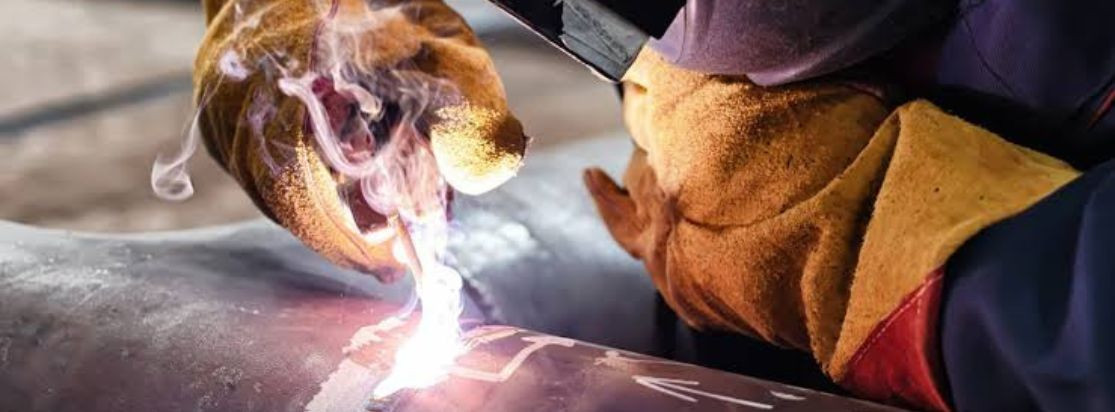
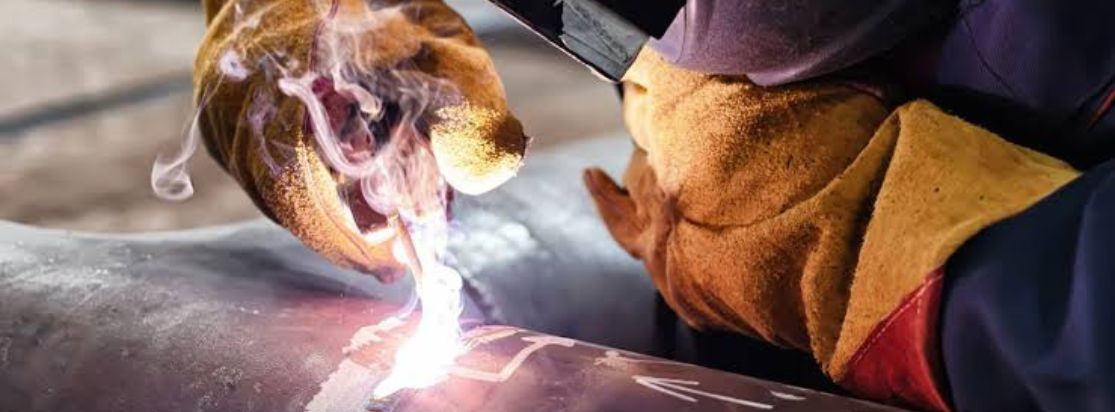
Choosing a coated electrode for the MMA arc welding process depends on several essential criteria. You need to consider the type of base metal, the thickness of the workpieces, and the joint configuration. The welding position, mechanical requirements, and the capabilities of your welding machine must also be taken into account.
The E6013 electrode has a rutile or rutile-cellulosic coating. It provides a smooth arc and is very easy to use on clean steels. The E7018 electrode has a low-hydrogen basic coating. It offers high mechanical strength and good impact toughness at low temperatures, making it suitable for thick structural components.
Neither of these electrodes is universally better than the other. Each is designed to meet specific technical requirements.
The electrode diameter, current type, polarity, and recommended amperage range must be taken from the exact product datasheet. Likewise, storage and re-drying conditions vary depending on the manufacturer.
Always carry out a preliminary test on a test piece before starting the actual welding work. The manufacturer’s datasheet, the welding machine manual, and the Welding Procedure Specification (WPS) should always take precedence over general recommendations.
Key Takeaways
- The coating type determines arc stability, ease of positional welding, and resistance to cracking.
- The first two digits of the AWS A5.1 classification indicate the minimum tensile strength of the deposited weld metal in psi × 1,000.
- The E6013 electrode is suitable for light-duty joints on clean metal, while the E7018 is better suited to heavily loaded structures.
- The welding current must be precisely adjusted according to the electrode core wire diameter and the manufacturer’s recommendations.
- Low-hydrogen basic electrodes must be stored in dry conditions or in a holding oven to prevent hydrogen-induced cracking.
How to choose between E6013, E7018, rutile and basic electrodes?
Selecting the right electrode coating is a key step in ensuring the strength of a welded joint and achieving a successful weld. MMA arc welding machines must be used with a consumable suited to the chemical and mechanical properties of the steel being welded.
The coating directly affects electric arc stability and weld pool fluidity. It also determines the electrode’s suitability for different welding positions and the weld bead’s resistance to cracking. Choosing the wrong coating can cause serious defects such as porosity, lack of penetration or brittle failure.
Understanding AWS and EN ISO classifications
Understanding AWS and EN ISO classifications involves decoding the letters and numbers printed on the electrode. Under the American AWS A5.1 standard, the letter “E” stands for electrode. The first two digits indicate the minimum tensile strength of the deposited weld metal, expressed in thousands of psi. For example, 60 means 60,000 psi and 70 means 70,000 psi. This value measures the tensile strength of the deposited weld metal under test conditions. It does not provide an overall guarantee of the strength of the finished welded joint. The third digit indicates the permitted welding position. The number 1 means the electrode can be used in all positions. The number 2 limits welding to flat and horizontal fillet positions. The fourth digit defines the coating type and the compatible welding current (alternating current AC or direct current DC).
In Europe, the EN ISO 2560-A standard provides a more detailed classification system. For example, the ESAB OK 46.00 electrode carries the designation E 38 0 RC 11. The E6013 classification does not always indicate a purely rutile coating. It may refer to a rutile-cellulosic (RC) coating. Likewise, the E7018 designation does not automatically guarantee a certified H4R or H5 diffusible hydrogen level. The exact electrode reference must therefore be checked, such as the E 42 4 B 42 H5 designation shown for the ESAB OK 48.00 electrode.
Choosing according to the application and requirements
Choosing an electrode according to the application requires assessing the surface condition, metal thickness and mechanical requirements. Welding on rusty, painted or contaminated workpieces can be carried out with high-penetration electrodes such as E6010 or E6011. These MMA welding electrode references belong to the electrodes and gouging carbons category, although they are clearly different from the carbon electrodes used specifically for gouging. By contrast, the E6013 electrode requires clean, properly prepared steel. The E7018 electrode is used on mild steels, high-strength steels and thick workpieces. If the welded joint is exposed to low-temperature impacts or high mechanical stresses, the use of a low-hydrogen basic electrode becomes necessary.
Once the coating type has been selected, the electrode diameter and welding current must be adjusted accordingly.
Which electrode diameter and amperage should you use?
Correctly matching electrode diameter and amperage helps control the weld pool and prevent welding defects. Incorrect amperage disrupts metal transfer and adversely affects the appearance and quality of the weld bead.
If the current is too low, the electrode tends to stick frequently and may cause lack of fusion. Excessive current produces an aggressive arc with heavy spatter, overheats the coating and may burn through the workpiece. An excessively long arc disrupts the gaseous protection generated by the flux. An arc that is too short can promote slag inclusions in the weld.
How should MMA electrodes be stored?
Storing electrodes in a dry environment protects the coating from moisture absorption. Moisture in the flux can cause porosity and increase the risk of hydrogen-induced cracking in the weld.
The presence of moisture in the coating can create a serious risk of failure in structural steelwork or piping applications. From a financial perspective, purchasing sealed protective packages is significantly less costly than scrapping welded components or carrying out lengthy re-drying procedures.
Storing unopened packages and opened electrodes
Unopened packages and opened electrodes must be stored under environmental conditions suited to each type of coating. Rutile or cellulosic electrodes, such as E6011 and E6013, should be stored in a dry area. Relative humidity should remain below 70%, with temperatures between 4°C and 49°C (40°F to 120°F). For basic electrodes such as the OK 48.00, hermetically sealed vacuum packages such as Vacuum Pac (VP) provide full protection as long as the packaging remains sealed.
Understanding the difference between hot storage, re-drying and disposal
Distinguishing between hot storage, re-drying and disposal helps prevent irreversible deterioration of the consumable. An electrode holding oven keeps basic electrodes warm after they have been removed from their packaging. Re-drying involves heating electrodes that have been exposed to ambient air to remove moisture absorbed by the coating. A domestic oven must never be used for this operation. Any electrode with a crumbling or cracked coating, or one that has been immersed in water, must be discarded immediately.
| Electrode condition | Potential risk | Required action | Temperature / Duration (if documented) | Product / Source |
|---|---|---|---|---|
| Sealed package (Vacuum Pac) | No moisture risk | Store in the original packaging | Room temperature | ESAB OK 48.00 |
| Opened / Moisture risk | Porosity, diffusible hydrogen | Keep warm in a holding oven |
120 °C to 150 °C (250–300 °F) |
E7018 / Miller |
| Exposed to humid air | Hydrogen-induced cracking | Re-dry in an electrode oven |
260 °C to 425 °C (500–800 °F) for 1 to 2 hours |
E7018 / Miller |
| Broken or cracked coating | Unstable arc, insufficient flux protection | Discard immediately | Not applicable | Manufacturer guidelines |
During welding and when handling electrode ovens, the operator must use compliant accessories and spare parts. Suitable personal protective equipment (PPE) must be worn, the work should be carried out in a well-ventilated area, and welding fumes should be extracted at the source.
Following these storage instructions carefully helps ensure consistent weld quality on site.
Conclusion
The quality of shielded metal arc welding depends on thorough preparation. Strict compliance with technical requirements helps ensure the conformity and reliability of welded joints.
Key takeaway
The key to successful MMA welding lies in selecting the right electrode coating, setting the welding current accurately, and controlling electrode storage conditions. The E6013 rutile electrode is well suited to general welding work on clean sheet metal thanks to its smooth and easy-to-control arc. The E7018 basic electrode is better suited to structural applications and thick workpieces because of its high mechanical properties. The electrode diameter determines the recommended amperage range specified by the manufacturer. Finally, storing low-hydrogen basic electrodes in a suitable electrode oven helps reduce the risk of porosity and hydrogen-induced cracking.
Recommended next step
The recommended next step is to consult the manufacturer’s technical datasheet and prepare the welding documentation. Before starting work, check the specifications of the welding machine, inspect the condition of the electrode coating, and validate the Welding Procedure Specification (WPS).