
 Français



_11zon.webp)


_14_11zon.webp)
_6_11zon.webp)



TIG Settings: Expert Guide for Steel, Stainless Steel and Aluminium
- LAURENT DAROLT
- 24 Sep, 2026
- Welding techniques
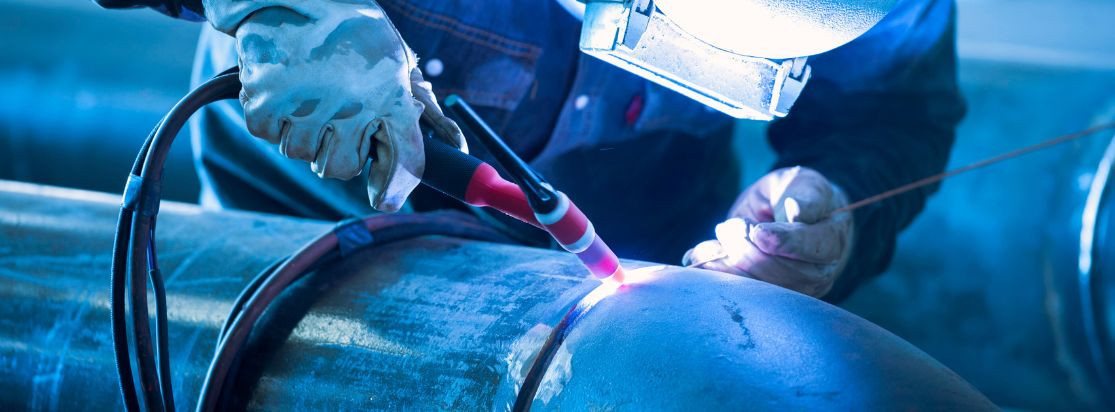
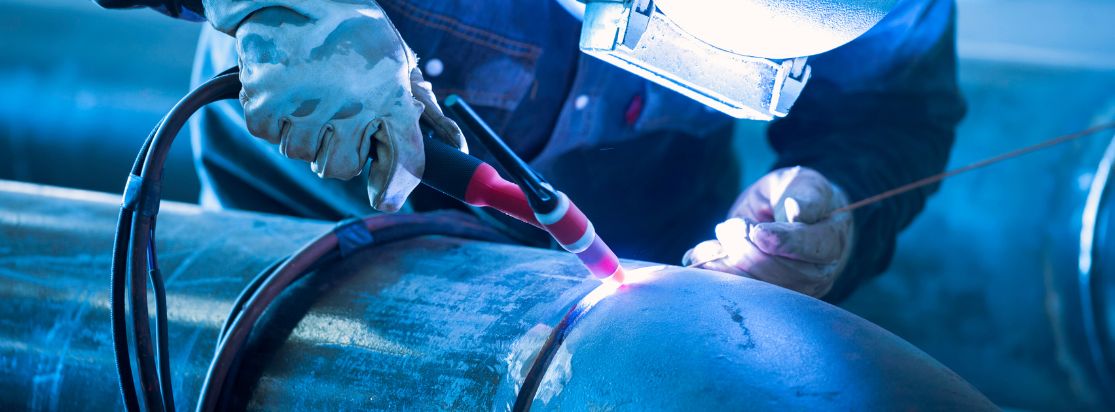
Achieving a high-quality weld depends on the dynamic balance between the arc’s thermal energy and the flow stability of the shielding gas. To achieve an effective TIG setting, the welder must first match the current to the metal thickness, then stabilize the arc using frequency and balance settings (in AC) or pulse settings (in DC), while ensuring optimal shielding. Argon is preferred here because of its low ionization potential, which helps provide consistent high-frequency arc starting.
This system is fully interconnected: changing the amperage often requires an adjustment of the post-gas time to protect both the electrode and the weld pool, while modifying the AC frequency changes the heat concentration required to achieve the desired penetration.
Key Takeaways
- 100% Argon is the universal shielding gas; its low ionization potential ensures stable HF arc starts on all metals.
- The post-gas rule is a technical requirement: divide the amperage by 10 (minimum 8 s) to cool the tungsten electrode and prevent porosity.
- DCEN polarity (Direct Current Electrode Negative) directs 70% of the heat toward the workpiece, promoting deep penetration on steel and stainless steel.
- The ideal AC balance for aluminum starts at 75% EN (Electrode Negative) on modern inverter machines, providing a balance between oxide cleaning and penetration.
- A more directional arc is achieved with a high AC frequency (up to 200 Hz), narrowing the arc cone for precise fillet welds.
Amperage: the driving force behind fusion
Amperage is the concentrated heat source required to create the weld pool. It must be set in proportion to the workpiece thickness and the thermal conductivity of the material to ensure proper penetration without burn-through.
Controlling steel and stainless steel with direct current (DC)
When welding steel, direct current electrode negative (DCEN) polarity is used. This configuration helps protect the electrode by directing only 30% of the heat toward it, while approximately 70% is concentrated in the workpiece. The current must be adjusted precisely: insufficient amperage can cause poor fusion, while excessive current may lead to root-side oxidation. Using a DC TIG welding machine or a professional model such as the Picotig 180 puls DC allows precise control of the heat input.
Specific requirements for aluminum with alternating current (AC)
Aluminum requires higher amperage to compensate for its high thermal conductivity. Alternating current (AC) is required to break down the aluminum oxide layer. Modern inverter machines use square-wave technology to transition almost instantaneously through the zero-current point, helping stabilize the arc and optimize energy transfer despite the metal's high thermal conductivity.
The stability of the arc must then be maintained through pulse settings and shielding gas protection free from excessive turbulence.
Pulse and shielding gas flow: protection and heat control
These parameters protect the tungsten electrode and isolate the weld pool from atmospheric contamination, which can cause porosity.
Optimizing Pulse mode
Pulse mode alternates between peak current, which produces fusion, and background current, which allows the weld pool to cool. By adjusting the duty cycle and pulse frequency, the welder can reduce the Heat-Affected Zone (HAZ), thereby limiting distortion on thin sheet metal. For consistent weld quality, using a TIG filler rod suited to these thermal cycles is essential.
Critical management of gas flow and supply lines
Effective shielding requires precise gas-flow management:
- Pre-flow: Minimum 0.2 s to purge the torch before the arc is initiated.
- Post-flow: Amperage / 10 = time in seconds (minimum 8 s). Keep the torch positioned above the weld pool until the gas flow stops.
- Laminar flow: Prefer a converging nozzle to maintain laminar gas flow for as long as possible. Never use green oxygen hoses for shielding gas, as they can significantly increase the risk of contamination. A flow rate of 5 to 16.5 L/min, controlled using accurate gas regulators, helps maintain weld-pool purity.
Advanced AC settings for aluminum
Modern inverter machines make it possible to manage the aluminum oxide layer, which melts at around 2,000°C, without excessively melting the underlying aluminum, which has a melting point of approximately 660°C.
AC balance: cleaning vs. penetration
The AC balance setting determines the ratio between electrode negative (%EN) and electrode positive (%EP).
- EP provides the cleaning action: during the electrode-positive portion of the cycle, the arc helps break down and remove the oxide layer from the surface.
- EN provides penetration: It concentrates heat in the base metal. On a TIG AC/DC welding machine, a setting of approximately 75% EN is a common starting point. An AC balance with too much EP, such as 50/50, can cause excessive rounding of the tungsten electrode and an unnecessarily wide weld bead.
AC frequency and correcting black “pepper” contamination
AC frequency (Hz) influences the width and directional focus of the arc cone. At 200 Hz, on equipment such as the Tetrix XQ Pulse 230 AC/DC, the arc becomes extremely narrow and directional, making it particularly suitable for precise root passes. If black contaminants or “pepper” appear in the weld pool, reduce the %EN to increase the EP cleaning action while also improving mechanical surface preparation before welding.
Summary of settings and test methodology
Meeting industrial welding requirements means testing each parameter configuration on a test coupon before welding the final workpiece.
Key takeaway
TIG settings work as an interconnected system: amperage controls fusion, shielding gas protects the chemical environment through controlled laminar flow, while AC balance and frequency shape the weld bead and penetration profile. Compliance with the Welding Procedure Specification (WPS) and the welding machine manufacturer's instructions should always take precedence.
Recommended next step
Systematically check the condition of your TIG accessories. Use rare-earth-alloyed tungsten electrodes such as 2% Ceriated (Grey) or 1.5–2% Lanthanated (Gold, Blue or Black). Avoid Pure Tungsten (Green) with modern inverter machines, as it tends to ball excessively and may result in arc instability. Grind the electrode to a truncated point to improve heat resistance and arc stability.
TECHNICAL TABLES
Table 1: Reference Settings (Ceriated/Lanthanated Electrodes)
| Metal | Thickness (mm) |
Current (AC/DC) |
Amperage (A) |
Tungsten Diameter (mm) |
Gas (Argon) |
|---|---|---|---|---|---|
| Carbon Steel | 1.6 | DCEN | 70–150 | 1.6 | 5–8 L/min |
| Stainless Steel | 1.6 | DCEN | 70–150 | 1.6 | 5–8 L/min |
| Aluminum | 1.6 | AC (75% EN) | 70–150 | 1.6 | 7–10 L/min |
| Carbon Steel | 3.2 | DCEN | 150–250 | 2.4 | 8–12 L/min |
| Aluminum | 3.2 | AC (75% EN) | 140–235 | 2.4 | 10–16.5 L/min |
Source: Indicative values from Miller/Air Liquide. The WPS takes precedence over these reference settings.
Table 2: Troubleshooting and Corrective Actions
| Symptom | Probable Cause | Recommended Correction |
|---|---|---|
| Erratic or unstable arc | Improperly prepared electrode or gas turbulence | Regrind the tungsten electrode and reduce the gas flow if it is excessive. |
| Black “pepper” contamination on aluminum | Insufficient cleaning action or contamination | Thoroughly clean the workpiece, then reduce the %EN to increase the EP cleaning action. |
| Electrode melts or forms an excessively large ball | Excessive heat during the EP phase | Increase the %EN and check that the tungsten diameter is suitable for the amperage being used. |
| Porosity at arc start | Air or oxygen still present before arc initiation | Gradually increase the pre-flow time and check the gas circuit for leaks as well as the effectiveness of the shielding gas coverage. |
| Crater or crack at the end of the weld bead | Current shut-off is too abrupt | Adjust the arc fade-out, also known as downslope, and set the final current appropriately. |
Note: These settings are starting points. Always validate your parameters on a test coupon.