Understanding the Limits of European Legislation on Welding Fume Extraction
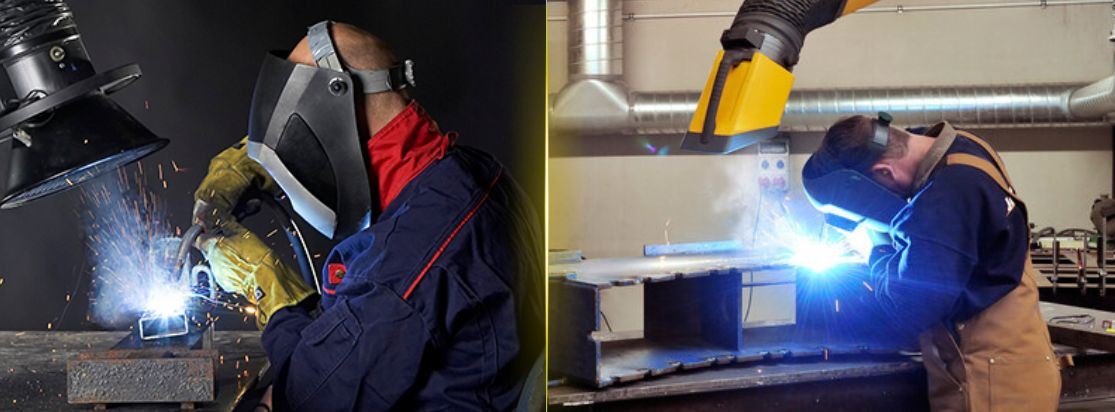
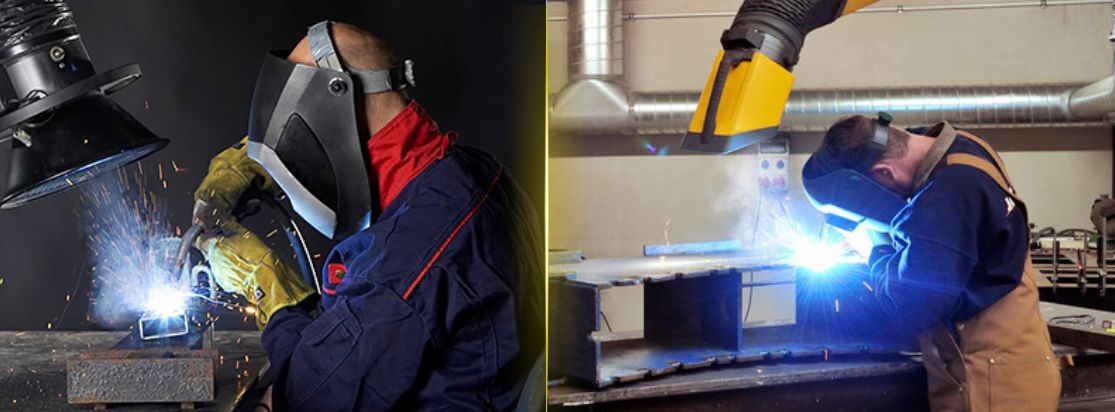
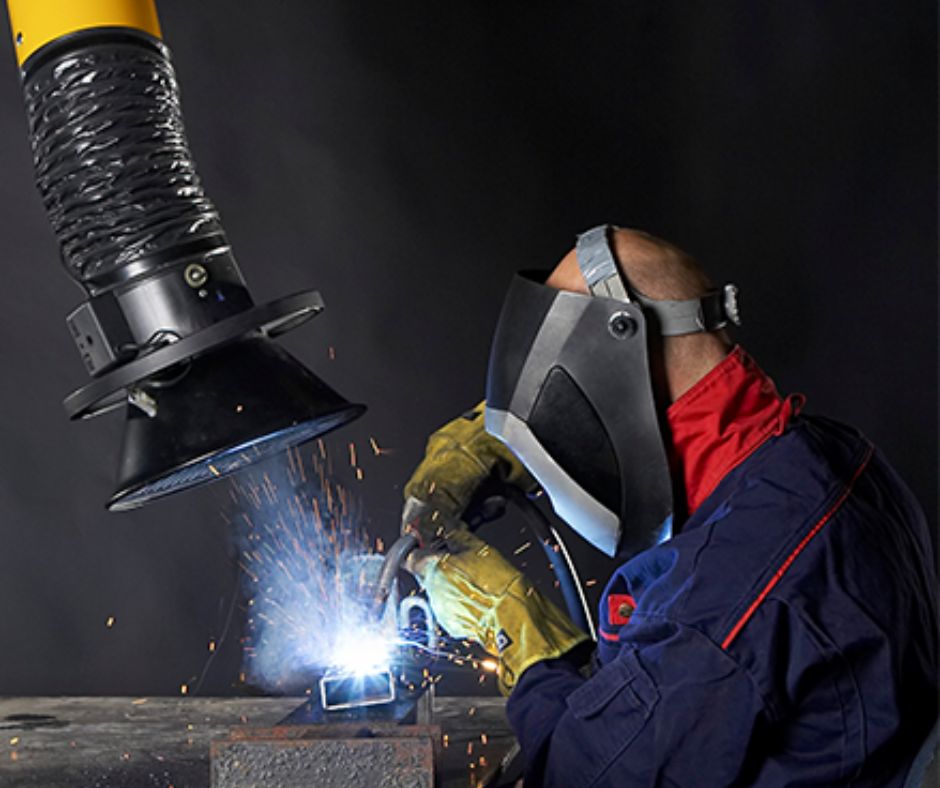
Exposure to fumes generated during welding represents a major occupational health challenge. Despite existing European regulations, the reality in workshops shows that these measures remain insufficient to protect operators from actual risks. Many workshop managers believe that compliance with legal standards ensures their welders’ safety. However, this confidence in official norms is misleading.
Analysis of Current Standards and Their Shortcomings
The regulatory thresholds for fine particles produced by welding are far less strict than those applied in other contexts, such as urban outdoor air. A striking example highlights this distortion: during visits to clients, Michel Ligthart, an expert at Plymovent, often presents a photograph of the famous India Gate in New Delhi shrouded in thick smog. Despite the near-zero visibility due to air pollution, this level of particulate concentration would actually comply with European limits for welding workshops.
The reason? Welding fumes mainly consist of ultrafine particles—sometimes 20 times smaller than the PM2.5 regulated in outdoor air—yet the permissible exposure limit for workplaces is set 50 times higher than the threshold allowed in European urban environments. For example, while the European ceiling for PM2.5 is 20 micrograms per cubic meter of air, the Dutch limit for welding fumes reaches 1,000 micrograms per cubic meter (1 milligram). In some EU member states, this limit is even higher.
Working under such concentrations means inhaling massive amounts of fine particles every day, known to penetrate deep into the human respiratory system. Their presence is now considered the third leading cause of reduced life expectancy among regularly exposed populations.
The problem lies not only in the high thresholds but also in their misinterpretation within workshops. Many assume that respecting these legal values automatically guarantees a healthy environment. In reality, according to Michel Ligthart and many international occupational health experts, no exposure level is risk-free: there is currently no recognized “safe threshold” for exposure to welding fumes without long-term health consequences.
Comparison with International Safety Standards
Given this alarming observation, it is worth examining how other regions of the world approach this universal occupational hazard. Organizations such as the World Health Organization (WHO) and the International Agency for Research on Cancer (IARC) have issued much stricter recommendations regarding exposure to fine particles and toxic substances emitted during welding.
According to these international authorities:
- The recommended limits are 50 to 150 times stricter than those currently in European legislation.
- The IARC now classifies all welding fumes as proven carcinogens.
- No minimum level can be considered completely safe to protect workers from potential long-term illnesses, such as lung cancer.
Within this demanding global framework, a significant gap persists between current scientific knowledge and the legal standards still applied in many European countries. This discrepancy is partly due to the slow updating of national legislation, which struggles to integrate the latest medical and toxicological research.
It is common for manufacturers and HSE managers to rely solely on local regulatory content without considering these crucial international advances, which are essential to effective preventive policy.
Even when certain technical standards exist regarding equipment (industrial extractors or mobile units), they generally focus on overall pollutant capture efficiency—without guaranteeing that specific toxic components, such as hexavalent chromium, remain below their individual toxicity limits after filtration.
Innovations and Solutions for a Safer Work Environment
While regulations struggle to evolve toward stricter health requirements, several emerging trends are nonetheless helping to improve welders’ real protection against the invisible dangers of their trade.
The Impact of HEPA Filters on Workshop Air Quality
In recent years, the systematic installation of HEPA (High Efficiency Particulate Air) filters in welding fume extraction systems has become increasingly common.
This technology offers proven performance: it captures at least 99.7% of particles as small as 0.3 microns—much smaller than the typical size of industrial metallic fumes. This exceptional efficiency drastically reduces the total pollutant load and, more importantly, provides real control over some of the most harmful components, such as:
- Chromium VI
- Nickel
- Manganese
- Other carcinogenic or irritant agents, depending on the welding process used.
In the United States, HEPA filtration is now an industry standard, and its adoption in Europe is rapidly increasing under growing internal and external health expectations (including corporate client audits).
The widespread use of HEPA filters produces two key effects:
1. Reliable compliance—and often overperformance— with WHO/IARC international standards for all hazardous chemical families.
2. Immediate measurable reduction in the annual rate of respiratory incidents reported among exposed personnel over consecutive years.
This technological advancement provides a practical solution where official regulations still lag behind.
Rethinking Practices with Plymovent
Plymovent has long adopted a proactive approach to air quality management in industrial environments facing the constant challenge of intensive welding. For its global technical and commercial teams, led by Michel Ligthart:
- Simply following “the letter” of the law is not enough.
- One must aim for the “maximum preventive spirit,” systematically going beyond compliance by integrating the latest available advances from:
- Recent medical studies,
- International benchmarks,
- Or direct feedback from pioneering users who have implemented advanced solutions such as high-performance HEPA filtration combined with targeted source extraction.
This mindset involves several core commitments:
Personalized Consulting Focused on Tangible Health Outcomes
Each client project systematically includes:
- In-depth on-site diagnostics (dynamic mapping of airflow and real exposure zones)
- Multi-scenario simulations combining point-source extraction with centralized or decentralized HEPA filtration
- Post-installation support to maintain long-term filtration performance through preventive maintenance.
Continuous Awareness Among Decision-Makers and Operators
Beyond supplying CE and ISO 21904-compliant equipment:
- Educational sessions for management teams and welders
- Publication of concise information sheets detailing the risks of specific substances based on materials and welding processes used.
Active Promotion of Industry Best Practices
By highlighting the experiences of pilot sites that have chosen:
- To generalize high-efficiency filtration wherever technically possible
- To progressively lower their internal exposure thresholds, now below current legal limits.
Through this multidimensional commitment—combining technological monitoring, innovation, regulatory foresight, and user engagement—Plymovent actively contributes not only to preventing long-term occupational diseases but also to enhancing the appeal of the industrial sector.
This global approach addresses a key issue: mitigating the shortage of qualified labor by securing jobs still perceived as “high-risk” when facilities, though legally compliant, remain structurally inadequate against invisible but persistent pollution. Next-generation filtration systems are now becoming a new standard across Europe, America, and Asia.
Adapting a workshop to modern health standards begins well before any future legal updates: anticipating with Plymovent ensures optimal working conditions today for employees in high-exposure trades such as metallurgy and welding—a rational investment to reduce absenteeism, avoid downtime, and preserve human capital in a sector where every skilled worker matters.
For personalized support or to assess your current installations, contact our experts specializing in industrial air extraction and high-performance filtration solutions tailored to real-world constraints.

 Français



_11zon.webp)


_14_11zon.webp)
_6_11zon.webp)